
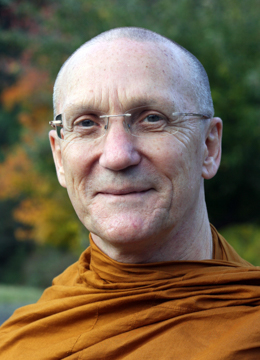
5. “How would you describe the jhāna states and do you teach this kind of meditation?” Answered by Ajahn Pasanno. [Jhāna] [Ajahn Pasanno] // [Concentration] [Energy] [Clear comprehension] [Knowledge and vision] [Ajahn Chah] [Relinquishment] [Craving] [Conceit]
10. “Would you share some of your personal journey, including the time before you became a monk, and why you became a monk, and how the holy life can help people grow and change?” Answered by Ajahn Pasanno. [Ajahn Pasanno] [Monastic life/Motivation] [Monastic life] [Long-term practice ] // [Culture/West] [Travel] [Culture/Thailand]
Story: Ajahn Pasanno begins meditation with a month-long Mahasi Sayadaw retreat. [Ajahn Pasanno] [Meditation retreats] [Mahasi Sayadaw] [Devotion to wakefulness] [Fierce/direct teaching]
Story: Ajahn Pasanno’s first visit to Wat Pah Pong. [Ajahn Pasanno] [Ordination] [Ajahn Chah] [Wat Pah Pong]
Quote: “If you want to stay here, you have to stay at least five years.” — Ajahn Chah. [Ajahn Pasanno] [Sequence of training]
Reflection: “Five years is five years. I’ll go back and give myself to Ajahn Chah.” — Ajahn Pasanno [Ajahn Pasanno] [Relinquishment] [Mentoring]
Quote: “There’s no such thing as the ideal monastic or the ideal practitioner.” [Idealism] [Lay life] [Faith] [Disrobing] [Suffering] [Energy] [Patience]
11. “It’s been so helpful to hear stories from your own experience. Could you talk about some of the more challenging moments in your practice and how you worked with them?” Answered by Ajahn Pasanno. [Gratitude] [Ajahn Pasanno] [Long-term practice] // [Doubt ] [Patience]
Quote: “It’s not me resolving doubt, but it’s allowing the practice or the Dhamma to work.” [Self-identity view] [Dhamma] [Practicing in accordance with Dhamma] [Faith] [Three Refuges]
Simile: “Getting in the vehicle and allowing it to carry you.” [Similes]
14. “Do you think being introduced to Buddhism guided you to the contemplative life or would you have become a monk in any tradition?” Answered by Ajahn Pasanno. [Ajahn Pasanno] [Monastic life] [Spiritual traditions] // [Meditation]
Story: Ajahn Pasanno’s aunt remembers that he said he wanted to be a priest when he was young. [Ajahn Pasanno]
3. “Reflecting on your 35 years in robes, do you have any strong lessons that stand out?” Answered by Ajahn Pasanno. [Ajahn Pasanno] [Monastic life] [Long-term practice] [Discernment] // [Patience ] [Ajahn Chah] [Virtue] [Meditation retreats]
Quote: “Oftentimes we don’t really recognize the goodness that we’re doing.” [Perfectionism] [Judgementalism]
Quote: “Patience isn’t just enduring. It’s being able to be present with experience.” [Direct experience] [Present moment awareness]
10. “What does Pasanno mean?” Answered by Ajahn Pasanno. [Ajahn Pasanno] [Translation] // [Faith]
Story: Why Ajahn Pasanno’s name is mispronounced. [Ajahn Pasanno] [Wat Pah Nanachat]
11. “Can I give a metta hug to the cute little Ajahn?” Answered by Ajahn Pasanno. [Goodwill] [Ajahn Pasanno]
3. “As an abbot taking care of a community, how do you handle it when a kerfluffle comes up?” Answered by Ajahn Pasanno. [Abbot] [Ajahn Pasanno] [Community] [Conflict ] // [Patience] [Views] [Skillful qualities] [Four Noble Truths]
Follow-up: “What are the antidotes to the next two Noble Truths?”
5. “Ajahn, can you see into our minds?” Answered by Ajahn Pasanno. [Ajahn Pasanno] [Psychic powers]
13. “If the Buddha were alive today, what question would it be most important for you to ask of him?” Answered by Ajahn Pasanno. [Buddha] [Ajahn Pasanno] // [Meditation]
7. “It seems that letting go is a process, and it doesn’t happen quickly. Is this true for you, or can you let go immediately?” Answered by Ajahn Pasanno. [Relinquishment] [Ajahn Pasanno]
2. “Ajahn, how are you doing? Is teaching a retreat as busy as being involved at the monastery? It is so pleasant to have a group of monastics here. Chanting and the whole energy is like sweet medicine. Wishing you all well, and thank you so much for coming here.” Answered by Ajahn Pasanno. [Ajahn Pasanno] [Meditation retreats] [Teaching Dhamma] [Monastic life] [Gratitude]
21. “As I understand Ajahn Sumedho in The Sound of Silence and Stephen Batchelor, they do not believe in rebirth or reincarnation in a literal sense. What is your belief and understanding in regards to this? Stephen in particular says this is a holdover from the society the Buddha was born into and not really his teaching. He also comments that the Buddha was more interested in creating a new civilization than individual enlightenment. Please comment.” Answered by Ajahn Pasanno. [Ajahn Sumedho] [Stephen Batchelor] [Rebirth] [Ajahn Pasanno] [Culture/India] [Buddha/Biography] [Politics and society] // [Sutta] [Teaching Dhamma] [Liberation]
Vinaya: Mahāvagga 1.6: The Buddha’s activities after his Awakening.
25. “What is the funniest story from your life as a monk? We humans love stories.” Answered by Ajahn Pasanno. [Humor] [Ajahn Pasanno] [Monastic life]
31. “I think about sharing the Dhamma with my family. Any suggestions on where to start? Has your family taken to the teachings since you’ve been on the path?” Answered by Ajahn Pasanno. [Teaching Dhamma] [Family ] [Ajahn Pasanno] // [Habits] [Non-contention] [Renunciation] [Amaravati]
Story: Ajahn Pasanno’s sister and her six-week-old baby attend his first meditation retreat in Canada. [Ajahn Pasanno] [Meditation retreats]
6. “Could you tell of your personal experience with a tiger?” Answered by Ajahn Pasanno. [Ajahn Pasanno] [Animal] [Tudong]
Story: Ajahn Pasanno hears and smells a tiger while doing walking meditation. [Ajahn Pasanno] [Dtao Dum] [Culture/Natural environment] [Posture/Walking] [Fear] [Death] [Impermanence] [Mindfulness] [Clear comprehension]
Sutta: MN 4: Fear and Dread
11. “I’m curious about your pre-monastic life and specifically what led you to the monastic life.” Answered by Ajahn Pasanno. [Ajahn Pasanno ] [Monastic life/Motivation] // [Temporary ordination] [Ajahn Chah] [Wat Pah Pong]
Quote: “If you want to stay here, you have to stay at least five years.” — Ajahn Chah to Ajahn Pasanno. [Ajahn Pasanno ] [Sequence of training]
13. “Do you ever work with the ‘thin line’ between sleep and waking, dreaming and lucidity? It seems like a powerful or useful fulcrum.” Answered by Ajahn Pasanno. [Ajahn Pasanno] [Devotion to wakefulness ] [Dreams] // [Continuity of mindfulness] [Posture/Lying down] [Determination]
10. “Thank you for teaching that listening to Dhamma is a spiritual practice, not just information download. When you opened your heart to Ajahn Chah, even though you couldn’t understand his words, would you say that was a sort of Dhamma transmission directly from one heart to another?” Answered by Ajahn Pasanno. [Hearing the true Dhamma] [Ajahn Chah] [Ajahn Pasanno] [Teaching Dhamma] // [Buddha]
9. “If Ajahn Pasanno could go back in time and give a word of advice to Ven. Pasanno on the day of his ordination, what would he say?” Answered by Ajahn Pasanno. [Ajahn Pasanno] [Ordination] // [Questions ] [Ajahn Chah] [Sickness]
19. “Did you know Ajahn Paññāvaḍḍho? I saw the DVD about him that Abhayagiri offers and listened to some of his Dhamma talks and was touched by how gentle he seemed. Is it true that a rainbow appeared during the cremation of his body?” Answered by Ajahn Pasanno and Ajahn Yatiko. [Ajahn Paññāvaḍḍho ] [Ajahn Pasanno] [Funerals] // [Ajahn Mahā Boowa] [Hampstead Vihara] [Wat Pah Ban Tat]
14. Comment: “Thank you for developing the wisdom to teach and the compassion to choose to teach. I trust we give you the opportunity to deepen your practice, especially of compassion and patience. The Buddha would be proud of you and your decision to teach instead of living in that nice little cave in a beautiful forest all peaceful and still. With metta.”—us sentient beings. [Gratitude] [Ajahn Pasanno] [Discernment] [Teaching Dhamma] [Compassion]
Response by Ajahn Pasanno: “It was actually Ajahn Chah who made me teach.” [Ajahn Chah] [Ajahn Pasanno] [Wat Pah Nanachat] [Abbot]
18. “Several years ago, I remember reading your little book The Last Breath about your experience supporting a Thai Buddhist at the death chamber [in San Quentin Prison]. I was very impressed how someone who as facing the last hours of his life still had sati and clear consciousness, practiced generosity, requested food for the monks, and was humble and kind. Would you mind telling us about Jay’s mindfulness again?” Answered by Ajahn Pasanno. [Dhamma books] [Ajahn Pasanno] [Prisons] [Death] [Mindfulness] [Generosity]
Story: Jay offers Ajahn Pasanno a meal in prison and makes sure that his family and the guards have an opportunity to hear Dhamma. [Happiness] [Ajahn Pasanno] [Hearing the true Dhamma] [Questions]
Story: Jay pays his last respects to Ajahn Pasanno. [Respect] [Ajahn Pasanno] [Equanimity] [Thai]
20. “Can you please tell us about dreams? Do they reveal our defilements? Do you have any interesting dream stories?” Answered by Ajahn Pasanno. [Dreams] [Unwholesome Roots] [Ajahn Pasanno] // [Culture/Thailand]
Story: Two Western monks ask Ajahn Chah at what point he became confident that he would have a major realization. Ajahn Chah describes three dreams in response. [Ajahn Chah] [Dhamma books] [Wat Pah Nanachat] [Culture/West]
Reference: Stillness Flowing by Ajahn Jayasaro, p. 111-113.
9. “Meditation is work. Sometimes I’m very tired, can’t think, can’t hear, can’t sit, can’t sleep; I just show up and breathe. How are you doing? What keeps you going? I’m so touched with your generous presence, patience, and deep commitment.” Answered by Ajahn Pasanno. [Meditation] [Sloth and torpor] [Mindfulness of breathing] [Ajahn Pasanno] [Energy] [Gratitude] // [Not-self] [Relinquishment]
Quote: “There’s only two things you need to do in Dhamma practice: know and let go.” — Ajahn Chah. [Ajahn Chah] [Mindfulness]
9. “The best thing is not claiming ownership over that insight. … Pay attention to the feeling of it.” Answered by Ajahn Pasanno. [Ajahn Pasanno] [Meditation] [Dhamma] [Similes] // [Recollection] [Learning] [Buddha] [Teachers] [Liberation]
17. “If Ajahn Chah were to appear here tonight, what are a couple of questions you would ask him?” Answered by Ajahn Pasanno. [Ajahn Chah] [Ajahn Pasanno] [Questions] // [Nature of the cosmos] [Concentration]
Recollections of talking with Ajahn Chah. [Clinging] [Relinquishment]
Story: Ajahn Chah describes the details of a spirit living at Wat Pah Pong to a long-term disciple who asked about it. [Ghost] [Wat Pah Pong]
Story: Right after that, a group of visitors ask if devas and ghosts really exist. [Deva] [Direct experience]
Story: Ajahn Chah responds to his teacher’s inquiry about developing astral travel. [Ajahn Kinaree] [Psychic powers ]
3. “I’ve noticed the proliferation of thoughts is different in walking meditation versus sitting. Would you recommend walking meditation for an at-home practice for the first meditation in the early morning? Would you mind sharing your experience with the effects of walking meditation?” Answered by Ajahn Pasanno. [Proliferation] [Posture/Walking] [Everyday life] [Ajahn Pasanno] // [Thai Forest Tradition] [Abhayagiri] [Lodging] [Right Effort]
Quote: “You can get a lot of wisdom from walking meditation.” — Ajahn Chah. [Ajahn Chah] [Discernment]
21. “Could you kindly talk about some obstacles in your practice and how you overcame them as an encouragement to us?” Answered by Ajahn Pasanno. [Ajahn Pasanno] // [Doubt] [Fear] [Mindfulness of body ] [Delusion]
10. “What were you like before you became a monk? Were you always so kind, generous, warm, and trustworthy?” Answered by Ajahn Pasanno. [Ajahn Pasanno] [Personality]
2. “A few years ago on the Metta Retreat, you taught a phrase that you use in your practice, ‘May I have the patience, courage, understanding, and determination to face and overcome obstacles, difficulties, and failures in life.’ Please speak on how you use this phrase in practice.” Answered by Ajahn Pasanno. [Ajahn Pasanno] [Goodwill] // [Bhante Gunaratana]
Reference: Amaravati Chanting Book, p. 41: Reflection on Universal Well-Being.
1. “Could you tell us how you became a monk?” Answered by Ajahn Pasanno. [Ordination] [Ajahn Pasanno] [Monastic life/Motivation] // [Culture/Thailand] [Meditation]
Quote: “I stumbled into it.” [Monastic life]
2. Comment: I have found your saying ‘Just don’t make a problem of it.’ very helpful. [Ajahn Pasanno] [Cessation of Suffering] [Tranquility] [Proliferation]
Response by Ajahn Pasanno.
5. “I saw one of your new publications ‘Don’t Hold Back.’ Why did you choose this title? The chapter on chanting answered many questions I had.” Answered by Ajahn Pasanno. [Dhamma books] [Ajahn Pasanno] [Chanting]
2. “If this question is okay, could you please tell us any more about how Ajahn Chah challenged you in those first five years – and/or later?” Answered by Ajahn Pasanno. [Ajahn Chah] [Ajahn Pasanno]
Story: Ajahn Chah keeps Ajahn Pasanno at Wat Pah Pong during the hot season. [Ajahn Pasanno] [Restlessness and worry] [Work]
18. “After your 17 talks on ānāpānasati (Winter Retreat 2005), were you out of breath?” Answered by Ajahn Pasanno. [Mindfulness of breathing] [Ajahn Pasanno] // [Dhamma online] [Ajahn Soṇa]
1. “Would you mind sharing some of the difficulties you have had in your practice and how you resolved them?” Answered by Ajahn Pasanno. [Ajahn Pasanno] // [Doubt] [Patience] [Saṅgha] [Community] [Ajahn Chah]
Quote: “It isn’t as if there’s some magic wand of the right bit of information or the right insight that will finally clear all the difficulties away. It’s more being willing to be patient and work with them, be present with them.” [Long-term practice]
21. “Would you be willing to tell as a little about the first steps that led you out of Northern Manitoba towards becoming an abbot in Thailand?” Answered by Ajahn Pasanno. [Ajahn Pasanno] // [Suffering]
2. “At what point did your practice change from serving yourself (to end your own suffering) to selfless service?” Answered by Ajahn Pasanno. [Long-term practice] [Ajahn Pasanno] [Cessation of Suffering] [Generosity ]
Sutta: MN 128.12: “Why don’t I set aside what I want to do and do what’s of benefit to the others?”
16. “Do you miss Ajahn Amaro?” Answered by Ajahn Pasanno. [Ajahn Pasanno] [Ajahn Amaro] // [Abhayagiri] [Abbot]
Simile: Two tigers sharing the same cave. [Similes]
6. “I find I do need some pleasures even though they don’t last, things like fine arts and being in nature. I’m curious, how did you manage as a monk in your early years at Ajahn Chah’s monastery where there’s almost no pleasure. … How did you manage to keep going over the years until the present?” Answered by Ajahn Pasanno. [Sensual desire] [Artistic expression] [Culture/Natural environment] [Ajahn Pasanno] [Monastic life] [Ajahn Chah] [Food] [Entertainment and adornment] [Monastic life/Motivation] // [Cessation of Suffering] [Happiness ] [Simplicity ] [Association with people of integrity] [Empathetic joy] [Human] [Hindrances] [Jhāna] [Virtue] [Discernment]
Quote: “One of the extraordinary perks of being a monk is that everyone tries to be good around you.”
Sutta: MN 36.32: “Why am I afraid of that happiness?” [Buddha/Biography] [Ascetic practices] [Suffering] [Skillful qualities] [Eightfold Path]
Quote: “As a monk, I can look back on forty years of living in a way where I don’t have to feel remorseful or regret anything.”
2. “What were the interesting practices you used so that you would get up as soon as you woke up?” Answered by Ajahn Pasanno. [Ajahn Pasanno] [Devotion to wakefulness] // [Mindfulness of body] [Continuity of mindfulness] [Sitter's practice]
5. “Ajahn Pasanno, did I hear correctly the other day that you met Luang Por Dune?” Answered by Ajahn Pasanno. [Ajahn Pasanno] [Ajahn Dune] // [Wat Pah Nanachat] [Wat Burapha] [Personality] [Teaching Dhamma]
8. “I was reading that Reverend Heng Sure found that his meditation object was particularly bright and clear when he was around his teacher Master Hua. I wondered if you experienced anything like that when you paid respects to various Ajahns?” Answered by Ajahn Pasanno. [Rev. Heng Sure] [Master Hsuan Hua] [Ajahn Pasanno] [Meditation] // [Conscience and prudence] [Respect for elders]
4. “Was Ajahn Jun around when you were training?” Answered by Ajahn Pasanno. [Ajahn Jun] [Ajahn Pasanno] // [Ajahn Chah] [Ajahn Liem] [Ajahn Boon Choo]
Story: Ajahn Sumedho gets upset at Ajahn Chah for not admonishing lax monks. [Ajahn Sumedho] [Admonishment/feedback]
1. “Did you participate in massage sessions with senior monks besides Luang Por Chah?” Answered by Ajahn Pasanno. [Ajahn Pasanno] [Upatakh]
6. “Were there short periods of time when you lived with Luang Por Koon?” Answered by Ajahn Pasanno. [Ajahn Koon (Na Pho)] [Ajahn Pasanno] // [Wat Keuan] [Ajahn Puriso]
1. “Did you live with Ajahn Mahā Som?” Answered by Ajahn Pasanno. [Ajahn Pasanno]
5. “Did you think of relocating Wat Pah Nanachat to Wat Keuan?” Answered by Ajahn Pasanno. [Ajahn Pasanno] [Wat Pah Nanachat] [Wat Keuan] // [Seclusion] [Ajahn Puriso] [Deva]
Story: Ajahn Chah asks Ajahn Pasanno to take over as abbot of Wat Pah Nanachat. [Ajahn Chah] [Ajahn Pasanno] [Abbot]
Story: Supporters offer Ajahn Pasanno several properties to start monasteries, but he passes them to others. [Ajahn Pasanno] [Generosity] [Culture/Natural environment] [Ajahn Gavesako] [Ajahn Liem] [Environment]
6. “You were offered a cornfield in Ohio? What year was that?” Answered by Ajahn Pasanno. [Generosity] [Ajahn Pasanno]
12. “If you had moved Wat Pah Nanachat to Wat Keuan, would you have left Thailand?” Answered by Ajahn Pasanno. [Wat Pah Nanachat] [Wat Keuan] [Ajahn Pasanno]
Quote: “I had one plan and the devas had a different one.” [Ajahn Pasanno] [Deva]
Sutta: DN 16.6.15: Mahāparinibbāna Sutta [Buddha/Biography] [Great disciples]
9. “Did you use the method of balancing a needle between your thumbs?” Answered by Ajahn Pasanno. [Ajahn Pasanno] [Meditation/Techniques]
5. “Do you know Venerable Nirodha who translated this book?” Answered by Ajahn Pasanno. [Ajahn Teean] [Dhamma books] [Translation] [Ajahn Pasanno]
4. “Was your eight years living with novices like how it was described in this reading [‘Toilets on the Path‘]?” Answered by Ajahn Pasanno. [Ajahn Pasanno] [Novices] // [Thai]
Story: Ajahn Preecha comes to Wat Pah Pong at the age of 11 or 12. [Ajahn Preecha] [Postulants] [Ajahn Chah] [Wat Pah Pong]
1. “When you were living with Ajahn Chah, were many of his talks more related to the Korwat or practical matters, as opposed to the High Dhamma?” Answered by Ajahn Pasanno. [Ajahn Chah] [Ajahn Pasanno] [Teaching Dhamma] [Protocols ] [Dhamma]
Quote: “There’s not really a separation.” [Vinaya ]
Comment: Ajahn Chah taught to the situation. Contributed by Ajahn Kaccāna. [Learning] [Sequence of training]
Response by Ajahn Pasanno. [Cessation of Suffering] [Practicing in accordance with Dhamma]
1. “Are there any stories you can share from the times when you were attendant to Luang Por Chah?” Answered by Ajahn Pasanno. [Ajahn Chah] [Ajahn Pasanno] [Upatakh] // [Teaching Dhamma] [Mentoring]
Quote: “I never asked him for anything. It never occured to me to ask Ajahn Chah for anything.” [Ajahn Pasanno] [Contentment]
Story: Ajahn Chah makes fun of Ajahn Pasanno’s first Pāṭimokkha chanting. [Ajahn Pasanno] [Pāṭimokkha]
Quote: “He would be unrelenting if you were stuck in some aversion. … He wouldn’t indulge it. It was inevitably painful if one did.” [Aversion] [Fierce/direct teaching]
2. “Were there any other ways in which he tormented you specifically?” Answered by Ajahn Pasanno. [Ajahn Chah] [Ajahn Pasanno] [Fierce/direct teaching]
Story: Ajahn Chah won’t let Ajahn Pasanno go to a branch monastery to escape the misery of the hot season. [Ajahn Pasanno] [Culture/Natural environment] [Work] [Thai Ajahn Chah monasteries] [Restlessness and worry] [Aversion]
Story: Ajahn Chah calls Ajahn Pasanno lazy. [Ajahn Pasanno] [Pūjā]
Quote: “Do you give up?” — Ajahn Chah to Ajahn Pasanno. [Ajahn Pasanno] [Vinaya] [Relinquishment]
7. “How often do you employ mindfulness of breathing in daily life? How much volition are you still using?” Answered by Ajahn Pasanno. [Everyday life] [Ajahn Pasanno] [Continuity of mindfulness] [Volition] [Mindfulness of breathing ] // [Mindfulness of body]
6. “Do you plan to lead any trips on pilgrimage?” Answered by Ajahn Pasanno. [Ajahn Pasanno] [Visiting holy sites] // [Sickness]
17. “Do you split up your almsfood?” Answered by Ajahn Pasanno. [Almsbowl] [Almsfood] [Ajahn Pasanno] [Ajahn Jayasaro] [Tudong] [Generosity] // [Culture/India]
3. “Is there a way to get involved in controversial political issues and still maintain a correct [audio unclear]?” Answered by Ajahn Pasanno. [Politics and society] [Compassion] [Ajahn Pasanno] [Environment] [Buddhist identity] // [Learning] [Corruption] [Divine Abidings] [Depression] [Ill-will] [Equanimity]
Reference: The Heart of the Revolution by Noah Levine.
2. Comment: I was saddened to hear that the time for the Q&A may be limited and not all questions may get answered. This Q&A time has been a highlight of this retreat time for me for many years and is quite unique as I have not experienced this extensive Q&A on other retreats. I felt from the first time I sat this retreat that the Q&A was a way that the Saṅgha could communicate even though we are in silence. Hearing all the questions, which are questions we all share, as none are truly unique to the person who asked, makes me feel so much more strongly the community of Saṅgha and the universality of our challenges. Only some of us are able to articulate the words into questions, and your thoughtful, considerate, compassionate, and comprehensive answers have benefitted me and so many others on the retreat. I thank you for all the years of your practice and ANSWERING ALL THE QUESTIONS. Every question is invaluable and important to the person who wrote it. [Questions ] [Meditation retreats ] [Teaching Dhamma] [Saṅgha] [Ajahn Pasanno] [Gratitude]
Response by Ajahn Pasanno.
7. “Can you tell us your story of when you decided to become a monk?” Answered by Ajahn Pasanno. [Ajahn Pasanno] [Monastic life/Motivation] // [Learning] [Travel] [Culture/Thailand] [Meditation] [Mahasi Sayadaw] [Temporary ordination] [Ajahn Chah]
Quote: “If you want to stay here, you have to stay at least five years.” — Ajahn Chah. [Wat Pah Pong] [Sequence of training] [Determination]
1. “As inspiration for the rest of us, would you please talk about some of your milestone insights over your years of practice and what kept you going over the years, especially when you hit roadblocks?” Answered by Ajahn Pasanno. [Ajahn Pasanno] [Monastic life/Motivation] [Long-term practice] // [Ajahn Jayasaro] [Ajahn Chah] [Impermanence] [Right Mindfulness] [Self-identity view]
Sutta: MN 10: Satipaṭṭhāna Sutta
2. “How could you accomplish studying Buddhism in Thailand with Luang Por Chah? How did Luang Por Chah teach you as a you were a foreigner new monk? How did you cope with the language issue?” Answered by Ajahn Pasanno. [Ajahn Pasanno] [Ajahn Chah ] [Teaching Dhamma] [Monastic life] [Language] // [Culture/Thailand] [Patience] [Wat Pah Pong] [Novices]
Quote: “It’s just like teaching buffaloes.” — Ajahn Chah. [Western Ajahn Chah lineage] [Similes]
Quote: “Dhamma is not about the words, about the concepts, about the ideas. It’s about the experience.” — Ajahn Chah. [Dhamma ] [Direct experience ]
2. “An ajahn visiting Abhayagiri spoke of you receiving an honor. Would you elaborate on what it was, who bestows it, and what it means for you and the community?” Answered by Ajahn Pasanno. [Chao Khun] [Ajahn Pasanno] [Abhayagiri]
Ajahn Pasanno describes the Chao Khun titles he and Ajahn Amaro will receive. [Ajahn Pasanno] [Ajahn Amaro] [Culture/Thailand] [Forest versus city monks] [Ajahn Chah] [Royalty]
10. “After forty years of meditating, what do you still find that is interesting?” Answered by Ajahn Pasanno. [Ajahn Pasanno ] [Long-term practice] // [Mindfulness of breathing] [Gladdening the mind] [Learning]
Quote: “Practicing Dhamma … sometimes it’s difficult, but it’s always interesting.” [Practicing in accordance with Dhamma] [Purpose/meaning]
2. “When you spent time with family, did you notice any old habits resurfacing?” Answered by Ajahn Pasanno. [Ajahn Pasanno] [Family] [Habits]
3. “Can you please speak about faith? How to develop it? How to maintain it through the ups and downs of practice? How have you maintained your faith over forty years of practice?” Answered by Ajahn Pasanno. [Faith ] [Long-term practice] [Ajahn Pasanno] // [Language] [Ajahn Chah] [Patience] [Mindfulness]
5. “I understand that there is a council of Theravāda elders who are a ‘decision making panel’ guiding the tradition. Who exactly is part of this council and who or what determines their eligibility? Will the honor being bestowed upon you and Ajahn Amaro next month make you eligible? Are there other monks in modern times who have received this honor?” Answered by Ajahn Pasanno. [History/Thai Buddhism] [Saṅgha decision making] [Chao Khun] [Ajahn Pasanno] [Ajahn Amaro] [Ajahn Chah] // [Politics and society] [Ajahn Buddhadāsa] [Ajahn Mahā Boowa] [Ajahn Sumedho] [P. A. Payutto] [CALM Group]
10. “Can you tell us what you find interesting about the breath? What insights have arisen for you from watching the breath?” Answered by Ajahn Pasanno. [Mindfulness of breathing] [Ajahn Pasanno]
16. “How does the process work to get a title as you do? Is this title only for monks? Will you be the only one in the USA?” Answered by Ajahn Pasanno. [Chao Khun] [Ajahn Pasanno] // [Ajahn Ṭhānissaro] [Abhayagiri]
20. “What is the pill in the little vial that sits next to you?” Answered by Ajahn Pasanno. [Ajahn Pasanno] [Medicinal requisites] [Health]
24. “I’m curious about the ceremony to bestow the honorific title. What does it entail? What is the new title? Does it change the appropriate way for us to address or refer to you?” Answered by Ajahn Pasanno. [Monastic titles] [Ajahn Pasanno] [Ceremony/ritual] // [Chao Khun] [Chanting]
5. Story: “How is it going? There are a lot of weeds growing on your walking path.” Told by Debbie Stamp. [Ajahn Pasanno] [Work] [Posture/Walking]
Response by Ajahn Karuṇadhammo. [Gratitude]
1. “Ajahn Pasanno, did you have a chance to spend much time with Ajahn Paññāvaḍḍho?” Answered by Ajahn Pasanno. [Ajahn Paññāvaḍḍho] [Ajahn Pasanno]
3. “Ajahn Sumedho talks about Ajahn Chah making him miserable, testing him. Was that your experience when you were practicing with Ajahn Chah?” Answered by Ajahn Pasanno. [Ajahn Chah] [Ajahn Sumedho] [Mentoring] [Ajahn Pasanno]
1. “How much did you have to adapt Ajahn Chah’s training for your own practice?” Answered by Ajahn Pasanno. [Ajahn Pasanno] [Ajahn Chah] [Monastic life] // [Teaching Dhamma] [Generosity] [Mindfulness] [Discernment]
Quote: “Ajahn Chah didn’t have a template.” [Meditation/Techniques]
4. “Why did you leave Wat Pah Pong to practice on your own?” Answered by Ajahn Pasanno. [Ajahn Pasanno] [Wat Pah Pong] [Seclusion] // [Ajahn Chah] [Wat Keuan] [Wat Tam Saeng Pet]
7. “Did you stay at Wat Pah Nanachat from then on?” Answered by Ajahn Pasanno. [Ajahn Pasanno] [Wat Pah Nanachat] // [Wat Pah Pong] [Tudong]
8. “Were you on tudong for a year?” Answered by Ajahn Pasanno. [Ajahn Pasanno] [Tudong] // [Seclusion] [Dtao Dum] [Ajahn Chah]
Story: Ajahn Pasanno takes a restless novice on tudong. [Ajahn Pasanno] [Novices] [Food]
3. “Did you go to his cremation?” Answered by Ajahn Pasanno. [Ajahn Paññāvaḍḍho] [Funerals] [Ajahn Pasanno] // [Humility]
1. “How does your relic pūjā work for you?” Answered by Ajahn Pasanno. [Ajahn Pasanno] [Relics] [Pūjā] [Prayer] [Devotional practice ] // [Respect] [Chanting]
Reference: “Great Chant of Universal Blessings,” Bhikkhu Manual, p. 135.
3. “Did you find any particular holy sites especially affecting?” Answered by Ajahn Pasanno. [Ajahn Pasanno] [Visiting holy sites ] // [Tranquility]
Reference: SN 56.11: Dhammacakkappavattana Sutta (Chanting Book translation)
5. “Did you get sick [during your pilgrimage in India]?” Answered by Ajahn Pasanno. [Ajahn Pasanno] [Culture/India] [Tudong] [Sickness] // [Food] [Almsround]
6. “How did you find Ajahn Jayasaro again [in India]?” Answered by Ajahn Pasanno. [Ajahn Pasanno] [Ajahn Jayasaro] [Visiting holy sites] // [Tudong] [Lodging] [Ajahn Koon (Chiang Rai)] [Ajahn Chai] [Ajahn Chah] [Culture/India]
5. “I notice that you have a very compassionate way of answering questions that are not in line with the Dhamma. Is there a trick that monks undergo to do this?” Answered by Ajahn Pasanno and Ajahn Jotipālo. [Ajahn Pasanno] [Questions] // [Patience] [Energy]
6. “Luang Por, for this ten day retreat, what is your Dhamma wish for us?” Answered by Ajahn Pasanno. [Ajahn Pasanno] [Meditation retreats] // [Tranquility] [Clear comprehension] [Faith]
2. “Can you please talk about some of the changes in the new version of the morning chant (Amaravati Chanting Book, p. 2) and which ones, if any, (and why) resonate with you?” Answered by Ajahn Pasanno. [Chanting] [Ajahn Pasanno] // [Saṅgha decision making]
16. “Will you tell a bit of your story in becoming a monk, early family life, how you came to Thailand, at what age you ordained?” Answered by Ajahn Pasanno. [Ajahn Pasanno] [Monastic life/Motivation] // [Culture/Thailand]
6. “When you don’t feel like practicing, what do you do?” Answered by Ajahn Pasanno. [Energy] [Ajahn Pasanno] // [Wat Pah Pong] [Cleanliness] [Ajahn Chah] [Spiritual friendship]
3. “When you first ordained, you were just starting to learn about Buddhism. What changed that made you want to dive in?” Answered by Ajahn Pasanno. [Ajahn Pasanno] // [Meditation/Results] [Ajahn Chah]
Story: “If you want to stay with me, you have to stay at least five years.” — Ajahn Chah [Ajahn Pasanno]
5. “What was the hardest thing to give up?” Answered by Ajahn Pasanno. [Ajahn Pasanno] [Renunciation] // [Family]
Story: Ajahn Pasanno’s first visit back to Canada. [Ajahn Pasanno]
8. “If you could give your younger self one piece of information, what would it be?” Answered by Ajahn Pasanno. [Ajahn Pasanno] // [Restlessness and worry] [Fear]
9. “What were you like when you were 18?” Answered by Ajahn Pasanno. [Ajahn Pasanno] // [Delusion] [Spiritual search] [Intoxicants] [Relationships]
11. “Can you talk about your environmental work in Thailand? What qualities of heart and inner strength help us live without being completely overwhelmed?” Answered by Ajahn Pasanno. [Ajahn Pasanno] [Environment ] [History/Thai Buddhism] // [Politics and society] [Culture/Thailand] [Greed] [Teaching Dhamma] [Panyaprateep School] [Agriculture] [Dtao Dum] [Activism]
Story: Sri Lankan monastic kidney donors. [Health] [History/Sri Lankan Buddhism] [Generosity]
15. “What was your greatest desire as a kid?” Answered by Ajahn Pasanno. [Ajahn Pasanno] [Desire] // [Monastic life/Motivation] [Truth]
17. “Have you broken any precepts where only you know if you broke them?” Answered by Ajahn Pasanno. [Vinaya] [Ajahn Pasanno] // [Right Speech]
Story: Ajahn Pasanno’s uncle offers him alcohol. [Ajahn Pasanno] [Intoxicants] [Truth]
25. “When’s your birthday?” Answered by Ajahn Pasanno. [Ajahn Pasanno]
6. “Can you talk more about “Skillfully contributing to an unpredictable situation”?” Answered by Ajahn Pasanno. [Impermanence] [Skillful qualities] [Ajahn Pasanno] // [Teaching Dhamma] [Clear comprehension]
7. “Have you been in situations where you didn’t know what to do?” Answered by Ajahn Pasanno. [Ajahn Pasanno] [Impermanence]
8. “I appreciate your saying “The transcendence of doubt isn’t getting the answers to your doubt, it’s being comfortable with the doubt.”” Answered by Ajahn Pasanno. [Ajahn Pasanno] [Doubt]