
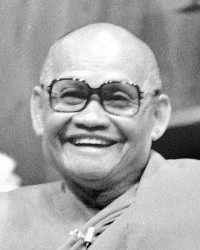
7. Story: Chanting sustains a long-time disciple of Ajahn Chah living as a businessman in Bangkok. Told by Ajahn Pasanno. [Ajahn Chah] [Lay life] [Culture/Thailand] [Chanting] // [Suffering]
13. “Could you say something about the fact that extreme hardship exists in the world?” Answered by Ajahn Pasanno. [Poverty ] [Compassion] // [Culture/Thailand]
Sutta: AN 4.162: Modes of Practice
Sutta: AN 8.2: Worldly Winds [Worldly Conditions]
Vinaya: Bhikkhu Pārājikā 1.2: The famine in Verañjā. [Buddha/Biography]
Recollection: The vast majority of 20th century Thai meditation masters are from the Northeast. They come from a region and area of great difficulty. [History/Thai Buddhism] [Thai Forest Tradition] [Patience] [Energy] [Faith]
Recollection: More Westerners came to study with Ajahn Chah than Central or Southern Thais. [Ajahn Chah] [History/Western Buddhist monasticism]
1. “What did you mean by ‘lifting up?’ Is it an object of attention?” Answered by Ajahn Pasanno. [Directed thought and evaluation] [Recollection ] // [Restlessness and worry] [Sloth and torpor] [Postures] [Energy]
Quote: “Namo viññāṇa dhātu (Homage to the element of consciousness).” — Ajahn Chah. [Ajahn Chah] [Consciousness] [Elements] [Knowing itself]
7. “You mentioned Ajahn Chah reflecting on viññaṇadhatu. Was this the consciousness of the six senses or something more fundamental like citta?” Answered by Ajahn Pasanno. [Ajahn Chah] [Consciousness] [Elements] [Sense bases] [Recollection] [Heart/mind] // [Release] [Liberation]
6. “How do we deal with a world full of view and opinions?” Answered by Ajahn Pasanno. [Views ] // [Idealism] [Conditionality] [Impermanence] [Truth]
Story: Sāriputta doesn’t approve of a teaching of the Buddha until he puts it into practice himself. Told by Ajahn Chah. [Great disciples] [Teaching Dhamma] [Direct experience] [Faith] [Ajahn Chah]
1. “Ajahn Chah was ill for the last ten years of his life. How could he endure that and why did this take place?” Answered by Ajahn Pasanno. [Ajahn Chah] [Sickness] // [Perfections] [Teaching Dhamma] [Saṅgha] [Death] [Monastic teachers] [Wat Pah Nanachat] [Upatakh] [Generosity]
6. “Is there something called fierce compassion in the Theravāda tradition? If so, how is that different from resentment or anger?” Answered by Ajahn Pasanno. [Fierce/direct teaching] [Compassion] [Theravāda] [Ill-will] [Aversion] // [Ajahn Mahā Boowa] [Suffering] [Teaching Dhamma] [Admonishment/feedback] [Spiritual bypass] [Ajahn Chah]
Story: Ajahn Chah calls newly-arrived Tan Pasanno lazy. [Ajahn Chah] [Ajahn Pasanno] [Chanting]
2. “During my sitting this morning, the thoughts keep arising one after the other. It seems endlessly. How do I notice, learn, and recognize thoughts as a function of the mind and not be affected by them? Also, how can one make use of skillful thoughts in meditation?” Answered by Ajahn Pasanno. [Restlessness and worry] [Proliferation] [Directed thought and evaluation] [Mindfulness of mind] [Recollection] // [Craving not to become] [Characteristics of existence] [Insight meditation] [Relinquishment] [Goodwill] [Patience] [Concentration] [Attitude]
Quote: “Kae nun lae (Thai) – It’s just that much.” — Ajahn Chah. [Ajahn Chah]
2. “I would appreciate further explanation of vitakka and vicāra.” Answered by Ajahn Pasanno. [Directed thought and evaluation ] // [Translation] [Investigation of states] [Bases of Success] [Desire] [Energy] [Heart/mind] [Calming meditation] [Hindrances] [Happiness]
Recollection: Ajahn Chah’s teachings about vitakka-vicāra. [Ajahn Chah]
2. “There is a constant sense of confusion underneath most of the experiences. Other defilements come and go, but moha of various form and intensity seems to be always present. Any suggestions?” Answered by Ajahn Pasanno. [Delusion ] [Unwholesome Roots] // [Mindfulness] [Clear comprehension] [Mindfulness of body] [Continuity of mindfulness]
Quote: “The mind is a liar and a cheat.” — Ajahn Chah. [Ajahn Chah] [Heart/mind] [False speech]
4. “How does one live in harmony with others who hold different views and have different understanding about things? How does one live in harmony with oneself when facing challenges?” Answered by Ajahn Pasanno. [Communal harmony ] [Views] // [Conflict] [Right Speech] [Delusion] [Patience] [Association with people of integrity] [Naturalness]
Quote: “Let the forest teach you. If you look around in the forest, there’s big trees, there’s little trees, there’s straight trees, there’s crooked trees, there’s vines. They all live together in harmony.” — Ajahn Chah. [Ajahn Chah] [Wat Pah Pong] [Culture/Natural environment] [Similes]
Reference: Amaravati Chanting Book, p. 46, Maṅgala Sutta: Don’t associate with fools.
1. Quote: “What is the essence of the Buddha’s teachings?” — “Is this a big piece of wood or a little piece of wood?” — Ajahn Chah. Quoted by Ajahn Pasanno. [Ajahn Chah] [Teaching Dhamma] [Conventions] // [Desire] [Four Noble Truths]
1. “You have so much community-building experience. Can you talk about what you have found challenging or effective in this? How did Ajahn Chah build community?” Answered by Ajahn Pasanno. [Community] [Ajahn Pasanno] [Ajahn Chah] // [Saṅgha] [Practicing in accordance with Dhamma] [Virtue] [Trust] [Communal harmony] [Compassion] [Culture/Thailand] [Ajahn Chah lineage] [Recollection/Saṅgha] [Sequence of training] [Wat Pah Nanachat] [Abhayagiri] [Eightfold Path] [Learning]
Sutta: MN 48.6: Kosambiya Sutta [Principles of Cordiality] [Goodwill] [Generosity] [Right View]
Story: Ajahn Pasanno pays respects to Ajahn Chah: “If you want to stay here, you have to stay at least five years.” [Ajahn Chah]
Quote: “The whole path of the Buddha is a path of learning, of education.”
7. “Your advice to leaders in the conflicts of 2021 in terms of the leaders themselves and how they can inspire their teams and communities?” Answered by Ajahn Pasanno. [Leadership] [Conflict] [Community] // [Trust] [Generosity] [Compassion] [Listening] [Ajahn Chah]
Quote: “Leadership always comes by example.”
Quote: “[Ajahn Chah] never asked us to do something that he himself wasn’t doing.” [Ajahn Chah]
9. Reflection by Ajahn Pasanno: Our warm relationship with the City of Ten Thousand Buddhas. [City of Ten Thousand Buddhas ] [Communal harmony] [Abhayagiri] // [Master Hsuan Hua] [Ajahn Sumedho] [Non-contention]
Story: Ajahn Sumedho is invited to teach from Master Hua’s Dhamma seat. [Teaching Dhamma]
Recollection: The first days of Wat Pah Nanachat. [Wat Pah Nanachat] [Ajahn Chah] [Ajahn Pasanno]
11. Reflection by Ajahn Pasanno: Ajahn Sumedho was a catalyst for Abhayagiri to happen. [Ajahn Sumedho ] [Abhayagiri] // [Western Ajahn Chah lineage] [Elders' Council]
Quote: “You should appreciate all that Ajahn Sumedho has done. He’s been the tank that has prepared the way for all the rest of you.” — Ajahn Chah. [Ajahn Chah] [Respect for elders] [Similes]
Comment by Ajahn Ñāṇiko: Ajahn Sumedho is the most senior American bhikkhu in the world.
13. Reflection by Ajahn Pasanno: Ajahn Chah is the inspiration for all of us. [Ajahn Chah] [Faith] // [Respect for elders] [Ajahn Pasanno] [Knowing itself] [Teaching Dhamma] [Simplicity]
Quote: “If buffaloes can learn, surely these farangs [foreigners] can learn.” — Ajahn Chah. [Ajahn Chah] [Western Ajahn Chah lineage]
15. Shedding, impermanence, and not-self: Reflections on moving to Amaravati by Ajahn Amaro. [Ajahn Amaro] [Impermanence] [Not-self] [Amaravati] [Abhayagiri] [Relinquishment] // [Lodging] [Ajahn Sumedho] [Travel] [Ajahn Pasanno] [Spaciousness]
Quote: “Die before you die.” — Ajahn Chah. [Ajahn Chah] [Death]
Quote: “The tone and flavor of Dhamma is bittersweet.” [Dhamma] [Grief] [Happiness]
6. “A question about Dogenji’s teaching: ‘To study the Buddha Way is to study the self. To study the self is to forget the self. To forget the self is to be actualized by myriad things. When actualized by myriad things your body and mind as well as the bodies and minds of others drop away. No trace of enlightenment remains, and this no trace continues endlessly.’ Can you reflect on this teaching from the Theravāda Thai Forest Teachings?” Answered by Ajahn Pasanno. [Dōgen] [Zen ] [Eightfold Path] [Not-self] [Liberation] [Theravāda] [Thai Forest Tradition] // [Teaching Dhamma] [Knowledge and vision] [Four Noble Truths] [Self-identity view] [Relinquishment] [Aggregates] [Proliferation] [Discernment] [Compassion]
Quote: “Everything is teaching us. Everything is a manifestation of Dhamma and truth.” — Ajahn Chah. [Ajahn Chah] [Dhamma] [Truth] [Suchness]
10. Recollections of almsround and learning Thai at Wat Pah Nanachat. Recounted by Ajahn Ñāṇiko. [Wat Pah Nanachat] [Almsround] [Ajahn Ñāṇiko] [Learning] [Thai]
Quote: “If you want to learn something, recite it every morning on almsround.” — Ajahn Chah. [Ajahn Chah]
3. “I remember reading in one of Ajahn Chah’s books about comparing our feelings to a snake with sadness and unhappiness at its head and happiness as its tail and how we should not touch any part of its body. … How can we just watch [feelings] come in and out of our mind without interacting with it or getting influenced by it?” Answered by Ajahn Pasanno. [Ajahn Chah] [Feeling] [Similes] [Happiness] [Suffering] [Equanimity] // [Appropriate attention]
Reference: “The Middle Way Within,” Collected Teachings of Ajahn Chah, p. 2.
3. Comment: Sīla (virtue) is like a compass. You know if you’re off. [Virtue]
Response by Ajahn Pasanno. [Suffering] [Feeling]
Quote: “The language of Dhamma is the language of feeling.” — Ajahn Chah. Quoted by Ajahn Pasanno. [Ajahn Chah] [Dhamma]
1. Ajahn Kovilo introduces Ajahn Pasanno with a brief biography. [Ajahn Pasanno] // [Western Ajahn Chah lineage] [Travel] [Wat Phleng Vipassanā] [Temporary ordination]
Ajahn Pasanno corrects the narrative. [Ordination] [Ajahn Chah] [Wat Pah Pong] [Mutual lay/Saṅgha support] [Wat Sai Ngam (Suphanburi)] [Ajahn Sumedho] [Vinaya]
Quote: “If you want to stay here, you have to stay at least five years.” — Ajahn Chah. [Ajahn Chah] [Sequence of training]
Recollection: The 1974 Māgha Pūjā gathering at Wat Pah Pong. [Festival days]
8. “Could you say a little more about that clarity? You talked about knowing that there is this factor of the truth of Dhamma? How do you be into that?” Answered by Ajahn Pasanno. [Knowledge and vision] [Truth] [Dhamma ] // [Cause of Suffering] [Unwholesome Roots]
Quote: “It’s intrinsic to us all, but we get in the way.”
Sutta: AN 1.49: “This mind, bhikkhus, is radiant, but it is defiled by adventitious defilements.” [Nature of mind]
Follow-up: “Does the academic speculation about AN 1.49 fall away when you’re actually practicing?” [Views] [Direct experience]
Quote: “First you have to know the Dhamma. Then you have to see the Dhamma. Then you have to be the Dhamma.” — Ajahn Chah. [Ajahn Chah] [Insight meditation] [Relinquishment] [Self-identity view]
Follow-up: “In Ajahn Chah’s progression of knowing Dhamma and seeing Dhamma and then being Dhamma, what is Dhamma in that context?”
10. “Is it possible to get enlightened living in a Muslim country where there are no monasteries?” Answered by Ajahn Pasanno. [Liberation] // [Dhamma online] [Association with people of integrity]
Quote: “You mean there are no good people in America?” — Ajahn Chah to Ajahn Sumedho. [Ajahn Chah] [Ajahn Sumedho] [Culture/West] [Virtue]
4. “How did it come to be that you ended up with Ajahn Chah? What was it like the first time you met him?” Answered by Ajahn Pasanno. [Ajahn Chah] [Ajahn Pasanno] // [Determination] [Wat Pah Pong]
Quote: (To himself) “Five years if five years. You’ve got to do it.”
6. “Were there any memories from that period of training with Ajahn Chah that really stand out in your mind? In what ways did you find it difficult?” Answered by Ajahn Pasanno. [Ajahn Chah] [Monastic life] [Wat Pah Pong] [Ajahn Pasanno] // [Poverty] [Requisites] [Posture/Sitting] [Monastic routine]
Quote: “It was difficult, but it was also very satisfying. It felt like exactly what I wanted to be doing and should be doing.” [Ardency] [Faith]
10. You were quite involved in Ajahn Chah’s funeral as well. I heard that a million Thai people visited during the funeral period. Comment by Sol Hanna. [Ajahn Chah] [Funerals] [Ajahn Pasanno] // [Trust]
Response by Ajahn Pasanno. [Building projects] [Ajahn Chah]
Follow-up: “How do you think it went?” Answered by Ajahn Pasanno. [Ajahn Chah] [Wat Pah Pong] [Lodging] [Food] [Eating after noon] [Not handling money] [Free distribution]
1. “In reference to the fragrance of the flower … There are many roses in the courtyard across the street. … Why do we cultivate beauty? Where does beauty arise from?” Answered by Ajahn Pasanno. [Beauty] // [Clinging] [Happiness] [Master Hsuan Hua] [Empathetic joy] [Unconditioned]
Sutta: MN 37: Sabbe dhamma nālaṃ abhinivesāya. (Nothing whatsoever should be clung to.)
Story: Ajahn Pasanno’s mother sends his old letters to Abhayagiri. [Ajahn Pasanno] [Abhayagiri]
Recollection: Ajahn Chah was unshakeable in the midst of all the things that were happening around him and responded warmly and compassionately to the people around him. [Ajahn Chah] [Equanimity] [Compassion] [Family] [Monastic life/Motivation]
2. “Did you get a little bit [of Ajahn Chah’s equanimity and warmth]? What’s it like?” Answered by Ajahn Pasanno. [Ajahn Chah] [Ajahn Pasanno] // [Monastic life/Motivation]
2. “What is meant by skillful?” Answered by Ajahn Pasanno. [Skillful qualities ] // [Unskillful qualities] [Happiness] [Tranquility] [Kamma] [Discernment]
Quote: “The language of Dhamma is the language of feeling.” — Ajahn Chah. [Ajahn Chah] [Dhamma] [Feeling]
4. “Am I what I feel? We have a lot of feelings as humans, and then a lot more feelings have come up since COVID. There’s a lot of depression, hurt feelings, regret, death, end of relation and of income, end of status. A lot of us want to know how to work with this or even change these really hard emotional states.” Answered by Ajahn Pasanno. [Emotion] [Human] [Self-identity view] [Pandemic] [Grief] // [Suffering] [Spiritual friendship] [Compassion]
Recollection: “Sometimes Ajahn Chah would consciously make things difficult for us. … He’s always pointing back to the heart.” [Ajahn Chah] [Fierce/direct teaching] [Heart/mind]
6. “Is there a right speed to silent walking?” Answered by Ajahn Pasanno. [Posture/Walking] // [Abhayagiri] [Postures] [Continuity of mindfulness]
Story: Jack Kornfield asks Ajahn Chah, “Whenever you teach walking meditation, you always teach the monks to walk slowly. But whenever you walk meditation, you walk really fast. [Ajahn Chah] [Jack Kornfield] [Teaching Dhamma] [Exercise]
Translations of sampajañña (clear comprehension) and its role in Dhamma practice. [Clear comprehension ] [Translation] [Mindfulness]
3. “Is there a time and place for intentionally breathing or using the breath as a means of calming the mind?” Answered by Ajahn Pasanno. [Volition] [Calming meditation] [Mindfulness of breathing] // [Tranquility] [Energy]
Sutta: MN 118.17: Ānāpānasati Sutta.
Recollection: To deal with the restless mind, Ajahn Chah taught to breath in deeply and not breathe out. [Restlessness and worry] [Ajahn Chah]
1. “How do Hsu Yun’s reflection ‘Who’s the guest and who’s the host?’ and Ajahn Chah’s metaphor of the one seat of awareness fit with [meditation practice]?” Answered by Ajahn Karuṇadhammo. [Master Hsu Yun] [Ajahn Chah] [Similes] // [Knowing itself] [Discernment] [Equanimity]
1. “After the mind has settled and I’m with the breath, the boundaries of the body disappear and the breath starts to be barely perceptible. When anxiety arises in this situation, is it a feeling or a sensation?” Answered by Ajahn Pasanno. [Tranquility] [Restlessness and worry] [Feeling] [Mindfulness of breathing] // [Pāli] [Emotion] [Volitional formations]
Quote: “You’re falling out of a tree. You don’t have to count all the branches as you go down. You just have to know it’s going to hurt when you hit the bottom.” Ajahn Chah [Ajahn Chah] [Dependent origination] [Similes] [Suffering]
Follow-up: “So I can just feel the feeling tone as unpleasant, pleasant, or neutral … ?” [Noting]
4. “Please speak about sense consciousness and how the release of attachment is achieved.” Answered by Ajahn Pasanno. [Sense bases] [Consciousness] [Clinging] [Relinquishment] // [Delusion] [Insight meditation] [Knowledge and vision] [Feeling] [Contact] [Drawbacks] [Compassion]
Quote: “Dhamma practice is not difficult. There are only two things you need to do: know and let go.” — Ajahn Chah. [Ajahn Chah] [Dhamma]
5. “How does one know the difference between appropriate grieving and honoring the memory of a beloved versus clinging and attachment?” Answered by Ajahn Pasanno. [Grief ] [Clinging] // [Cause of Suffering] [Self-identity view] [Spiritual urgency]
Recollection: Grieving for Ajahn Chah. [Ajahn Chah] [Ajahn Pasanno] [Recollection/Saṅgha]
Quote: “It’s that personalization of experience that gets us into trouble over and over again in different ways.” [Suffering]
8. “Can you offer practical advice for working with hindrances and cultivating sīla without taking it personally, that is, trying to perfect the personality?” Answered by Ajahn Pasanno. [Hindrances] [Virtue] [Self-identity view] // [Dhamma] [Relinquishment]
Quote: “Kae nun lae (Thai) – It’s just this much.” — Ajahn Chah. [Ajahn Chah] [Suchness]
21. “My husband died 10 years ago. There was sadness but also relief that his journey was over and sadness and relief for myself. I can still hear his advice regarding my medications. Is this clinging? He lives in my heart. What do you do with memories and teachings yourself?” Answered by Ajahn Pasanno. [Family] [Death] [Grief] [Memory] [Clinging]
Recollection: I still hear Ajahn Chah’s voice. [Ajahn Pasanno] [Ajahn Chah] [Dreams] [Ajahn Mahā Boowa]
4. “Would you be willing to share memories of Ajahn Chah?” Answered by Ajahn Pasanno. [Ajahn Chah] // [Ajahn Pasanno ] [Temporary ordination] [Personality] [Not-self] [Equanimity]
When asked about the core essence of the Buddha’s teachings, Ajahn Chah replies, “Is this a big stick or a little stick?” [Ajahn Chah] [Teaching Dhamma] [Conventions] [Cause of Suffering]
Story: Ajahn Chah pretends to forget simple questions in order to embarrass his translator. [Ajahn Chah] [Forest versus city monks] [Media] [Aversion] [Questions] [Translation] [Similes]
Recollection: Ajahn Pasanno writes to his family that he’s staying in Thailand because Ajahn Chah is peaceful, solid, clear, and unshakeable in the midst of all that’s going on around him. [Family] [Ajahn Chah] [Tranquility] [Clear comprehension]
1. “I know that everything changes, and the only thing we can do is accept or be fine with that. But then you have a lot of resistance to acceptance. What can we do with that resistance?” Answered by Ajahn Pasanno. [Impermanence] [Clinging] // [Naturalness] [Suffering] [Truth] [Patience] [Continuity of mindfulness]
Quote: So often Ajahn Chah would respond with the advice, “Just be patient.” [Ajahn Chah]
2. “When that flower is new, if we’re aware of its impermanence and we accept that and we know that it’s coming, is there any reason not to love the flower, appreciate its beauty, and accept it as a blessing?” Answered by Ajahn Pasanno. [Impermanence ] [Beauty]
Quote: A group of experienced Western Buddhists ask Ajahn Chah about Right View. He replies, “Right View is knowing that this cup is broken.” [Ajahn Chah] [Right View]
7. “At the San Francisco Zen Center, they chant the Heart Sutra daily: ‘No path, no knowledge, no attainment.’ Could you help me understand the paths we’re talking about here and Zen no-path?” Answered by Ajahn Pasanno. [Zen] [Eightfold Path] [Liberation] // [Unconditioned] [Relinquishment] [Buddha] [Truth] [Worldly Conditions]
Reference: The Heart of Prajna Paramita Sutra.
Reference: Vijjācaraṇa-sampanno in the Morning Chanting. [Recollection/Buddha]
Quote: “Right view is knowing that this is a broken glass.” — Ajahn Chah. [Ajahn Chah] [Right View] [Impermanence]
3. “Does the concept of refuge in Buddhism contain an element of grace?” Answered by Ajahn Pasanno. [Three Refuges ] [Theravāda] [Hinduism] // [Relinquishment] [Knowing itself] [Truth]
Quote: “Did you come here to die?” — Ajahn Chah’s greeting to newcomers. [Ajahn Chah] [Death] [Liberation] [Self-identity view]
Quote: “If you really understood refuge in Buddha, Dhamma, and Saṅgha, there wouldn’t be a time when you bowed without bursting into tears of gratitude and devotion.” — Ajahn Chah. [Ajahn Chah] [Bowing ] [Gratitude ] [Ajahn Jayasaro]
1. “What is the translation of sabbaṃ dukkhaṃ? The way you translate it seems psychological. In Sanskrit, dukkhaṃ means out of the cosmic flow of Dhamma. But perhaps dukkhaṃ is best left untranslated. If untranslated, does dukkhaṃ mean the same thing in Buddhism and Advaita Vedanta?” Answered by Ajahn Pasanno. [Suffering] [Pāli] [Equanimity] [Dhamma] [Translation] [Advaita Vedanta] // [Thai] [Human] [Aggregates] [Clinging ] [Knowing itself] [Relinquishment]
Ancient etymology of dukkha: du = bad, unwanted, unpleasant, uncomfortable, not easy; kha = where the axle fits into the wheel. [Language] [History/Indian Buddhism]
Sutta: SN 56.11.4: Dhammacakkappavattana Sutta (Chanting Book translation)
Teaching: The four forms of clinging. [Clinging ] [Sensual desire] [Impermanence] [Naturalness] [Happiness] [Neutral feeling] [Attachment to precepts and practices] [Views] [Doctrine-of-self clinging] [Not-self]
Quote: “Nibbāna is the reality of non-grasping.” — Ajahn Chah. [Ajahn Chah] [Nibbāna] [Cessation of Suffering]
1. “What should one consider when looking for a teacher or guru to guide one’s personal journey?” Answered by Ajahn Pasanno. [Teachers ] [Mentoring] [Discernment] // [Ajahn Chah] [Determination] [Truth] [Perfectionism] [Personality]
Quote: “I saw many people show up [at Wat Pah Pong] with their list of what they thought a perfect teacher should be. … and they would leave.” [Ajahn Chah]
Quote: “It is only when we are willing to give ourselves to truth or reality that the teacher makes sense.” [Relinquishment]
2. Quote: “Nibbāna is realizing the reality of non-grasping.” — Ajahn Chah. Quoted by Ajahn Pasanno. [Ajahn Chah] [Nibbāna]
3. “Why don’t we concentrate not so much on personal liberation, but think more about our practice? What are your thoughts about the Bodhisattva ideal, thinking of others all the time rather than achievement or personal liberation?” Answered by Ajahn Pasanno. [Liberation] [Bodhisattva] [Compassion] [Nibbāna]
Quote: “Thinking of yourself is isolating. Thinking of others is proliferating. … Suffering is an experience rather than a conceptualization.” [Self-identity view] [Proliferation] [Suffering]
Quote: “Don’t be an arahant. Don’t be a Bodhisattva. Don’t be anything at all. As long as you’re anything or anybody, you are going to suffer. And as long as you’re suffering, you’re going to be sharing that out with everyone else as well.” — Ajahn Chah. [Ajahn Chah] [Arahant]
1. Reflection by Ajahn Pasanno: There is no such thing as the Ajahn Chah method of meditation. [Meditation/Techniques ] [Ajahn Chah] // [Teaching Dhamma] [Self-reliance]
2. Quote: “Be very careful what you build, because you’ve got to look after it.” — Ajahn Chah. Quoted by Ajahn Pasanno. [Ajahn Chah] [Building projects] [Lodging] // [Simplicity]
3. Ajahn Chah emphasized the importance of sīla during his second trip to the West. [Culture/West] [Virtue] [Ajahn Chah] // [Communal harmony]
Quote: “Teaching Buddhism without sīla is like sending someone out in the open sea in a leaky boat.” — Ajahn Chah. [Ajahn Chah] [Similes]
Simile: A millipede’s many legs all work together in harmony.
5. Reading: Ajahn Mun answers Ajahn Chah’s questions about Vinaya. Read by Ajahn Pasanno. [Ajahn Mun] [Vinaya] [Ajahn Chah] // [Commentaries] [Conscience and prudence] [Simplicity] [Mindfulness]
Reference: “Understanding Vinaya,” Collected Teachings of Ajahn Chah, pp. 533-534.
The meaning of hiri-otappa. [Translation] [Respect]
6. Recollection: Ajahn Chah taught that the precepts are a mirror for the mind to understand the intention behind actions of body, speech, and mind. Recounted by Ajahn Pasanno. [Precepts] [Virtue] [Volition] [Ajahn Chah]
8. Ajahn Chah greets Jack Kornfield: “I hope you’re not afraid to suffer.”Quoted by Ajahn Pasanno. [Ajahn Chah] [Jack Kornfield] [Suffering] [Fear] // [Isan] [Ajahn Pasanno] [Relinquishment] [Faith]
10. Quote: “You can go back to your cave and learn to be peaceful there, or you can stay here and learn how to be peaceful anywhere.” — Ajahn Chah. Quoted by Ajahn Pasanno. [Ajahn Chah] [Tranquility] [Seclusion] [Equanimity] // [Upatakh]
1. “Please tell us where the nuns [attending this event] are from?” Answered by Ajahn Pasanno. [Bhikkhunī] // [Aranya Bodhi Hermitage] [Dhammadharini Monastery] [Ayya Tathālokā] [Ajahn Mahā Prasert] [Lodging]
Story: Ajahn Chah tells the early Wat Pah Nanachat monks to clear the underbrush. [Ajahn Chah] [Wat Pah Nanachat]
4. “How did Ajahn Chah speak about non-self and consciousness?” Answered by Ajahn Pasanno. [Ajahn Chah] [Not-self] [Consciousness] // [Impermanence] [Doctrine-of-self clinging] [Language] [Thai ] [Pāli] [Sense bases] [Unestablished consciousness] [Knowing itself] [Cessation of Suffering]
Quote: “One of the beauties of the Thai language is that it is wonderfully imprecise. … It’s a feeling language.” [Thai ] [Proliferation]
Story: George Sharp asks Ajahn Chah why he teaches “Buddho” all the time. Ajahn Chah responds, “Namo viññāṇa dhātu” [Homage to the element of consciousness]. [George Sharp] [Ajahn Chah] [Buddho mantra] [Elements]
5. “Can you give some context to the story of Ajahn Chah getting angry and yelling at a monk and then regretting it, practicing with it?” Answered by Ajahn Pasanno. [Ajahn Chah] [Aversion] // [Unwholesome Roots] [Fierce/direct teaching] [Protocols]
Recollection: Ajahn Chah said that it wasn’t until he took on the responsibility of teaching others that he really gained wisdom. [Ajahn Chah] [Teaching Dhamma] [Discernment]
Reference: “Toilets on the Path,” Collected Teachings of Ajahn Chah, p. 723.
6. “You mentioned that often Ajahn Chah pushed his students through their suffering in order to help them let go. Can you share specific examples of this happening?” Answered by Ajahn Pasanno. [Ajahn Chah] [Suffering] [Teaching Dhamma] [Relinquishment]
Story: A restless ex-monk asks to reordain. Ajahn Chah says he will keep him as an anagārika for seven years. [Ajahn Chah] [Restlessness and worry] [Postulants] [Sequence of training]
Story: After one year, the restless monk asks to go tudong. [Tudong] [Ajahn Chah]
7. “You mentioned how much Ajahn Chah emphasized the importance of letting go. As a lay person, how do we do that? And how do we reconcile letting go with being kind to ourselves? For instance, it could be seen as a kindness to oneself to listen to one’s favorite music or eat one’s favorite foods.” Answered by Ajahn Pasanno. [Ajahn Chah] [Relinquishment] [Lay life] [Compassion] // [Right Effort] [Idealism] [Eight Precepts] [Contentment]
Story: A monk practices letting go by not fixing his roof. [Ajahn Chah] [Lodging]
1. Quote: [Pointing to his heart] “It’s all here” — Ajahn Khao to Ajahn Sumedho. Quoted by Ajahn Pasanno. [Ajahn Khao] [Ajahn Sumedho] [Knowing itself] // [Ajahn Chah] [Ajahn Mahā Amorn] [Isan]
2. Simile from Ajahn Chah: The mind is like a bell struck by sense contact and moods. Related by Ajahn Pasanno. [Ajahn Chah] [Nature of mind] [Contact] [Moods of the mind] [Similes] // [Knowing itself]
3. Similes from Ajahn Chah: The natural state of the mind is like clear water or a still leaf. Related by Ajahn Pasanno. Read by Ajahn Pasanno. [Ajahn Chah] [Nature of mind] [Similes] // [Contact] [Feeling] [Moods of the mind] [Knowing itself]
Reference: “A Gift of Dhamma,” Collected Teachings of Ajahn Chah, p. 226.
4. Quote: “Mindfulness is the graveyard of all things.” — Ajahn Chah. Quoted by Ajahn Pasanno. [Ajahn Chah] [Mindfulness] [Cessation] // [Self-identity view] [Proliferation] [Compassion]
5. Story: A woman asked Ajahn Chah if she would have to give up listening to music to practice Buddhism. Ajahn Chah replied that learning to listen to the peaceful heart would be more pleasurable and satisfying. Told by Ajahn Pasanno. [Ajahn Chah] [Artistic expression] [Tranquility] [Happiness] // [Cessation] [Nature of mind]
Reference: Recollections of Ajahn Chah, p. 52.
Quote: “That quality of being without boundaries can be so peaceful. It’s much more compelling.” [Spaciousness]
Sutta: AN 3.32: “This is peaceful, this is sublime …”
6. Ajahn Chah’s letter to Ajahn Sumedho: “Whenever you have feelings of love or hate for anything whatsoever, these will be your aides and partners in building pārami. The Buddha Dhamma is not to be found in moving forwards, nor in moving backwards, nor in standing still. This, Sumedho, is your place of non-abiding.” [Ajahn Chah] [Ajahn Sumedho] [Feeling] [Perfections] [Dhamma] [Emptiness] // [Self-identity view ] [Knowing itself]
Quote: “As long as we’re willing to be a somebody, we’ve got to be willing to suffer. We volunteered.” [Self-identity view ] [Suffering]
7. Story: When asked to teach about vipassanā, Ajahn Chah instructed practitioners to observe a wilting flower. Told by Ajahn Pasanno. [Ajahn Chah] [Insight meditation ] [Impermanence] // [Thai Forest Tradition] [Liberation] [Manjushri Institute]
8. Quote: “Samādhi is the one-pointed mind fixed on the point of balance.” — Ajahn Chah. Quoted by Ajahn Pasanno. [Ajahn Chah] [Concentration ] [Unification] [Equanimity]
Quote: “Samādhi is a holiday for the heart.” — Ajahn Chah. [Ajahn Chah] [Heart/mind] [Ajahn Sumedho]
1. “What was your experience of Ajahn Chah’s personality and character? What was most inspiring about how he conducted himself?” Answered by Ajahn Pasanno. [Ajahn Chah ] [Personality] [Personal presence] // [Teaching Dhamma] [Admonishment/feedback] [Not-self] [Equanimity] [Humor]
Quote: “If you tried to create a CV for what a Bodhisattva should be, Luang Por Chah would fit that bill.” [Ajahn Chah ] [Bodhisattva]
Story: Ajahn Pasanno chose to stay with Ajahn Chah for five years because he aspired to Ajahn Chah’s unshakeability. [Ajahn Pasanno] [Ajahn Chah ] [Wat Pah Nanachat]
Story: Ajahn Chah gave the farang monks playful Thai names. [Ajahn Chah ] [Thai] [Ajahn Sumedho] [Ajahn Amaro]
6. “What personal obstacles, either internal or external have you used as dhammas, stepping stones to lift yourself up and go beyond it?” Answered by Ajahn Pasanno. [Ajahn Pasanno] [Long-term practice] // [Fear ] [Ajahn Chah] [Impermanence] [Mindfulness of body] [Knowing itself]
Quote: “The anxious and fearful mind is always trying to find some certainty somewhere. And of course it isn’t anywhere at all except in this present moment and in the quality of awareness that we have. But the personality doesn’t believe that for a long time.” [Present moment awareness]
Quote: “Be careful of believing your mind because it’s a liar and a cheat.” — Ajahn Chah. [Ajahn Chah] [Nature of mind]
11. “Whatever you do, if you do it with care and attention, it takes longer. If I rush, the task would not be done so well. How do we give care and attention in a quick manner?” Answered by Ajahn Pasanno. [Mindfulness] [Clear comprehension] [Time management] // [Right Mindfulness] [Ardency]
Story: A man moves so slowly paying care and attention that he annoys his family. [Family]
Quote: “A good thief is really mindful.” Ajahn Chah [Ajahn Chah]
13. “When you started teaching and taking on the role of leader of a community, did that affect the way you related to your own practice because you were being seen by others, having to be more careful about conduct?” Answered by Ajahn Pasanno. [Ajahn Pasanno] [Abbot] [Leadership] // [Wat Pah Nanachat] [Ajahn Chah] [Fear] [Faith] [Culture/Thailand]
Ajahn Chah always emphasized, “Whatever you’re doing, you have to learn from it.” [Ajahn Chah] [Learning]
1. Comment: I was thinking about our obsession to create things. We create our world out of the things that we create. So Nibbāna being no thing-ness seems just right. [Proliferation] [Nibbāna] [Non-identification]
Response by Ajahn Amaro. [Volitional formations] [Conventions] [Impermanence] [Philosophy] [Aggregates] [Insight meditation] [Suffering]
Quote: “The things of this world are merely conventions of our own making …” — Ajahn Chah in Convention and Liberation. [Ajahn Chah]
2. “Something that I’ve noticed is that my wish to translate something differently at one point in my practice changes later when I realize, ‘Hmm … perhaps I’m just trying to get around the point.’ I feel uncomfortable with that translation and then later on realize I have to practice with this one. Does that sometimes happen to you?” Answered by Ajahn Amaro. [Hearing the true Dhamma] [Translation ] // [Truth]
Story: Jack Kornfield translates for Ajahn Chah at Insight Meditation Center and puts his own spin on the precepts. Ajahn Chah figures it out. [Jack Kornfield] [Ajahn Chah] [Joseph Kappel] [Insight Meditation Society] [Precepts]
8. “Coming back to Arahantship, as Chris was mentioning, you’re not supposed to talk about your attainments, but is there a notion of how likely it is happening nowadays in the monastic community?” Answered by Ajahn Amaro. [Arahant] [Vinaya] [Saṅgha] // [Ajahn Chah]
Quote: “Why do you want to know if I’m an arahant? It would be better for your to explore why you are not.” — Ajahn Chah. [Ajahn Chah]
3. “How do you tell the difference between genuine insight and conceptual fabrication?” Answered by Ajahn Amaro. [Insight meditation] [Proliferation] // [Cessation of Suffering] [Spiritual friendship] [Suffering] [Lawfulness] [Doubt] [Stream entry] [Self-reliance]
Follow-up: “The fact that it can’t be verified intuitively makes me uncomfortable. I can see how that would lead to delusion of falsity.” [Delusion]
Story: Ajahn Sumedho asks Ajahn Chah whether he [Ajahn Sumedho] is a stream enterer. [Ajahn Sumedho] [Ajahn Chah]
4. “I’ve been pondering Ajahn Chah’s phrase, ‘Right but not true; true but not right.’ I’ve never been able to figure our ‘Right but not true.’ …” Answered by Ajahn Amaro. [Ajahn Chah] [Truth] // [Clear comprehension]
Quote: “You are right in fact but wrong in Dhamma.” — Ajahn Chah. [Ajahn Chah] [Dhamma]
Story: Ajahn Sumedho reports Ajahn Buddhadāsa’s different approach to Vinaya to Ajahn Chah. [Ajahn Sumedho] [Ajahn Buddhadāsa] [Vinaya] [Ajahn Chah]
Story: Ajahn Sumedho criticizes an outspoken monk’s loud speech at Pāṭimokkha. The monk leaves Wat Pah Pong soon after. [Harsh speech] [Admonishment/feedback] [Ajahn Chah]
2. “Does Ajahn Chah’s phrase, ‘Right in fact but wrong in Dhamma,’ imply that there is an objective world of facts and then a world above that which is Dhamma?” Answered by Ajahn Amaro and Ajahn Pasanno. [Ajahn Chah] [Truth] [Dhamma] // [Etymology] [Conventions] [Ajahn Sumedho] [Harsh speech]
Note: This phrase was discussed during the previous session.
Stories about the Buddha’s disciples who had killed people. [Great disciples] [Killing]
Suttas: MN 86: Aṅgulimāla Sutta; the story of Kuṇḍalakesī (Commentary to Dhp 102-103, Dhamma Verses Commentary translated by E. W. Burlingame and Ānandajoti Bhikkhu, p. 500).
Recollection: The lay disciple Pansak would sometimes show up drunk after work and spend the night under Ajahn Chah’s kuti. Recounted by Ajahn Pasanno. [Lay supporters] [Intoxicants] [Ajahn Chah]
Story: The monk Por Suey had been a hit man hired to kill Ajahn Chah. [Ajahn Chah lineage] [Crime] [Ajahn Chah] [Wat Pah Nanachat]
3. “I don’t have any clear memory of past lives, and I’m happy not to overly speculate about that. But some monks suggested that you need to take on the doctrine of rebirth as part of Right View. Do you have any thoughts about this?” Answered by Ajahn Amaro and Ajahn Karuṇadhammo. [Rebirth ] [Right View] // [Self-reliance] [Ajahn Amaro] [Four Noble Truths] [Ajahn Chah] [Becoming]
Sutta: MN 117.6: Definition of Right View.
Quote: “You don’t have to believe in past lives or future lives in order to be a practicing Buddhist, do you?” — The Dalai Lama. Quoted by Ajahn Amaro. [Dalai Lama] [Buddhist identity]
Story: Ajahn Chah describes the supernatural beings who live at Wat Pah Pong to two sincere Dhamma practitioners, then refuses to answer inquiries about this topic by a group from Bangkok. Told by Ajahn Pasanno. [Ajahn Chah] [Non-human beings] [Wat Pah Pong]
4. “When developing disenchantment and dispassion by seeing the way things are, how do we not go to the extreme of aversion or the craving of unbecoming?” Answered by Ajahn Pasanno and Ajahn Karuṇadhammo. [Disenchantment] [Dispassion] [Aversion] [Craving not to become] // [Suffering] [Four Noble Truths]
Story: Ajahn Chah prods Ajahn Pasanno to reflect on suffering. Told by Ajahn Pasanno. [Ajahn Chah] [Ajahn Pasanno]
5. “How do we distinguish the nuances of happiness and suffering?” Answered by Ajahn Pasanno. [Happiness] [Suffering] // [Language]
Reflection: Any language is always a problem.
Quote: “The language of Dhamma is the language of feeling.” — Ajahn Chah. [Ajahn Chah] [Dhamma] [Feeling]
1. “Would you say that with the ending of greed, hatred, and delusion that these are eradicated and don’t arise anymore?” Answered by Ajahn Pasanno. [Unwholesome Roots] [Cessation] // [Knowledge and vision] [Cause of Suffering] [Buddha] [Arahant]
Follow-up: “We hear sometimes that it arises, but the person isn’t grasping it.”
Comment by Ajahn Karuṇadhammo: This is similar to Ajahn Chah’s declaration, “Yes, I have a lot of anger, but I don’t pick it up.” [Ajahn Chah] [Aversion] [Relinquishment]
Story: Ajahn Chah explains that the many lines in his palm mean that he had lots of suffering. [Ajahn Chah] [Suffering] [Ajahn Vīradhammo] [Teaching Dhamma] [Discernment]
3. “Was there a Winter Retreat where Ajahn Chah had the community practice midnight vigils every night? Were you there at that time?” Answered by Ajahn Pasanno. [Ajahn Chah] [Devotion to wakefulness] [Ajahn Pasanno] // [Rains retreat] [Sitter's practice]
Quote: “Ajahn Chah fired up. That’s pretty scary.” [Ajahn Chah]
1. “Could [the principles in AN 3.102] also be related to practicing ānāpānasati?” Answered by Ajahn Pasanno. [Investigation of states] [Right Effort] [Mindfulness of breathing]
Quote: “Dhamma is that which is just right.” — Ajahn Chah. [Ajahn Chah] [Dhamma]
Quote: “Dhamma is neither high nor low, not dark or light, not tall or short. It’s just right.” — Ajahn Kinaree. [Ajahn Kinaree] [Middle Path]
3. “Typically it seems that Luang Por Sumedho uses more passive language [in regards to abandoning defilements]. Lately I’ve come across teachings from Ajahn Geoff and Ajahn Chah that use much more aggressive language, even ‘go to war with your defilements.’ It seems contradictory to me.” Answered by Ajahn Pasanno. [Ajahn Sumedho] [Ajahn Ṭhānissaro] [Ajahn Chah] [Language] [Unwholesome Roots] // [Teaching Dhamma] [Culture/West ]
Recollection: A Westerner asks Ajahn Chah why he scolds the Thai monks more than the Western monks. [Ajahn Chah] [Monastic life] [Fierce/direct teaching] [Guilt/shame/inadequacy]
Comment by Sister Ñāṇasirī: “In Thailand, we can be extremely lax, so we need a little bit more push.” [Culture/Thailand]
Recollection: Ajahn Chah would rarely speak in personal terms. Instead he tried to get people to reflect on how we can take Dhamma as a refuge. Recounted by Ajahn Kaccāna and Ajahn Pasanno. [Ajahn Chah] [Dhamma] [Ajahn Mahā Boowa]
3. “I have the impression that Ajahn Chah concentrated on direct realization and the practice of meditation. He didn’t recommend reading too much, but instead reading our mind. You mentioned the 37 faculties/tools to purify our mind. For a lay person, this is a long study. Is it enough for us as laypeople to just have the practice of being here now?” Answered by Ajahn Pasanno. [Ajahn Chah] [Meditation] [Aids to Awakening] [Lay life] [Present moment awareness] // [Paul Breiter] [Four Noble Truths] [Right View] [Faith] [Learning]
Quote: “There needs to be a catalyst. We have to challenge the mind. That’s where the structure of the teachings is important.” [Teaching Dhamma] [Delusion]
Follow-up: “If we practice meditation, does understanding come naturally?” [Discernment]
Response by Ajahn Pasanno and Ajahn Karuṇadhammo. [Liberation] [Spiritual friendship] [Appropriate attention] [Tranquility] [Relinquishment]
Story: Ajahn Sumedho spends his first year as a monk in solitary meditation reading only Word of the Buddha by Venerable Ñāṇatiloka (pdf unavailable). [Ajahn Sumedho] [Monastic life]
Follow-up: “Having kids is a big structure.” [Children]
Response by Ajahn Pasanno.
6. Quote: “Whenever you have feelings of love or hate for anything whatsoever, these will be your aides and partners in building pārami. The Buddha Dhamma is not to be found in moving forwards, nor in moving backwards, nor in standing still. This, Sumedho, is your place of non-abiding.” — Ajahn Chah’s only letter to Ajahn Sumedho. Quoted by Ajahn Pasanno. [Ajahn Chah] [Ajahn Sumedho] [Greed] [Aversion] [Perfections] [Dhamma] [Middle Path ] // [Relinquishment] [Knowing itself]
1. Teaching by Ajahn Pasanno: The satipaṭṭhāna insight formula is a pointer to atammayatā. [Right Mindfulness] [Insight meditation] [Non-identification] // [Ajahn Buddhadāsa] [Translation]
Sutta: MN 10.37: “Or else mindfulness that ‘there are mind objects’ is simply established in him to the extent necessary for bare knowledge and awareness. And he abides independent, not clinging to anything in the world.
Quote: “You don’t have to go and study every tree in the forest.” — Ajahn Chah. [Ajahn Chah] [Similes]
Reference: Mindfulness: A Practical Guide to Awakening by Joseph Goldstein (commercial).
Follow-up: “Do you think that the not-self perception is the precursor to the experience of atammayatā?” [Not-self] [Relinquishment]
4. “How does atammayatā relate to Ajahn Chah’s simile about oil and water, the mind and the mind objects being separate?” Answered by Ajahn Amaro and Ajahn Pasanno. [Non-identification] [Ajahn Chah] [Similes ] [Nature of mind]
Quote: “Inside is Dhamma, outside is Dhamma, everything is Dhamma.” — Ajahn Chah. Quoted by Ajahn Amaro. [Ajahn Chah] [Dhamma]
Quote: “All symbols and similes are partially relevant. All analogies are partial.” — Ajahn Amaro. [Symbolism/metaphor]
3. “When the mind rests in awareness and it’s not going out, it feels very natural. It knows that this is the place to be, but still over and over again, no matter how clearly it sees this pure quality and peaceful quality, it still goes out to thoughts. The mind keeps going out. It keeps grabbing, it keeps identifying, even though it knows this is dukkha.” Answered by Ajahn Amaro and Ajahn Pasanno. [Knowing itself] [Clinging] [Suffering] [Long-term practice] // [Noting] [Mindfulness of mind] [Idealism] [Discernment] [Food] [Feeling] [Birth]
Quote: “It’s just that much.” — Ajahn Chah. [Ajahn Chah]
6. “According to what you read in the book (The Island by Ajahn Pasanno and Ajahn Amaro, p. 123-124; MN 18.16-19), first there is contact and then phassa and vedanā. So first when we have contact there is no self yet. For example, if I contact something painful, at that time I feel I have no self, and then when I feel painful there is still no self, but then I feel like, ‘Oh, I don’t like this painfulness,’ the desire not to have it. Is feeling more self related with desire? It always comes together or not always?” Answered by Ajahn Amaro. [Contact] [Feeling] [Pain] [Self-identity view] [Craving] // [Clinging] [Mindfulness of feeling] [Ascetic practices] [Heedfulness]
Sutta: Ud 1.10: Bāhiya.
Sutta: AN 10.58: “Rooted in interest are all things. …”
Reference: Catastrophe/Apostrophe by Ajahn Amaro, p. 139.
Quote: “Just a few more things for you to let go of.” — Ajahn Chah’s response to Jack Kornfield’s description of his travels and meditation experiences. [Ajahn Chah] [Jack Kornfield] [Relinquishment] [Conceit] [Restlessness and worry]
4. Question about associating with and clinging to wholesome and conducive environments. Answered by Ajahn Amaro and Ajahn Pasanno. [Skillful qualities] [Clinging] [Spiritual friendship] // [Suffering] [Knowing itself] [Discernment] [Amaravati] [Ajahn Chah]
Quote: “If you seek for security in what is insecure, you are bound to suffer.” — Ajahn Chah. Quoted by Ajahn Amaro. [Ajahn Chah] [Impermanence]
Quote: “Wanting what’s good without stop. That’s a disease of the mind.” — Ajahn Mun, Ballad of Liberation from the Khandhas. Quoted by Ajahn Amaro. [Ajahn Mun] [Craving]
Quote: “Live simply; be natural.” — Ajahn Chah. Quoted by Ajahn Amaro. [Ajahn Chah] [Simplicity]
Story: A sincere practitioner’s family complains about his way of being mindful. Told by Ajahn Amaro. [Mindfulness] [Everyday life] [Pace of life]
10. “If you are constantly around someone who engages you with prolonged and agitated discussion, how do you handle that?” Answered by Ajahn Amaro and Ajahn Pasanno. [Idle chatter] // [Mindfulness] [Clear comprehension] [Admonishment/feedback]
Sutta: MN 2: Sabbāsava Sutta.
Quote: “Never give feedback to your fellow samaṇas before the meal.” — Ajahn Chah. Quoted by Ajahn Pasanno. [Ajahn Chah] [Monastic life]
Quote: “We can be completely mindful of taking initiative. Our capacity to act is part of the way things are.” — Ajahn Amaro. [Right Action ] [Discernment] [Right Mindfulness] [Buddha/Biography]
5. Story: Ajahn Chah explains the many lines on his palm: “Yeah, I’ve had a lot of suffering. Otherwise I wouldn’t be able to teach you.” Told by Ajahn Pasanno. [Ajahn Chah] [Suffering] [Teaching Dhamma] // [Ajahn Vīradhammo]
6. Quote: “Scary ride, eh?” — Ajahn Chah. Quoted by Ajahn Amaro. [Ajahn Chah] [Fear] // [Jack Kornfield] [Geography/Thailand]
7. “What is the difference between unsupported and unsupportive [consciousness]?” Answered by Ajahn Amaro and Ajahn Pasanno. [Unestablished consciousness] // [Direct experience] [Ajahn Sumedho] [Self-identity view] [Appropriate attention]
Reference: The Island by Ajahn Pasanno and Ajahn Amaro, p. 133.
Quote: “We say the mind is empty, but it’s actually full of wisdom.” — Ajahn Chah. Quoted by Ajahn Amaro. [Ajahn Chah] [Emptiness] [Discernment]
Reference: Wisdom Develops Samādhi by Ajahn Mahā Boowa
3. Reflections by Ajahn Amaro and Ajahn Pasanno about the Dhamma and Vinaya aspects of dependence. [Dhamma] [Vinaya] [Dependence] // [Middle Path] [Four Noble Truths]
Sutta: Snp 752-753: “There is danger in dependence.” [Clinging]
Quote: “The Dhamma is all about letting go, and the Vinaya is all about holding on. When you figure out how these work together, you’ll be fine.” — Ajahn Chah. Quoted by Ajahn Amaro. [Ajahn Chah] [Ajahn Sumedho] [Relinquishment]
6. Recollection: Ajahn Chah’s advice for establishing mindfulness in the midst of strong emotions. Recounted by Ajahn Amaro and Ajahn Pasanno. [Ajahn Chah] [Mindfulness] [Emotion] // [Ajahn Amaro] [Food] [Suffering] [Conditionality] [Equanimity] [Mindfulness of body] [Greed]
Story: Ajahn Chah eats 37 mangoes. [Ajahn Chah]
3. “Is there a difference between citta and poo roo?” Answered by Ajahn Pasanno and Ajahn Amaro. [Heart/mind ] [Knowing itself] [Nature of mind] // [Thai] [Language] [Proliferation] [Dhamma] [Buddha] [Ajahn Amaro] [Dhamma books]
Quote: “If there’s anything left, just throw it to the dogs.” — Ajahn Chah. Quoted by Ajahn Amaro. [Ajahn Chah] [Relinquishment]
4. Story: Huineng evades his pursuers with a koan. Told by Ajahn Amaro. [Koan] [Huineng]
Follow-up: “Do you know why Huineng returned after sixteen years?”
Recollection: Ajahn Buddhadāsa translated a few Chinese Buddhist texts into Thai. [Ajahn Buddhadāsa] [Translation] [Ajahn Chah]