
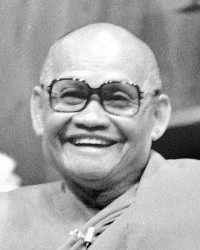
4. Story: Ajahn Chah struggles through lust with patience. Told by Ajahn Pasanno. [Ajahn Chah] [Sensual desire ] [Patience] [Tudong] // [Ajahn Pasanno] [Human] [Meditation/Techniques] [Impermanence]
Quote: Ajahn Chah to biographer: “If you don’t put that in the book, don’t bother printing it.” [Ajahn Chah] [Dhamma books]
Quote: “If you ordain as a monk, your defilements ordain with you.” — Ajahn Chah. [Ajahn Chah] [Monastic life] [Unwholesome Roots]
5. Quote: “You’re inspired, and you put forth effort. You’re depressed and fed up, and you put forth effort. You’re rested, and you put forth effort. You’re tired, and you put forth effort. ” — Ajahn Chah. Quoted by Ajahn Pasanno. [Ajahn Chah] [Right Effort] [Ardency] [Faith] [Tudong] [Depression] [Sloth and torpor] // [Gladdening the mind]
5. “Was Ajahn Chah an arahant? How can one tell when someone’s work is done? Also, is it inappropriate to ask one’s teacher if they are a stream enterer, once-returner, etc.?” Answered by Ajahn Pasanno. [Ajahn Chah] [Arahant ] [Teachers] [Stages of awakening] // [Suffering] [Unwholesome Roots]
Quote: “To me, I’m more like a tree that birds can come and feed in. … [What they say] I am is just the chattering of the birds.” — Ajahn Chah. [Ajahn Chah] [Similes] [Teaching Dhamma]
Sutta: AN 4.192: Discerning another person’s wisdom. [Discernment]
Recollections of mistaken estimates of enlightenment. [Ajahn Pasanno] [Delusion] [Relics]
17. “Could you please talk about Shakyamuni Buddha, whose teaching we learn, and the ones before him, and the one to come Maitreya? Are the teachings the same? What is important for us to know about the Buddhas?” Answered by Ajahn Pasanno. [Buddha] [Previous Buddhas] [Metteyya Bodhisatva] // [Naturalness] [Teaching Dhamma] [Discernment] [Goodwill]
Reference: Amaravati Chanting Book Volume 2, p. 54: The Twenty-Eight Buddhas’ Protection. [Protective chants]
Quote: “Ajahn Chah had tremendous lovingkindness, and because of that he had many, many people coming to him all the time. I’m going to focus on equanimity.” — Ajahn Liem. [Ajahn Liem] [Wat Pah Pong] [Ajahn Chah] [Equanimity]
4. “A small window of anatta has opened. It is very fresh, light, and breezy, but the opening is small, and the rest of the window is caked with so much dirt and grime. I’m fearful that outside of the support of retreat, it could close. Even now it feels like it is opening and closing. How to best proceed?” Answered by Ajahn Pasanno. [Not-self] [Symbolism/metaphor] [Fear] [Meditation retreats] // [Insight meditation] [Restlessness and worry] [Proliferation]
Quote: “The best thing is not claiming ownership over that insight. … Pay attention to the feeling of it.” [Non-identification] [Direct experience ] [Feeling]
Quote: “If you just stick your finger in the warm water, then you’ll know what warm water is.” — Ajahn Chah. [Ajahn Chah] [Language] [Dhamma]
9. “Meditation is work. Sometimes I’m very tired, can’t think, can’t hear, can’t sit, can’t sleep; I just show up and breathe. How are you doing? What keeps you going? I’m so touched with your generous presence, patience, and deep commitment.” Answered by Ajahn Pasanno. [Meditation] [Sloth and torpor] [Mindfulness of breathing] [Ajahn Pasanno] [Energy] [Gratitude] // [Not-self] [Relinquishment]
Quote: “There’s only two things you need to do in Dhamma practice: know and let go.” — Ajahn Chah. [Ajahn Chah] [Mindfulness]
32. “What’s that meat hook doing in my back? Not that again! Or my knees screaming for movement. Not that again! Or my mind racing with judgement. Not that again! Yet I settle down, breathe in and out, watch closely, and then a moment of peaceful, sublime feeling. Not that either?” Answered by Ajahn Pasanno. [Pain] [Judgementalism] [Mindfulness of breathing] [Tranquility] // [Feeling]
Quote: “The language of Dhamma is the language of feeling.” — Ajahn Chah. [Ajahn Chah] [Dhamma]
1. “When a discrete awareness arises and passes away with respect to each mental image, sound, etc., should it be characterized as mindfulness (saṅkhāric aggregate) or consciousness (viññāṇa aggregate)? Are the mental images, sounds, etc. characterized as mind object consciousness, sound consciousness, etc.? What about when consciousness arises and passes away in turn by itself?” Answered by Ajahn Pasanno. [Mindfulness] [Consciousness] [Aggregates] [Sense bases] // [Proliferation]
Quote: “Knowing and letting go.” — Ajahn Chah. [Ajahn Chah] [Relinquishment]
Simile from Ajahn Chah: Investigating Dependent Origination is like falling out of a tree. You don’t have to count every branch as you’re going down. You just have to know that when you hit the bottom it’s going to hurt. [Ajahn Chah] [Dependent origination] [Suffering]
1. “Could you expand about the layers of understanding of thought, perception, and dukkha?” Answered by Ajahn Pasanno and Ajahn Yatiko. [Discernment] [Directed thought and evaluation] [Perception] [Suffering] // [Proliferation] [Relinquishment]
Quote: “First you study the Dhamma, then you know the Dhamma, then you see the Dhamma, they you be the Dhamma.” — Ajahn Chah. Quoted by Ajahn Pasanno. [Ajahn Chah] [Dhamma] [Progress of insight]
Commentary: Path of Purification by Bhikkhu Ñāṇamoli, p. 631: The highest level of understanding is giving up.
9. “Can you speak more about the impermanence of goodness?” Answered by Ajahn Pasanno. [Impermanence] [Virtue] [Gradual Teaching] // [Conditionality] [Happiness] [Compassion] [Fear] [Suffering] [Clinging]
Sutta: AN 8.39: Five great gifts which give freedom from fear. [Generosity] [Five Precepts]
Quote: “The basis of Right View is knowing that this cup is a broken glass.” — Ajahn Chah. [Ajahn Chah] [Right View]
3. “I’ve noticed the proliferation of thoughts is different in walking meditation versus sitting. Would you recommend walking meditation for an at-home practice for the first meditation in the early morning? Would you mind sharing your experience with the effects of walking meditation?” Answered by Ajahn Pasanno. [Proliferation] [Posture/Walking] [Everyday life] [Ajahn Pasanno] // [Thai Forest Tradition] [Abhayagiri] [Lodging] [Right Effort]
Quote: “You can get a lot of wisdom from walking meditation.” — Ajahn Chah. [Ajahn Chah] [Discernment]
2. “Could you please tell us about some of your responsibilities as an abbot of Abhayagiri Buddhist Monastery? Is being an abbot of one of Ajahn Chah’s monasteries unique compared to other monasteries?” Answered by Ajahn Pasanno. [Abbot ] [Abhayagiri] [Ajahn Chah monasteries] // [Wat Pah Nanachat] [Culture/West] [Culture/Thailand] [Seclusion] [Mentoring]
Quote: “The garbage can at the top of the line.” — Ajahn Chah’s description of an abbot. [Ajahn Chah]
15. “Can you say a little more about ‘the mind going outside itself’—what that means and how it is dukkha?” Answered by Ajahn Pasanno. [Proliferation] [Suffering] [Cause of Suffering ] // [Knowing itself] [Craving] [Tranquility]
Reference: Gifts He Left Behind by Ajahn Dune, p. 3.
Quote: “Still, flowing water.” — Ajahn Chah. [Ajahn Chah] [Equanimity] [Similes]
Reference: Collected Teachings of Ajahn Chah, pp. 380-381.
7. Comment: The mind is quite tricky. When I notice conflict arise or aversion to another and respond emotionally, I look to the Dhamma and practice and see where to let go, offer compassion and kindness to what is happening, and try to see the moment as impermanent and we will all die. Then the mind and body settle a bit, and I begin to think, ‘Why can’t the other person do this before they become so dramatic? I’m trying, why can’t they?’ And suddenly I’m tense and the mind comes back again to making a me. It tricks me into this loop, so I have to keep catching it. Māra keeps finding ways in, yet I keep practicing with faith. [Nature of mind] [Proliferation] [Aversion]
Response by Ajahn Pasanno. [Suffering] [Self-reliance]
Quote: “The quickest way to enlightenment is to look directly at the mind, point your finger, and say ‘Liar!’” — Ajahn Chah. [Ajahn Chah] [Liberation] [Delusion]
Quote: “Why can’t these ducks be more like chickens?” — Ajahn Chah. [Ajahn Chah] [Judgementalism] [Similes] [Human]
12. Quote: “I’m feeling a bit like a prisoner. People take me upstairs to stay and then they bring me down from time to time for questioning.” — Ajahn Chah leading the 1979 retreat at Insight Meditation Society. Quoted by Ajahn Pasanno. [Ajahn Chah] [Insight Meditation Society] [Questions]
Quote: “I’m getting old and my knees hurt.” — Ajahn Chah. [Ajahn Chah] [Ageing] [Pain]
9. “How can we balance knowing and letting go with investigation? In what circumstances should one be used rather than the other?” Answered by Ajahn Pasanno. [Mindfulness] [Relinquishment] [Investigation of states] [Discernment ] // [Ajahn Chah] [Calming meditation]
Quote: “The most efficacious investigation comes when the mind has stopped thinking.” — Ajahn Chah. [Ajahn Chah] [Concentration]
1. “If starting each meditation session with five minutes of skeleton contemplation, do you have any suggestions, advice, cautions?” Answered by Ajahn Pasanno. [Unattractiveness] // [Disenchantment]
Quote: “They’ve brought their own skeleton to the monastery. Why are they shocked by seeing a skeleton in the cupboard?” — Ajahn Chah. [Ajahn Chah]
7. “How does craving relate to the Five Khandhas?” Answered by Ajahn Pasanno. [Craving] [Aggregates] [Sense bases] // [Suffering] [Clinging]
Quote: “You don’t have to count the branches as you fall down.” — Ajahn Chah. [Ajahn Chah] [Dependent origination]
Comment by Ajahn Karuṇadhammo: In the Fire Sermon (SN 35.28), desire, hatred, and delusion arise on everything. [Unwholesome Roots]
5. “What is the significance of asking for a teaching in brief in SN 35.64?” Answered by Ajahn Pasanno. [Teaching Dhamma]
Quote: “When you pick up one little bit of Dhamma, everything else comes with it as well.” — Ajahn Chah. [Ajahn Chah] [Dhamma]
4. “Can you say more about the practice of awareness of arising and ceasing in relation to discernment and right view?” Answered by Ajahn Pasanno. [Becoming] [Cessation] [Mindfulness] [Discernment] [Right View] // [Impermanence] [Ajahn Chah] [Conditionality] [Self-identity view] [Happiness] [Mindfulness of mind] [Patience]
Reading from an unnamed recent Ajahn Chah book. [Ajahn Chah] [Relinquishment] [Practicing in accordance with Dhamma]
Quote: “I don’t teach you guys much. Just be patient.” — Ajahn Chah. [Ajahn Chah]
2. “Is it possible for an arahant to have seemingly negative thoughts or speech while free from defilement? In the Udana, Venerable Pilindavaccha gets complained about for calling monks outcastes or lowlings.” Answered by Ajahn Pasanno. [Arahant] [Unskillful qualities] [Great disciples] [Harsh speech]
Sutta: Ud 3.6: Pilindavaccha.
Quote: “Purity or impurity—you have to know for yourself.” — Ajahn Chah. [Ajahn Chah]
Vinaya: Khandhaka 18.11.14 and Khandhaka 18.12.4: Students and teachers are mutually accountable. [Vinaya] [Mentoring]
5. “I notice that when my mind is drifting I don’t feel physical pain but when ‘present’ pain comes to the fore. Suggestions?” Answered by Ajahn Pasanno. [Pain] // [Habits] [Patience] [Suffering] [Cessation]
Sutta: Dhp 183-185: Ovāda Pāṭimokkha (Amaravati Chanting Book, p. 79).
Quote: “All I’m teaching you is patient endurance.” — Ajahn Chah. [Ajahn Chah]
7. “During meditation when thoughts come and want to engage me, some thoughts have the power to take me into the storyline, and I don’t even know why. I don’t even know when. Is there a point, sign,or warning that can be seen before I get lost? It’s really painful to live in a virtual reality that never delivers the promise.” Answered by Ajahn Pasanno. [Restlessness and worry] [Proliferation ] [Suffering] // [Mindfulness of body ] [Ajahn Pasanno] [Feeling] [Dreams]
Quote: “Tuning into the body, I can start to feel where [the thought] is taking me.”
Quote: “You know what the quickest way to enlightenment is? Just look at the thoughts, point your finger, and say ‘Liar!’” — Ajahn Chah. [Ajahn Chah] [Liberation] [Truth]
1. “Is body scan as a meditation practice done in the Ajahn Chah tradition? Is there a sutta where the Buddha talks about it?” Answered by Ajahn Pasanno. [Body scanning ] [Ajahn Chah lineage] [Sutta] // [Unattractiveness] [Mindfulness of body ] [Elements] [Recollection/Death] [Disenchantment]
Quote: “Ajahn Chah would recommend doing anything that worked.” [Ajahn Chah] [Right Effort]
Reference: Amaravati Chanting Book, p. 60: Reflection on the Thirty-Two Parts.
Sutta: MN 10.4: Satipaṭṭhāna Sutta, mindfulness of body section.
5. “Sorry, I missed something. Did you say that instead of dwelling on our hindrances and getting depressed, we could instead work with the Factors of Enlightenment to brighten the mind? What are the Factors you would suggest?” Answered by Ajahn Pasanno. [Factors of Awakening] [Gladdening the mind] // [Divine Abidings] [Perfections] [Right Effort] [Hindrances]
Reflections on Unbinding as a translation of Nibbāna. [Nibbāna] [Translation] [Ajahn Ṭhānissaro]
Quote: “Practicing Dhamma is like taking a screwdriver and unscrewing something rather than putting the screwdriver in and tightening it up.” — Ajahn Chah. [Ajahn Chah] [Practicing in accordance with Dhamma] [Similes]
10. “Could you please explain again the differences between saññā, saṅkāra, and viññāṇa? I’m still not getting it.” Answered by Ajahn Pasanno. [Perception] [Volitional formations] [Consciousness] // [Memory] [Sense bases] [Dependent origination ] [Conditionality] [Suffering]
Quote: “All the details of the process of dependent origination . … It’s like falling out of a tree. As you go down, you’re not really counting branches. You just know that when you hit the bottom, it’s going to hurt.” — Ajahn Chah. [Ajahn Chah]
1. “Can you tell us about how Ajahn Chah taught Western monks when he didn’t know English?” Answered by Ajahn Pasanno. [Ajahn Chah] [History/Western Buddhist monasticism] [Teaching Dhamma] [Language] // [Similes]
Quote: “It’s just like teaching buffaloes. Pull them here, pull them there, and sooner or later they learn.” — Ajahn Chah. [Ajahn Chah] [Western Ajahn Chah lineage]
5. “You said you have to adjust and think about contemplating. But how can you do that in your working time?” Answered by Ajahn Pasanno. [Right Effort] [Directed thought and evaluation] [Discernment] [Everyday life] // [Mindfulness] [Clear comprehension] [Happiness] [Recollection]
Quote: “In daily life, in contact with the world, do you still breathe?” — Ajahn Chah. [Ajahn Chah] [Mindfulness of breathing]
Follow-up: “In Bangkok, there is lots of news that makes people crazy and divisive. When you see this news, you feel upset and angry.” [News ] [Conflict] [Aversion] [Right Speech] [Politics and society] [Proliferation]
Quote: “I don’t care. Not in the sense that I don’t think it’s serious or that it’s not a problem. But I don’t care in the sense that I don’t want to be getting involved in whatever side people are working themselves up about, because the problem is much deeper than that. We have to pay attention to the deeper problem, both in the human condition and politically.” [Human]
2. “There are photos of Luang Ta Mahā Boowa looking very fierce and also photos of him looking very joyful, laughing, and the same with Ajahn Chah, a bit more stern I’d say. Do you think the same could be said of Ajahn Mun, not that there are photos but there could have been?” Answered by Ajahn Pasanno. [Ajahn Mahā Boowa] [Ajahn Chah] [Happiness] [Ajahn Mun] [Technology] // [Culture/Thailand]
Quote: “Those farangs, they really like teeth.” — Ajahn Chah. [Ajahn Chah] [Culture/West]
4. “Do you have any advice about how to hold a particularly strong “fighting spirit” teaching, like Ajahn Dtun?” Answered by Ajahn Pasanno. [Fierce/direct teaching] [Teaching Dhamma ] [Ajahn Dtun] // [Culture/Thailand] [Ardency] [Right Effort] [Restlessness and worry] [Heedfulness] [Discernment] [Goodwill]
Sutta: AN 1.49: The mind is radiant.
Quote: “If you invite visitors into your home [the mind] and they just make a mess, then you want to close the door on them before they come in. You can’t be too polite.” — Ajahn Chah. [Ajahn Chah] [Similes] [Unwholesome Roots]
7. “In the Luang Por Baen reading, he encouraged his monks to admonish each other, but Ajahn Chah said to put 90% of your attention on yourself and only 10% on other people. Could you describe the context of these two statements?” Answered by Ajahn Pasanno. [Ajahn Baen] [Admonishment/feedback ] [Ajahn Chah] // [Culture/Thailand] [Culture/West]
Quote: “If someone criticizes you, then you should raise your hands in añjali and say ‘Sadhu!’ because you don’t have to hire them to do it for you!” — Ajahn Chah. [Ajahn Chah] [Respect] [Gratitude]
13. “Is that where when one isn’t meditating per se but where virtue would come in to inform whether we have slipped or not?” Answered by Ajahn Pasanno. [Virtue] // [Upāsikā Kee Nanayon] [Ajahn Chah] [Conscience and prudence] [Similes] [Spiritual friendship]
Quote: “The defilements have their wisdom also.” — Ajahn Chah. [Ajahn Chah] [Unwholesome Roots] [Discernment] [Delusion]
5. “Did Ajahn Chah ever tell a student to study?” Answered by Ajahn Pasanno. [Ajahn Chah] [Learning ] // [Eightfold Path] [Study monks] [Practicing in accordance with Dhamma]
Quote: “These are not absolute statements. When Ajahn Chah says something, he’s pointing. He just doesn’t work that way. And we take it as an absolute.” [Ajahn Chah] [Teaching Dhamma] [Proliferation]
Story: Ajahn Chah monks who became study monks. [Ajahn Chah] [Ajahn Bunjong] [Ajahn Mahā In]
6. “Could the Ajahn Teean technique work for restlessness?” Answered by Ajahn Pasanno. [Ajahn Teean] [Movement meditation] [Restlessness and worry]
Quote: “There’s no such thing as the Ajahn Chah method of meditation.” [Ajahn Chah] [Meditation/Techniques] [Right Effort] [Mindfulness of mind]
1. “Are there any stories you can share from the times when you were attendant to Luang Por Chah?” Answered by Ajahn Pasanno. [Ajahn Chah] [Ajahn Pasanno] [Upatakh] // [Teaching Dhamma] [Mentoring]
Quote: “I never asked him for anything. It never occured to me to ask Ajahn Chah for anything.” [Ajahn Chah] [Contentment]
Story: Ajahn Chah makes fun of Ajahn Pasanno’s first Pāṭimokkha chanting. [Ajahn Chah] [Pāṭimokkha]
Quote: “He would be unrelenting if you were stuck in some aversion. … He wouldn’t indulge it. It was inevitably painful if one did.” [Ajahn Chah] [Aversion] [Fierce/direct teaching]
2. “Were there any other ways in which he tormented you specifically?” Answered by Ajahn Pasanno. [Ajahn Chah] [Ajahn Pasanno] [Fierce/direct teaching]
Story: Ajahn Chah won’t let Ajahn Pasanno go to a branch monastery to escape the misery of the hot season. [Ajahn Chah] [Culture/Natural environment] [Work] [Thai Ajahn Chah monasteries] [Restlessness and worry] [Aversion]
Story: Ajahn Chah calls Ajahn Pasanno lazy. [Ajahn Chah] [Pūjā]
Quote: “Do you give up?” — Ajahn Chah to Ajahn Pasanno. [Ajahn Chah] [Vinaya] [Relinquishment]
4. Recollections of Ajahn Chah charming people. Recounted by Ajahn Pasanno. [Ajahn Chah] [Personal presence]
Story: “I’ll have her bowing before the end.” — Ajahn Chah speaking of George Sharp’s daughter who travelled with George to Thailand. [Ajahn Chah] [George Sharp] [Bowing]
Note: Compare to George Sharp’s version in The Chithurst Story by George Sharp, p. 67.
Quote: “Thank you. That was the most delicious meal I’ve had here.” — Ajahn Chah to an anxious English donor. [Ajahn Chah] [Food] [Gratitude] [Culture/West] [Culture/Thailand]
8. “In that talk he [Ajahn Sim] seemed to stress doing samatha meditation before practicing vipassanā. Is that strictly held within this tradition?” Answered by Ajahn Pasanno. [Ajahn Sim] [Calming meditation] [Insight meditation] [Thai Forest Tradition] // [Tranquility] [Knowing itself] [Concentration] [Language]
Quote: “The qualities of the one pointed mind are vitakka, vicāra, pīti, sukha, and ekaggatā. … It’s not one pointed excluding. It works together, it harmonizes, it’s balanced.” — Ajahn Chah. [Ajahn Chah] [Unification ] [Right Concentration]
8. Quote: “There’s only two things you have to do in practice: know and let go.” — Ajahn Chah. Quoted by Ajahn Pasanno. [Ajahn Chah] [Mindfulness] [Knowing itself] [Relinquishment] [Thai Forest Tradition]
4. “When Ajahn Liem says, ‘Practice is just for practice,’ what arises for me is that any time I put a meaning on practice, there has to be an ego state that arises around that meaning. … It’s like letting go even of the idea of practicing in order to become enlightened.” Answered by Ajahn Pasanno. [Ajahn Liem] [Practicing in accordance with Dhamma ] [Self-identity view] [Becoming] [Thai Forest Tradition] [Liberation] [Relinquishment]
Quote: “Practicing for Nibbāna is just another kind of desire.” — Ajahn Chah. [Ajahn Chah] [Nibbāna] [Desire]
1. Comment: I notice a connection between a person who is preparing for transition and going though agonal breathing. It’s one breath per minute or two, and it’s relaxed. [Death] [Mindfulness of breathing]
Response by Ajahn Pasanno. [Release] [Clinging] [Relinquishment]
Quote: “You have to keep letting go until there is no remainder.” — Ajahn Chah. Quoted by Ajahn Pasanno. [Ajahn Chah] [Liberation]
27. “The Buddha teaches to end suffering, but from the ordinary person’s view, cultivating the practices of forest monks is also suffering. Who is right?” Answered by Ajahn Pasanno. [Buddha] [Suffering] [Ascetic practices] // [Four Noble Truths] [Faith] [Investigation of states] [Happiness] [Feeling]
Quote: “The teaching of the Buddha isn’t about language. … The teaching of the Buddha is the language of experience.” — Ajahn Chah. [Ajahn Chah] [Language] [Dhamma] [Direct experience]
10. “If unwholesome thoughts arise and it creates fear and a repeating pattern, what is the best method for breaking the patterns? For instance, mettā meditation replacing the fear or attention with something else? Thank you.” Answered by Ajahn Pasanno. [Fear] [Goodwill] [Unskillful qualities] [Habits] // [Right Effort] [Intuition] [Mindfulness of body]
Quote: “Some things are outside the scriptures but inside the Dhamma.” — Ajahn Chah. [Ajahn Chah] [Tipiṭaka] [Dhamma]
2. “In the chant on ‘The Buddha’s Words on Loving Kindness’ (Amaravati Chanting Book, p. 37), what does the line that says ‘unburdened with duties’ mean? Does it mean that we are to not have duties, or that we do not feel burdened by them, or does it mean something else? Thank you!” Answered by Ajahn Pasanno. [Work] // [Ajahn Chah]
Quote: “Are these rocks heavy?” — Ajahn Chah. [Ajahn Chah] [Similes]
3. “Can you please speak a little more about the process of bringing in a wholesome, brightening reflection into meditation? This morning you spoke about using directed thought / evaluation to explore the primary object (breath) then bringing in the ‘brightening’ object. In this way, the attention shifts back and forth from breath to ‘brightening’ object? Should one use this reflection often? Always? Please speak about this process. Thank you.” Answered by Ajahn Pasanno. [Directed thought and evaluation] [Gladdening the mind ] [Mindfulness of breathing] [Recollection] // [Right Effort] [Recollection/Buddha] [Goodwill] [Perception of light] [Self-reliance]
Quote: “If the mind is already clear and alert and imbued with the quality of knowing, you don’t have to be saying ‘Buddho.’ You’re already doing it.” — Ajahn Chah. [Ajahn Chah] [Clear comprehension] [Knowing itself] [Buddho mantra]
8. “I know parting with loved ones is a natural course of life, but deep sadness and grief arises when I reflect on that. Could you instruct on how to work with this grief? Is there a level of understanding when there is no grief? Thank you!” Answered by Ajahn Pasanno. [Grief ] [Naturalness] // [Recollection] [Recollection/Death] [Impermanence] [Kamma] [Goodwill]
Sutta: AN 5.57 Five Recollections (Chanting Book translation)
Suttas: SN 47.13, SN 47.14: The deaths of Sāriputta and Moggallāna. [Buddha/Biography] [Great disciples] [Death]
Quote: “Now I’m an orphan.” — Ajahn Chah. [Ajahn Chah] [Parents] [Wat Pah Pong] [Mae Chee]
14. “My relationship with my kids can be so contentious and draining—so different than I thought it would be. How can I love and train them even though it seems they were born to resist these things?” Answered by Ajahn Pasanno. [Family] [Children] [Conflict]
Reflection from Ajahn Chah: “Ducks should really be more like chickens.” [Ajahn Chah] [Cause of Suffering] [Proliferation] [Humor]
10. “Thank you so very much for your very compassionate, clear, and useful teachings. Can you please talk a little bit about dependent origination so that we may put an end to the causes of suffering? Thank you again for your compassionate teachings and humor. We appreciate you and the rest of the Saṅgha!” Answered by Ajahn Pasanno. [Gratitude] [Dependent origination] [Cessation of Suffering] // [Conditionality] [Suffering] [Cause of Suffering]
Story: Ajahn Pasanno writes a term paper on dependent origination at university. [Ajahn Pasanno]
Quote: “When you’re falling down from a tree, you don’t have to count the branches. You just have to know that when you hit the bottom, it’s going to hurt.” — Ajahn Chah. [Ajahn Chah]
8. “Can you please explain releasing the mind (again) in the context of the 12th step of the ānāpānasati. Thank you for your teachings. Mettā!” Answered by Ajahn Pasanno. [Liberation ] [Mindfulness of breathing] [Mindfulness of mind] // [Relinquishment] [Hindrances] [Self-identity view] [Perception]
Sutta: MN 118.20: Ānāpānasati Sutta
Quote: “Practice is very simple. There’s only two things to do: know and let go.” — Ajahn Chah. [Ajahn Chah] [Mindfulness]
8. “A question for all the bhikkhus: Can you please recall a time when you were intensely attacked by the armies of Māra and had a lot of suffering and what did you do to overcome it? What strategy did you use or whether nothing worked at all and you just had to be patient with it and accept it? Thank you for your teaching.” Answered by Ajahn Pasanno. [Monastic life ] [Māra] [Suffering] [Patience] // [Unwholesome Roots] [Ajahn Chah]
Quote: “Learn how to practice like an earthworm.” — Ajahn Chah. [Ajahn Chah] [Ajahn Vīradhammo] [Similes]
10. “Thank you Ajahn Ñāṇiko for encouraging us to see Dhamma in hearts around us, and within. Apart from your beloved teachers and tradition, where else in our modern world do you see Dhamma in the hearts of those who also in various ways seek the end of suffering for all? Who particularly inspires you? Who is worthy of respect? For example, your support of Julia Butterfly Hill was inspired by her courage and heart, correct? Also, could a future Buddha be in the Saṅgha? Is it already happening? Your thoughts, Ajahn Pasanno and those of your esteemed company appreciated.” Answered by Ajahn Pasanno. [Teachers] [Respect] [Buddha] [Gratitude] // [Education]
Quote: “You mean to say there are no kind people in America?” — Ajahn Chah to Ajahn Sumedho. [Ajahn Chah] [Ajahn Sumedho] [Generosity] [Culture/West] [Human]
1. “What is your experience of directed thought and evaluation?” Answered by Ajahn Pasanno. [Directed thought and evaluation ]
Quote: “Directed thought [vitakka] is like lifting up the object in the mind. Evaluation is then looking at it from different angles.” — Ajahn Chah. [Ajahn Chah] [Similes]
8. “Do you have to emerge from jhāna to contemplate the characteristics of the aggregates?” Answered by Ajahn Pasanno and Ajahn Karuṇadhammo. [Jhāna] [Insight meditation] [Aggregates] // [Mindfulness] [Thai Forest Tradition] [Knowing itself]
Sutta: AN 9.36: “Jhāna.”
Quote: “Contemplation gets really good when you stop thinking.” — Ajahn Chah. [Ajahn Chah] [Directed thought and evaluation]
9. “Is the goal (Nibbāna) a thought-less state of mind?” Answered by Ajahn Karuṇadhammo and Ajahn Pasanno. [Nibbāna] [Heart/mind] [Directed thought and evaluation] [Formless attainments] // [Cessation of Suffering] [Relinquishment] [Impermanence]
“Who is the only person who doesn’t think? An arahant? A Buddha?” “No. The only person who doesn’t think is a dead person.” – Ajahn Chah. [Ajahn Chah] [Arahant] [Buddha] [Death]
7. Recollection: Ajahn Chah laments that the forests in Thailand are being destroyed so quickly that there’s not much place for monks to wander any more. Recounted by Ajahn Pasanno. [Ajahn Chah] [History/Thai Buddhism] [Environment] [Culture/Natural environment] [Tudong] // [Culture/Thailand] [Ajahn Dtun]
Quote: “Nowadays it’s hard to tudong because you taludong (go through the forest).” — Ajahn Chah. [Ajahn Chah] [Thai]
9. “Is renting a good metaphor for not-self?” Answered by Ajahn Pasanno. [Symbolism/metaphor] [Not-self] // [Ajahn Chah]
Quote: “We only rent this house. We don’t own it.” — Ajahn Chah. [Ajahn Chah] [Similes]
Reference: “Our Real Home” in Collected Teachings of Ajahn Chah, p. 145
10. “Any advice for cures for burnout? I’m in a helping profession and feel depleted and exhausted. I need help getting the balance between giving and receiving.” Answered by Ajahn Pasanno. [Depression] [Work] [Health] [Generosity] [Compassion ] // [Culture/West] [Idealism] [Commentaries] [Selfishness]
Quote: “Compassion in the English language means ‘to suffer with.’ If you end up suffering with too much, you end up burnt out.” [Language] [Suffering]
Quote: “Don’t think you’re a ten-wheeled dump truck when all you are is a wheelbarrow.” — Ajahn Chah. [Ajahn Chah]
Commentary: Path of Purification by Bhikkhu Ñāṇamoli, p. 291: Classical cultivation of goodwill and compassion, first to yourself. [Goodwill]
Quote: “Our ability to be with others and to help and to give is dependent on our being kind and compassionate to ourselves.” [Spiritual friendship] [Self-reliance ]
5. “Is jhāna only in meditation?” Answered by Ajahn Pasanno. [Meditation] [Jhāna] // [Right Concentration]
Quote: “Only farangs [Westerners] go into meditation rock climbing! Does he contemplate the Four Noble Truths?” — Ajahn Chah. [Ajahn Chah] [Culture/West] [Recreation/leisure/sport] [Four Noble Truths] [Directed thought and evaluation] [Relinquishment]
24. “In the jhāna similes (MN 39.15), ‘He makes …’ seems very active. In dropping away things, is it a conscious dropping or an allowing?” Answered by Ajahn Pasanno and Ajahn Karuṇadhammo. [Right Concentration] [Relinquishment] [Jhāna] // [Volitional formations] [Conditionality] [Right Effort]
Quote: “Ajahn Chah emphasizes the doing within a sphere of detachment and letting go.” [Ajahn Chah]
7. “I practice the brahmavihāras, and not just on the cushion. How do these relate to jhāna?” Answered by Ajahn Pasanno. [Divine Abidings] [Posture/Sitting] [Posture/Walking] [Jhāna] // [Continuity of mindfulness] [Skillful qualities]
Quote: “You can sit on your cushion for a long time. Chickens sit for a long time, and they don’t get enlightened!” — Ajahn Chah. [Ajahn Chah] [Liberation] [Animal]
6. “Can you address dependent origination and causation?” Answered by Ajahn Pasanno. [Dependent origination] [Conditionality ] // [Impermanence] [God] [Cessation]
Sutta: Ud 1.3: “When this is, that is …”
Quote: “All you really need to know is that it’s going to hurt when you hit the bottom.” — Ajahn Chah. [Ajahn Chah]
7. “Can you tell us your story of when you decided to become a monk?” Answered by Ajahn Pasanno. [Ajahn Pasanno] [Monastic life/Motivation] // [Learning] [Travel] [Culture/Thailand] [Meditation] [Mahasi Sayadaw] [Temporary ordination] [Ajahn Chah]
Quote: “If you want to stay here, you have to stay at least five years.” — Ajahn Chah. [Ajahn Chah] [Wat Pah Pong] [Sequence of training] [Determination]
2. “How could you accomplish studying Buddhism in Thailand with Luang Por Chah? How did Luang Por Chah teach you as a you were a foreigner new monk? How did you cope with the language issue?” Answered by Ajahn Pasanno. [Ajahn Pasanno] [Ajahn Chah ] [Teaching Dhamma] [Monastic life] [Language] // [Culture/Thailand] [Patience] [Wat Pah Pong] [Novices]
Quote: “It’s just like teaching buffaloes.” — Ajahn Chah. [Ajahn Chah ] [Western Ajahn Chah lineage] [Similes]
Quote: “Dhamma is not about the words, about the concepts, about the ideas. It’s about the experience.” — Ajahn Chah. [Ajahn Chah ] [Dhamma ] [Direct experience ]
3. “All the stories you told us this morning made me realize the fact that what we are seeking is just right here in our mind. What do you think?” Answered by Ajahn Pasanno. [Nature of mind]
Quote: “It’s all here! (pointing to his heart)” — Ajahn Khao to Ajahn Sumedho. [Ajahn Khao] [Ajahn Sumedho] [Heart/mind] [Ajahn Chah] [Ajahn Mahā Amorn]
4. “Could you talk more about the two levels of understanding the true nature of karma: mundane and transcendent?” Answered by Ajahn Pasanno. [Kamma] [Conventions] [Unconditioned] // [Right View ] [Four Noble Truths] [Impermanence] [Conditionality]
Quote: “Outside of cause, beyond effect; outside of suffering, beyond happiness.” — Ajahn Chah. [Ajahn Chah]
11. “I am so grateful for the peace I am developing here and in my life. It feels like a refuge. Is it the fourth refuge?” Answered by Ajahn Pasanno. [Tranquility] [Gratitude] [Three Refuges] // [Buddha images]
Quote: “That farang Buddha is really like a farang. He’s really tense and stressed.” — Ajahn Chah. [Ajahn Chah] [Culture/West ] [Ajahn Sumedho] [Thai] [Restlessness and worry] [Humor]
2. Quote: “Sumedho will teach you about Nibbāna. I can teach you how to look after your bowl.” — Ajahn Chah to young Ajahn Vajiro. Quoted by Ajahn Pasanno. [Ajahn Chah] [Ajahn Vajiro] [Ajahn Sumedho] [Nibbāna] [Almsbowl] [Protocols]
1. “Can you provide guidance on the contemplation of conceiving, and name and form?” Answered by Ajahn Pasanno. [Conceit] [Aggregates] [Proliferation] // [Suffering] [Nature of mind] [Advertizing] [Impermanence] [Relinquishment] [Non-identification] [Four Noble Truths]
Sutta: Ud 3.10: “For however one conceives it, it is always other than that.”
Quote: “The mind is a liar and a cheat.” — Ajahn Chah. [Ajahn Chah] [False speech]
Reference: Ajahn Buddhadāsa’s Nine Eyes, The Island by Ajahn Pasanno and Ajahn Amaro, p. 116. [Ajahn Buddhadāsa] [Characteristics of existence]
Sutta: Ud 1.10 Bāhiya Sutta: “In the seen there is only the seen …” [Sense bases] [Perception]
Quote: “You can hurt yourself even with really good tools.” [Meditation/Techniques] [Right Effort]
3. “What does the phrase “beyond good and evil” mean in reference to the mind of an arahant?” Answered by Ajahn Pasanno. [Arahant] [Skillful qualities] [Unskillful qualities] // [Thai]
Quote: “Above cause, beyond effect. Above good, beyond evil. Above merit, beyond demerit.” — Ajahn Chah. [Ajahn Chah] [Conditionality] [Merit]
1. “How much reading is appropriate?” Answered by Ajahn Pasanno. [Learning] // [Culture/West] [Investigation of states] [Suffering] [Unwholesome Roots]
Quote: “If you have to read anything, read your heart.” — Ajahn Chah. [Ajahn Chah] [Heart/mind]
1. “How much did you have to adapt Ajahn Chah’s training for your own practice?” Answered by Ajahn Pasanno. [Ajahn Pasanno] [Ajahn Chah] [Monastic life] // [Teaching Dhamma] [Generosity] [Mindfulness] [Discernment]
Quote: “Ajahn Chah didn’t have a template.” [Ajahn Chah] [Meditation/Techniques]
1. “Could you comment on the issue of feeling that there need to be certain conditions in place for me to practice?” Answered by Ajahn Pasanno. [Meditation] [Conditionality] // [Ajahn Chah] [Mindfulness] [Discernment] [Continuity of mindfulness]
Quote: “You can go off to the forest and be happy on your own or you can stay here and I can teach you how to be happy all the time.” — Ajahn Chah to Ajahn BahnKow. [Ajahn Chah] [Ajahn BahnKow] [Happiness] [Seclusion] [Everyday life]
1. “What does “sabbe saṅkhārā dukkhā” mean in relation to the first Noble Truth?” Answered by Ajahn Pasanno. [Suffering] [Volitional formations] [Noble Truth of Suffering ] // [Self-pity]
Quote: “Sumedho loves to suffer.” — Ajahn Chah. [Ajahn Chah] [Ajahn Sumedho]
Response by Ajahn Pasanno. [Fierce/direct teaching] [Compassion]
4. Quote: “A monastery isn’t the buildings or the land, but it’s the people.” — Ajahn Pasanno. [Monasteries] [Community] // [Theravāda] [Mutual lay/Saṅgha support] [Ajahn Chah]
3. Story: Heng Shun visits Ajahn Chah. Told by Bhikshu Heng Shun. [Bhikshu Heng Shun] [Ajahn Chah] // [Paul Breiter] [Ajahn Anando] [Master Hsuan Hua]
Reference: Venerable Father by Paul Breiter (commercial).
“Very imposing, very strict, very straightforward, and very challenging.” — Heng Shun describes Ajahn Chah [Ajahn Chah] [Personality]
2. Reflection by Ajahn Amaro: The qualities of the heart are what really matters. [Skillful qualities] // [Memory] [Impermanence]
Quote: “This is a broken glass.” — Ajahn Chah. [Ajahn Chah]
3. Story: Ajahn Amaro hears of Master Hsuan Hua through Ajahn Sumedho. Told by Ajahn Amaro. [Ajahn Amaro] [Master Hsuan Hua] [Ajahn Sumedho] // [Chithurst] [City of Ten Thousand Buddhas]
Quote: “I always thought I would never meet anyone else like Luang Por Chah, but I just met another one.” — Ajahn Sumedho. [Ajahn Chah]
13. “When you’re living on the precepts, how do I relate to (for example) a friend who tells me about an affair they are having?” Answered by Ajahn Pasanno and Ajahn Jotipālo. [Precepts] [Spiritual friendship] [Sexual misconduct] // [Skillful qualities] [Admonishment/feedback] [Discernment] [Right Speech] [Vinaya] [Abhayagiri]
Quote: “Don’t admonish your fellow monks before the meal.” — Ajahn Chah. Quoted by Ajahn Pasanno. [Ajahn Chah] [Monastic life] [Food] [Eating after noon]
6. Story: Ajahn Sumedho admonishes a misbehaving monk at Pāṭimokkha when Ajahn Chah was away. The monk disappears the next day. Told by Ajahn Pasanno. [Ajahn Sumedho] [Admonishment/feedback] [Pāṭimokkha] [Right Speech] // [Culture/Thailand] [Ajahn Chah]
Quote: “True but not right; right but not true.” — Ajahn Chah. [Ajahn Chah] [Truth]
2. “In meditation, why does the Buddha tell us to deliberately shut down the voices of papañca as opposed to just sitting?” Answered by Ajahn Pasanno. [Meditation] [Proliferation] // [Self-identity view]
Quote: “There’s only two things you have to do: know and let go.” — Ajahn Chah. [Ajahn Chah] [Mindfulness] [Relinquishment]
9. “Can Ajahn Pasanno teach us how Ajahn Chah teaches or gives techniques on physical states and mental states? Can you tell us more about Ajahn Chah’s biography, for example, when and how Ajahn Chah wanted to become a monk?” Answered by Ajahn Pasanno. [Ajahn Chah] [Body/form] [Heart/mind] // [Christianity] [Conditionality]
Recollection: Ajahn Chah engaged in conversation with the villagers before the meal to reveal the junior monks’ desires around food. [Ajahn Chah] [Idle chatter] [Food] [Sensual desire]
Advice from Ajahn Chah: “Don’t admonish anybody before the meal.” [Ajahn Chah] [Admonishment/feedback]
Update about the progress on the new Ajahn Chah biography. [Ajahn Chah] [Dhamma books] [Ajahn Jayasaro] [Ajahn Kovilo]
Reference: Stillness Flowing by Ajahn Jayasaro
Story: Nine year old Ajahn Chah goes to the monastery after getting fed up with household chores. [Ajahn Chah] [Culture/Thailand] [Geography/Thailand] [Faith] [Monasteries] [Family] [Work]
2. “I often find it hard to stay settled on the breath. Though I’ve been meditating for some time, my mind does not seem to focus well. When things are going “well”, I feel sense of joy but my mind jumps from topic to topic quickly (as though excited it’s going well). When things aren’t going well, my mind shifts into work mode, trying to “fix” the situation and bring the joy back. This results in a lot of tension in my face and long, difficult sittings. Do you have any advice?” Answered by Ajahn Pasanno. [Mindfulness of breathing] [Meditation/General advice] [Meditation/Results] // [Tranquility] [Self-reliance] [Trust]
Quote: “That’s really a farang Buddha. Look how tense he is!” — Ajahn Chah. [Ajahn Chah] [Buddha images] [Culture/West] [Ajahn Sumedho]
12. “It’s a common phrase: “If you see the Buddha on the road, kill him.” Obviously it’s using hyperbole for effect but I think it means to trust only in your own experience. At what point do the guidelines and precepts leave off and the way to proceed on findings begins? I know it’s not a linear path, but I’d appreciate your thoughts.” Answered by Ajahn Pasanno. [Direct experience] [Precepts] [Trust] [Long-term practice] // [Zen] [Vinaya] [Dhamma] [Relinquishment] [Middle Path]
Quote: “The Vinaya and the precepts are for holding on, and the Dhamma is for letting go. When you learn how to balance those two, then you will be free from dukkha.” — Ajahn Chah to Ajahn Sumedho. [Ajahn Chah] [Ajahn Sumedho] [Liberation]
5. “Can you please give some guidance on recognizing delusion in the mind? Greed and aversion seem easier to spot.” Answered by Ajahn Pasanno. [Delusion ] // [Restlessness and worry] [Fear] [Self-identity view]
Quote: “It’s like riding along on a horse and asking, ‘Where’s the horse? Where’s the horse?’” — Ajahn Chah. [Ajahn Chah] [Jack Kornfield]
9. Reflections by Ajahn Pasanno on AN 3.136: “Whether a Buddha appears in the world or not …” [Characteristics of existence] [Buddha] // [Truth]
Quote: “Whether you’ve got a well or don’t have a well, there’s water in the ground.” — Ajahn Chah. [Ajahn Chah] [Similes]
2. Reflection by Ajahn Pasanno: Ajahn Chah as a focus of devotion. [Ajahn Chah] [Devotional practice] // [Respect for elders] [Skillful qualities]
Quote: “Ajahn Chah was an exemplary being and incredible teacher, but that didn’t mean that you always agreed with him or that he was always just very nice to you all the time.” [Ajahn Chah] [Human]
Recollection: The annual Ajahn Chah remembrance day in January. [Ajahn Chah Remembrance Day] [Ajahn Chah Stupa]
4. Quote: “I just follow the Buddha. You do the same.” — Ajahn Chah. Quoted by Ajahn Pasanno. [Ajahn Chah] [Buddha] // [Humility] [Three Refuges]
6. Comment: I’ve been reflecting on freedom from as opposed to freedom within. Sometimes there’s a secret hope that those thoughts will go away, vibhava-taṇhā, as opposed to freedom within, meaning releasing the identification with painful thoughts. [Craving not to become] [Self-identity view] [Release] [Directed thought and evaluation] // [Hindrances]
Response by Ajahn Pasanno. [Suffering]
Quote: “Just that much.” — Ajahn Chah. [Ajahn Chah] [Disenchantment]
1. Quote: “That person is making me suffer. … If they would just smarten up and do what I like, then I would be happy. My life would be smooth and peaceful again, just like it always was before.” — Ajahn Pasanno. [Cause of Suffering] [Humor] [Politics and society]
Quote: “Don’t believe your mind. It’s a liar and a cheat.” — Ajahn Chah. [Ajahn Chah] [Heart/mind] [False speech] [Delusion]
16. “I spread lovingkindness from home and don’t have the good fortune of meeting with like minds who practice to perfect sīla. Any suggestions?” Answered by Ajahn Pasanno. [Lay life] [Goodwill] [Spiritual friendship] [Virtue]
Quote: Ajahn Chah to Ajahn Sumedho: “Do you mean to say there’s no good people in America?” [Ajahn Chah] [Ajahn Sumedho] [Culture/West]
2. “How closely do you and the other monks live together?” Answered by Ajahn Pasanno. [Monastic life] [Saṅgha] [Abhayagiri] // [Ajahn Chah] [Communal harmony ] [Vinaya] [Seclusion] [Culture/West] [Culture/Thailand] [Monastic routine]
Quote: “Human beings. Those are beings with issues.” — Ajahn Chah. [Ajahn Chah] [Human] [Conflict]
5. “How do we break the chain of dependent origination?” Answered by Ajahn Pasanno. [Dependent origination] // [Suffering]
Quote: “As you’re falling out of a tree, you’re not counting the branches as you go down. All you know is that when you hit the bottom, it’s going to hurt.” — Ajahn Chah. [Ajahn Chah]
7. “What is the role of admonishment? How do we admonish skillfully?” Answered by Ajahn Pasanno. [Admonishment/feedback ] [Monastic life] [Saṅgha] // [Right Intention] [Goodwill] [Mentoring] [Respect for elders]
Vinaya: Khandhaka 18.11.14, Khandhaka 18.12.8: Mutual admonishment between teacher and student.
Story: Ajahn Amaro waits a year before giving feedback. [Ajahn Amaro] [Patience]
Quote: “Don’t admonish somebody before the meal.” — Ajahn Chah. [Ajahn Chah]
1. Quote: “One of the main characteristics of Luang Por Chah was his loving kindness and compassion.” — Ajahn Liem. Quoted by Ajahn Pasanno. [Ajahn Liem] [Ajahn Chah] [Goodwill] [Compassion] // [Personal presence] [Equanimity]
8. “Kataññu-katavedi refers to receiving kindness and the recognition of the gift of kindness. How are we to understand cultivating the intention to offer kindness to others?” Answered by Ajahn Pasanno. [Gratitude] [Compassion] [Generosity] [Ajahn Chah] // [Happiness] [Mindfulness of feeling] [Aversion] [Contact] [Spaciousness] [Direct experience]
Story: Villagers ask Ajahn Chah how he can teach Westerners when they don’t speak Thai. [Ajahn Chah] [Culture/West] [Language]
Quote: “Dhamma is the language of experience.” — Ajahn Chah. [Ajahn Chah] [Dhamma]
1. Quote: “Ajahn Chah tried to make practice into everything we were doing, whether we were monastics or laypeople.” — Ajahn Pasanno. [Ajahn Chah] [Continuity of mindfulness] [Monastic life] [Lay life] // [Work]
7. Reading: Stillness Flowing by Ajahn Jayasaro, p. 647-648 “Por Am” Read by Ajahn Pasanno. [Ajahn Chah] // [Right Livelihood] [Views] [Intoxicants]
Story: Ajahn Chah teaches Por Am herbal medicine so he can avoid killing animals. [Culture/Thailand] [Food] [Precepts] [Medicinal requisites] [Ajahn Pasanno] [Health care] [Lunar observance days]
Quote: “It’s not possible to defeat the Dhamma, you know, and that’s why you fainted.” — Ajahn Chah to Por Am. [Ajahn Chah] [Dhamma]
6. Recollection: When asked about what qualities allowed him to succeed in practice, Ajahn Chah replied, “I dared to do it.” Recounted by Ajahn Pasanno. [Courage ] [Ajahn Chah] // [Jack Kornfield] [Determination] [Energy]
Reference: Collected Teachings of Ajahn Chah, p. 572.
Quote: “In the ground there is water. All you need to do is dig a well.” — Ajahn Chah. [Ajahn Chah] [Similes]
Reference: Stillness Flowing by Ajahn Jayasaro, p. 614.
12. “You’re one of the first Western monks that came to see and study under Ajahn Chah. How did Ajahn Chah give you lessons, especially in the beginning when you didn’t speak Thai? Dhamma talks were given in Thai. How did you understand them and how did you learn Thai?” Answered by Ajahn Pasanno. [Ajahn Pasanno] [Teaching Dhamma] [Language ] [Thai] [Ajahn Chah] // [Isan] [Direct experience]
Quote: “Teaching Westerners isn’t difficult. It’s just like teaching buffaloes.” — Ajahn Chah. [Ajahn Chah] [Similes] [Humor]
Quote: “The language of Dhamma is the language of feeling.” — Ajahn Chah. [Ajahn Chah] [Dhamma]
1. Reflections by Ajahn Pasanno before the meal offering at Spirit Rock. [Almsfood] // [Requisites] [Anumodana] [Generosity] [Perception of a samaṇa] [Mutual lay/Saṅgha support]
Ajahn Chah regarding almsfood in London: “You’re not going for the food; you’re going for the people.” [Ajahn Chah] [Hampstead Vihara] [Almsround]