
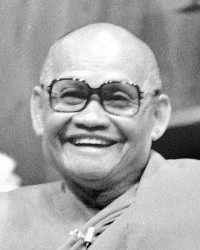
5. “I work as a psychotherapist and it seems to be useful to have a more or less stable self, a more or less stable ego, to be able to transcend the ego.” Answered by Ajahn Amaro. [Western psychology ] [Self-identity view] [Liberation] // [Mark Epstein] [Virtue] [Happiness] [Conditionality] [Language] [Ajahn Chah] [Conventions]
Reference: “The Wisdom of the Ego” in Head and Heart Together by Ajahn Ṭhānissaro.
Sutta: SN 1.25: “Skillful, knowing the world’s parlance, he uses such terms as mere expressions.”
1. Comment: I was thinking about our obsession to create things. We create our world out of the things that we create. So Nibbāna being no thing-ness seems just right. [Proliferation] [Nibbāna] [Non-identification]
Response by Ajahn Amaro. [Volitional formations] [Conventions] [Impermanence] [Philosophy] [Aggregates] [Insight meditation] [Suffering]
Quote: “The things of this world are merely conventions of our own making …” — Ajahn Chah in Convention and Liberation. [Ajahn Chah]
2. “This state of nothingness or no-thing-ness is kind of liberating. Is that something that can be quick or something we attain and is forever?” Answered by Ajahn Amaro. [Non-identification] [Liberation] // [Insight meditation] [Long-term practice] [Arahant] [Ajahn Chah]
Reference: Nibbāna for Everyone by Ajahn Buddhadāsa.
3. “Does it mean that these three stages [of awakening] are still shaky? Like they can still go back to thingness?” Answered by Ajahn Amaro. [Stages of awakening] [Arahant] // [Stream entry] [Realms of existence] [Impermanence] [Once return] [Sensual desire] [Ill-will] [Non-return] [Fetters] [Ajahn Chah]
Reference: Śhūrangama Sūtra, Fifty Skandha Demon States.
2. “Something that I’ve noticed is that my wish to translate something differently at one point in my practice changes later when I realize, ‘Hmm … perhaps I’m just trying to get around the point.’ I feel uncomfortable with that translation and then later on realize I have to practice with this one. Does that sometimes happen to you?” Answered by Ajahn Amaro. [Hearing the true Dhamma] [Translation ] // [Truth]
Story: Jack Kornfield translates for Ajahn Chah at Insight Meditation Center and puts his own spin on the precepts. Ajahn Chah figures it out. [Jack Kornfield] [Ajahn Chah] [Joseph Kappel] [Insight Meditation Society] [Precepts]
8. “Coming back to Arahantship, as Chris was mentioning, you’re not supposed to talk about your attainments, but is there a notion of how likely it is happening nowadays in the monastic community?” Answered by Ajahn Amaro. [Arahant] [Vinaya] [Saṅgha] // [Ajahn Chah]
Quote: “Why do you want to know if I’m an arahant? It would be better for your to explore why you are not.” — Ajahn Chah. [Ajahn Chah]
3. “How do you tell the difference between genuine insight and conceptual fabrication?” Answered by Ajahn Amaro. [Insight meditation] [Proliferation] // [Cessation of Suffering] [Spiritual friendship] [Suffering] [Lawfulness] [Doubt] [Stream entry] [Self-reliance]
Follow-up: “The fact that it can’t be verified intuitively makes me uncomfortable. I can see how that would lead to delusion of falsity.” [Delusion]
Story: Ajahn Sumedho asks Ajahn Chah whether he [Ajahn Sumedho] is a stream enterer. [Ajahn Sumedho] [Ajahn Chah]
3. “When Luang Por Sumedho talks about resting in awareness in which everything is included, is this connected to the subject part [of non-duality] or is this neither there nor in between (Ud 1.10)?” Answered by Ajahn Amaro. [Ajahn Sumedho] [Knowing itself] [Non-identification] [Equanimity] [Advaita Vedanta] // [Buddhist identity] [Not-self] [Language] [Ajahn Chah] [Wat Pah Nanachat] [Unestablished consciousness] [Brahma gods]
Recollection: When Ajahn Amaro first arrived at Wat Pah Nanachat, a monk recommended Zen Mind, Beginner’s Mind. [Ajahn Amaro] [Zen]
5. “In one of the first readings [Session 2, question 2 and Session 3, question 3] you mentioned momentary Nibbāna. How do jhānas relate to momentary Nibbāna?” Answered by Ajahn Amaro and Ajahn Pasanno. [Nibbāna] [Jhāna] // [Clinging] [Ajahn Chah] [Liberation]
Sutta: MN 113.21: Don’t be content with jhāna.
Sutta: MN 26.15-16: Āḷāra Kālāma and Uddaka Rāmaputta.
3. “I don’t have any clear memory of past lives, and I’m happy not to overly speculate about that. But some monks suggested that you need to take on the doctrine of rebirth as part of Right View. Do you have any thoughts about this?” Answered by Ajahn Amaro and Ajahn Karuṇadhammo. [Rebirth ] [Right View] // [Self-reliance] [Ajahn Amaro] [Four Noble Truths] [Ajahn Chah] [Becoming]
Sutta: MN 117.6: Definition of Right View.
Quote: “You don’t have to believe in past lives or future lives in order to be a practicing Buddhist, do you?” — The Dalai Lama. Quoted by Ajahn Amaro. [Dalai Lama] [Buddhist identity]
Story: Ajahn Chah describes the supernatural beings who live at Wat Pah Pong to two sincere Dhamma practitioners, then refuses to answer inquiries about this topic by a group from Bangkok. Told by Ajahn Pasanno. [Ajahn Chah] [Non-human beings] [Wat Pah Pong]
4. “When developing disenchantment and dispassion by seeing the way things are, how do we not go to the extreme of aversion or the craving of unbecoming?” Answered by Ajahn Pasanno and Ajahn Karuṇadhammo. [Disenchantment] [Dispassion] [Aversion] [Craving not to become] // [Suffering] [Four Noble Truths]
Story: Ajahn Chah prods Ajahn Pasanno to reflect on suffering. Told by Ajahn Pasanno. [Ajahn Chah] [Ajahn Pasanno]
5. “How do we distinguish the nuances of happiness and suffering?” Answered by Ajahn Pasanno. [Happiness] [Suffering] // [Language]
Reflection: Any language is always a problem.
Quote: “The language of Dhamma is the language of feeling.” — Ajahn Chah. [Ajahn Chah] [Dhamma] [Feeling]
1. “Would you say that with the ending of greed, hatred, and delusion that these are eradicated and don’t arise anymore?” Answered by Ajahn Pasanno. [Unwholesome Roots] [Cessation] // [Knowledge and vision] [Cause of Suffering] [Buddha] [Arahant]
Follow-up: “We hear sometimes that it arises, but the person isn’t grasping it.”
Comment by Ajahn Karuṇadhammo: This is similar to Ajahn Chah’s declaration, “Yes, I have a lot of anger, but I don’t pick it up.” [Ajahn Chah] [Aversion] [Relinquishment]
Story: Ajahn Chah explains that the many lines in his palm mean that he had lots of suffering. [Ajahn Chah] [Suffering] [Ajahn Vīradhammo] [Teaching Dhamma] [Discernment]
2. Comment: There’s the suggestion that just four hours of sleep is enough, and I know that some people can cope with that, but I’ve always struggled with not getting much sleep, and it feels like torture if I force myself to stay awake. [Devotion to wakefulness ]
Response by Ajahn Pasanno. [Ajahn Chah] [Fasting] [Truth] [Ajahn Pasanno] [Wat Pah Nanachat] [Moderation in eating]
1. “Could [the principles in AN 3.102] also be related to practicing ānāpānasati?” Answered by Ajahn Pasanno. [Investigation of states] [Right Effort] [Mindfulness of breathing]
Quote: “Dhamma is that which is just right.” — Ajahn Chah. [Ajahn Chah] [Dhamma]
Quote: “Dhamma is neither high nor low, not dark or light, not tall or short. It’s just right.” — Ajahn Kinaree. [Ajahn Kinaree] [Middle Path]
1. “Where is the path [of stream entry etc.] clearly defined?” Answered by Ajahn Pasanno and Ajahn Karuṇadhammo. [Stages of awakening] // [Aids to Awakening] [Stream entry] [Recollection/Saṅgha] [Ajahn Chah]
Reference: Amaravati Chanting Book, p. 7: “The four pairs, the eight kinds of noble beings.”
Sutta: MN 70.20-21: Definitions of faith follower and Dhamma follower.
2. “You mentioned that the Tathāgata is a bit harsh in discipline [in MN 70]. What is the practical side of this?” Answered by Ajahn Pasanno and Ajahn Kaccāna. [Buddha/Biography] [Fierce/direct teaching] // [Teaching Dhamma] [Ajahn Chah] [Ajahn Pasanno] [Mahāyāna] [Sutta]
Sutta: MN 34: The Shorter Discourse on the Cowherd.
1. Teaching by Ajahn Pasanno: The satipaṭṭhāna insight formula is a pointer to atammayatā. [Right Mindfulness] [Insight meditation] [Non-identification] // [Ajahn Buddhadāsa] [Translation]
Sutta: MN 10.37: “Or else mindfulness that ‘there are mind objects’ is simply established in him to the extent necessary for bare knowledge and awareness. And he abides independent, not clinging to anything in the world.
Quote: “You don’t have to go and study every tree in the forest.” — Ajahn Chah. [Ajahn Chah] [Similes]
Reference: Mindfulness: A Practical Guide to Awakening by Joseph Goldstein (commercial).
Follow-up: “Do you think that the not-self perception is the precursor to the experience of atammayatā?” [Not-self] [Relinquishment]
4. “What does contemplating the body internally and externally mean [in MN 10.5]?” Answered by Ajahn Pasanno. [Mindfulness of body] // [Mindfulness] [Clear comprehension] [Ajahn Chah]
2. “Can you give a practical antidote in terms of how we can relinquish the attachment to view?” Answered by Ajahn Pasanno. [Clinging] [Views] [Relinquishment] // [Suffering] [Ajahn Chah]
2. “Are unworldly feelings to be treated the same? (referring to MN 18.8, ‘nothing is found there to delight in.’) Some of them appear in the cessation cycle, for example joy. They’re pleasant spiritual feelings.” Answered by Ajahn Amaro. [Feeling] [Happiness] [Skillful qualities] // [Jhāna] [Formless attainments] [Conditionality] [Ajahn Chah]
3. “When the mind rests in awareness and it’s not going out, it feels very natural. It knows that this is the place to be, but still over and over again, no matter how clearly it sees this pure quality and peaceful quality, it still goes out to thoughts. The mind keeps going out. It keeps grabbing, it keeps identifying, even though it knows this is dukkha.” Answered by Ajahn Amaro and Ajahn Pasanno. [Knowing itself] [Clinging] [Suffering] [Long-term practice] // [Noting] [Mindfulness of mind] [Idealism] [Discernment] [Food] [Feeling] [Birth]
Quote: “It’s just that much.” — Ajahn Chah. [Ajahn Chah]
6. “According to what you read in the book (The Island by Ajahn Pasanno and Ajahn Amaro, p. 123-124; MN 18.16-19), first there is contact and then phassa and vedanā. So first when we have contact there is no self yet. For example, if I contact something painful, at that time I feel I have no self, and then when I feel painful there is still no self, but then I feel like, ‘Oh, I don’t like this painfulness,’ the desire not to have it. Is feeling more self related with desire? It always comes together or not always?” Answered by Ajahn Amaro. [Contact] [Feeling] [Pain] [Self-identity view] [Craving] // [Clinging] [Mindfulness of feeling] [Ascetic practices] [Heedfulness]
Sutta: Ud 1.10: Bāhiya.
Sutta: AN 10.58: “Rooted in interest are all things. …”
Reference: Catastrophe/Apostrophe by Ajahn Amaro, p. 139.
Quote: “Just a few more things for you to let go of.” — Ajahn Chah’s response to Jack Kornfield’s description of his travels and meditation experiences. [Ajahn Chah] [Jack Kornfield] [Relinquishment] [Conceit] [Restlessness and worry]
3. “Would you say that way of reflecting using non conceptual thought is more effective or more penetrative than using verbalisation?” Answered by Ajahn Amaro and Ajahn Pasanno. [Insight meditation] [Directed thought and evaluation] // [Ajahn Chah] [Ajahn Jāgaro] [Culture/West]
Reference: “What is Contemplation?”, Collected Teachings of Ajahn Chah, p. 475.
2. “Could you clarify what you said about the mind and objects of awareness and how freedom from attachments is possible?” Answered by Ajahn Amaro and Ajahn Pasanno. [Nature of mind] [Knowing itself] [Liberation] // [Non-identification] [Insight meditation] [Ajahn Mun]
Simile: Oil and water. — Ajahn Chah. [Similes] [Ajahn Chah]
Follow-up: “I like flowers, but I need to stop buying flowers. How can this help?” Answered by Ajahn Amaro. [Clinging] [Feeling] [Volitional formations]
4. Question about associating with and clinging to wholesome and conducive environments. Answered by Ajahn Amaro and Ajahn Pasanno. [Skillful qualities] [Clinging] [Spiritual friendship] // [Suffering] [Knowing itself] [Discernment] [Amaravati] [Ajahn Chah]
Quote: “If you seek for security in what is insecure, you are bound to suffer.” — Ajahn Chah. Quoted by Ajahn Amaro. [Ajahn Chah] [Impermanence]
Quote: “Wanting what’s good without stop. That’s a disease of the mind.” — Ajahn Mun, Ballad of Liberation from the Khandhas. Quoted by Ajahn Amaro. [Ajahn Mun] [Craving]
Quote: “Live simply; be natural.” — Ajahn Chah. Quoted by Ajahn Amaro. [Ajahn Chah] [Simplicity]
Story: A sincere practitioner’s family complains about his way of being mindful. Told by Ajahn Amaro. [Mindfulness] [Everyday life] [Pace of life]
1. Comment: The separation between the mind and the sense/mind objects can be helpfully contemplated at multiple levels of acuity. Contributed by Ajahn Kaccāna. [Nature of mind] [Knowing itself] [Sense bases] // [Nibbāna] [Ajahn Chah]
Sutta: AN 11.9.
Reference: Stillness Flowing by Ajahn Jayasaro, pp. 90-91.
Response by Ajahn Amaro. [Hearing the true Dhamma] [Perception] [Etymology]
Quote: “The Five Khandhas exist, but they aren’t real. The Dhamma is real, but it doesn’t exist.” — Ajahn Paññāvaḍḍho. [Ajahn Paññāvaḍḍho] [Aggregates] [Dhamma]
Response by Ajahn Pasanno.
Quote: “Bright, loud, and mobile is the false; subtle and indistinct is the true.” — Master Hsuan Hua to Ajahn Amaro in a dream. Quoted by Ajahn Amaro. [Master Hsuan Hua] [Ajahn Amaro] [Dreams] [Truth]
10. “If you are constantly around someone who engages you with prolonged and agitated discussion, how do you handle that?” Answered by Ajahn Amaro and Ajahn Pasanno. [Idle chatter] // [Mindfulness] [Clear comprehension] [Admonishment/feedback]
Sutta: MN 2: Sabbāsava Sutta.
Quote: “Never give feedback to your fellow samaṇas before the meal.” — Ajahn Chah. Quoted by Ajahn Pasanno. [Ajahn Chah] [Monastic life]
Quote: “We can be completely mindful of taking initiative. Our capacity to act is part of the way things are.” — Ajahn Amaro. [Right Action ] [Discernment] [Right Mindfulness] [Buddha/Biography]
7. “What is the difference between unsupported and unsupportive [consciousness]?” Answered by Ajahn Amaro and Ajahn Pasanno. [Unestablished consciousness] // [Direct experience] [Ajahn Sumedho] [Self-identity view] [Appropriate attention]
Reference: The Island by Ajahn Pasanno and Ajahn Amaro, p. 133.
Quote: “We say the mind is empty, but it’s actually full of wisdom.” — Ajahn Chah. Quoted by Ajahn Amaro. [Ajahn Chah] [Emptiness] [Discernment]
Reference: Wisdom Develops Samādhi by Ajahn Mahā Boowa
3. “Is there a difference between citta and poo roo?” Answered by Ajahn Pasanno and Ajahn Amaro. [Heart/mind ] [Knowing itself] [Nature of mind] // [Thai] [Language] [Proliferation] [Dhamma] [Buddha] [Ajahn Amaro] [Dhamma books]
Quote: “If there’s anything left, just throw it to the dogs.” — Ajahn Chah. Quoted by Ajahn Amaro. [Ajahn Chah] [Relinquishment]
4. Story: Huineng evades his pursuers with a koan. Told by Ajahn Amaro. [Koan] [Huineng]
Follow-up: “Do you know why Huineng returned after sixteen years?”
Recollection: Ajahn Buddhadāsa translated a few Chinese Buddhist texts into Thai. [Ajahn Buddhadāsa] [Translation] [Ajahn Chah]
4. “Are mindfulness of mind and contemplating a subject such as impermanence two different approaches?” Answered by Ajahn Amaro and Ajahn Pasanno. [Mindfulness of mind] [Recollection] // [Ajahn Chah] [Language] [Directed thought and evaluation] [Appropriate attention] [Lawfulness]
Reference: “What is Contemplation?”, Collected Teachings of Ajahn Chah, pp. 475-479.
Quote: “Your best contemplation is quite thoughtless.” — Ajahn Pasanno. [Tranquility]
Reflection by Ajahn Pasanno: Yoniso manasikāra is a way of paying attention to the process of experience. [Pāli] [Characteristics of existence]
7. Comment: The translation of the Nibbāna Sutta (Ud 8.3) in The Island renders paññāyati as ‘discerned;’ the Amaravati Chanting Book, p. 49 translates it as ‘possible.’ Contributed by Ajahn Kaccāna. [Discernment] [Translation] [Chanting]
Response by Ajahn Amaro and Ajahn Pasanno.
Quote: “If you can’t go forward, if you can’t go backwards, if you can’t stand still, where do you go?” — Ajahn Chah. Quoted by Ajahn Amaro and Ajahn Pasanno. [Ajahn Chah] [Ajahn Sumedho] [Koan]
Sutta: Ud 8.1.
7. “When the mind feels quiet and peaceful, but there’s still something niggling away that doesn’t feel quite right, how do you work with that?” Answered by Ajahn Pasanno. [Tranquility] [Suffering] // [Patience] [Truth] [Self-reliance] [Conditionality] [Faith] [Perfections]
Recollection: It was frustrating being a disciple of Ajahn Chah and going to him with all your problems. He would just tell us to be patient. [Ajahn Chah]
5. “I was trying to imagine what it would be like to look into the world through the eyes of an arahant. Something like looking through The Matrix or looking at people as children …” Answered by Ajahn Pasanno and Ajahn Amaro. [Arahant]
Quote: “What is the mind of an arahant like?”—“Only compassion.” — Ajahn Mahā Boowa. Quoted by Ajahn Pasanno. [Ajahn Mahā Boowa] [Compassion]
Reflection by Ajahn Pasanno: Ajahn Chah’s form of compassion could be pretty demanding sometimes. [Ajahn Chah] [Fierce/direct teaching] [Patience] [Humor]
Reflection by Ajahn Kaccāna: From the perspective of an arahant, what drives the entire world is feeble (MN 112.6). [Aggregates] [Dispassion]
3. “The connection between tathatā and suññatā—would you like to expound a bit more?” Answered by Ajahn Pasanno. [Suchness] [Emptiness ] // [Proliferation] [Relinquishment] [Pāli] [Conventions] [Aggregates] [Ajahn Buddhadāsa] [Characteristics of existence] [Self-identity view]
Quote: “It’s just that much.” — Ajahn Chah. [Ajahn Chah]
Sutta: MN 72.20: “… unfathomable like the great ocean.” [Buddha]
Sutta: Ud 8.3: “There is the unborn, the unoriginated, the uncreated, the unformed.” (Chanting Book Translation).
Reference: The Poetics of Space by Gaston Bachelard.
5. Comment: “The principle of letting go is that nothing is destroyed … we are not buying into the future.” [Relinquishment] [Clinging] [Buddha] [Death]
Response by Ajahn Amaro. [Stream entry] [Aggregates]
Quote: “A samaṇa is one with no future.” — Ajahn Chah. Quoted by Ajahn Pasanno. [Ajahn Chah] [Perception of a samaṇa] [Time]
6. “In animitta samādhi, is the mind one-pointed or just sharp? Does it fall into the world of jhāna?” Answered by Ajahn Pasanno. [Concentration] [Nimitta] [Unification] [Jhāna]
Sutta: SN 48.9.4: Unification of mind with relinquishment as its object. [Relinquishment]
Quote: “The point that includes.” — Ajahn Sumedho. Quoted by Ajahn Amaro. [Ajahn Sumedho] [Spaciousness]
Teaching from Ajahn Chah: “Being Dhamma.” Related by Ajahn Amaro and Ajahn Pasanno. [Ajahn Chah] [Dhamma] [Knowing itself] [Not-self] [Self-identity view]
Sutta: MN 95.20: The sequence of hearing, understanding, practicing, and realizing Dhamma.
Reference: Being Dharma by Ajahn Chah (commercial).
3. “How does [disenchantment towards the aggregates] square with taking delight in the natural world?” Answered by Ajahn Pasanno and Ajahn Amaro. [Disenchantment] [Happiness] [Culture/Natural environment] // [Dispassion] [Beauty] [Culture/West] [Clinging] [Judgementalism]
Sutta: Thag 18.1.12: Mahākassapa’s verses about nature. [Great disciples]
Quote: “The more completely the heart lets go of the world, the more it can really enjoy it.” — Ajahn Amaro. [Relinquishment]
Recollection: Ajahn Chah had tremendous joy but no illusions about the world around him. [Ajahn Chah]
7. “In what ways does engaging with the natural world which is always changing contribute to renunciation and realization? In the modern world, such conditions are becoming rarer. What is the answer?” Answered by Ajahn Pasanno, Ajahn Kaccāna and Ajahn Amaro. [Culture/Natural environment ] [Impermanence] [Thai Forest Tradition] [Culture/West] // [Characteristics of existence] [Spiritual friendship] [Seclusion] [Insight meditation] [Ascetic practices]
Suttas: SN 47.6-7: The Four Foundations of Mindfulness are one’s ancestral territory.
Recollection: The austerity of the early days of Wat Pah Pong highlighted the seeking of security. Recounted by Ajahn Pasanno. [Wat Pah Pong] [Ajahn Chah] [Food]
3. “Is it possible to repeat the preparatory stages [before the Buddha teaches the Four Noble Truths] (Mahāvagga 1.7.5)?” Answered by Ajahn Pasanno. [Gradual Teaching ] [Four Noble Truths] // [Generosity] [Virtue] [Deva] [Kamma] [Drawbacks] [Sensual desire] [Renunciation] [Happiness] [Teaching Dhamma]
Story: A gangster visits Ajahn Chah and begins to keep the precepts. [Crime] [Ajahn Chah] [Killing] [Five Precepts] [Stealing]
4. “If one cultivates certain pāramīs during one’s lifetime, one can lose them in another lifetime?” Answered by Ajahn Pasanno and Ajahn Amaro. [Perfections] [Rebirth] [Impermanence] // [Aversion] [Clinging] [Fetters] [Stream entry] [Ajahn Chah]
Simile from Ajahn Chah: Tending a plant. [Ajahn Chah] [Naturalness] [Similes] [Stages of awakening]
1. “The suttas ae the classic Dhamma texts, and there are a lot of books, etc. that expound the Dhamma as well. What sources to study to hear the true Dhamma?” Answered by Ajahn Pasanno and Ajahn Amaro. [Hearing the true Dhamma ] [Sutta] [Dhamma books] // [Thai Forest Tradition] [Discernment] [Four Noble Truths] [Views]
Quote: “Does he contemplate the Four Noble Truths when he’s climbing rocks?” — Ajahn Chah. Quoted by Ajahn Pasanno. [Ajahn Chah] [Paul Breiter] [Culture/West] [Recreation/leisure/sport]
Sutta: AN 8.53: Eight criteria to determine what is Dhamma. [Dhamma]
11. “Is Nibbāna unconditioned? Can Nibbāna make a connection with you, or do you have to go to Nibbāna?” Answered by Ajahn Pasanno. [Nibbāna] [Unconditioned ] [Impermanence] // [Characteristics of existence]
Sutta: Ud 8.3: Nibbāna Sutta (Chanting Book translation).
Quote: “The place where there’s no coming, no going, no standing still. What’s that?” — Ajahn Chah. [Ajahn Chah]
7. “Can you offer any reflections about people’s tendency to measure samādhi, concentration, and jhāna and their doubt and discontent about how much is enough to develop insight?” Answered by Ajahn Pasanno. [Calming meditation] [Concentration] [Jhāna] [Insight meditation] // [Craving] [Relinquishment] [Etymology] [Translation] [Right Mindfulness] [Right Effort]
Quote: “Samādhi is a holiday for the heart.” — Ajahn Chah. [Ajahn Chah] [Ajahn Sumedho]
Simile: Samādhi is like a chicken in a bamboo coop. [Similes] [Ajahn Chah] [Spaciousness] [Mindfulness]
Sutta: MN 44.12: The bases of samādhi.
Simile: Unification of mind is like a bowl of fruit. [Unification] [Ajahn Chah]
3. “Could you speak about the practice of being mindful of craving and allowing it to pass?” Answered by Ajahn Pasanno. [Unskillful qualities] [Mindfulness] [Craving] [Cessation] // [Hindrances] [Relinquishment] [Recollection/Dhamma] [Faith] [Memory]
Quote: “If we don’t understand the obstacle, we can’t be free from it.” [Discernment] [Liberation]
Quote: “You’ve got to be really careful because the mind is a liar and a cheat.” — Ajahn Chah. [Ajahn Chah] [Nature of mind] [Heedfulness]
10. “How do we recognize when we’re being taken advantage of when we’re trying to offer compassion? How do we draw a line to maintain our compassion without it impeding?” Answered by Ajahn Pasanno. [Abuse/violence] [Compassion ] // [Discernment] [Ajahn Chah] [Fierce/direct teaching]
Suttas: SN 22.86.13; MN 22.37.
Reflection: The qualities of the Buddha: wisdom, compassion, purity. [Recollection/Buddha ] [Arahant] [Pūjā]
Reference: Amaravati Chanting Book, p. 3: Homage to the Buddha. [Recollection/Buddha ]
Story: A person asks the same question four times. [Questions]
12. “When someone opens up about issues or something difficult they are dealing with, when should one just listen and when should one say something that might help?” Answered by Ajahn Pasanno. [Listening ] [Right Speech] [Compassion] // [Spiritual friendship] [Trust] [Virtue] [Goodwill] [Admonishment/feedback] [Ajahn Pasanno] [Abbot] [Ajahn Chah]
14. “Sometimes we hear that with practice, some qualities change, but other qualities don’t change very much over a long time of practice. When I read certain biographies [of Buddhist teachers], it seems like certain rough qualities can remain even though the mind is pure. How to know the difference in oneself and others?” Answered by Ajahn Pasanno. [Long-term practice] [Personality ] [Teachers] [Fierce/direct teaching] [Unskillful qualities] // [Suffering] [Unwholesome Roots] [Relinquishment] [Hindrances]
Ajahn Pasanno describes the personality of great teachers he has met. [Ajahn Mahā Boowa] [Ajahn Thate] [Ajahn Dune] [Ajahn Chah]
Reflection: The arahant disciples of the Buddha were able to free their minds, but they all had different personalities. [Arahant] [Buddha] [Great disciples ]
Sutta: SN 14.15 Caṅkama Sutta: Monks with different personalities gather around the great disciples.
Note: Ajahn Pasanno mentions the similarly-themed Cūḷagosiṅga Sutta (MN 31) by name, but describes the content of the Caṅkama Sutta.
2. “Is renunciation like surrender?” Answered by Ajahn Pasanno. [Renunciation] [Relinquishment]
Quote: “You let go a little, you get a little peace. You let go a lot, and you get a lot peace. Let go completely, and you get complete peace.” — Ajahn Chah. [Ajahn Chah] [Tranquility]
1. “What is the difference between concentration and mindfulness?” Answered by Ajahn Pasanno. [Concentration] [Mindfulness] // [Continuity of mindfulness] [Ajahn Chah] [Unification ] [Translation] [Equanimity] [Etymology] [Spaciousness]
Teaching from Ajahn Sumedho: The point that includes versus the point that excludes. [Ajahn Sumedho]
3. “If you live long enough and you start to have Alzheimer’s or dementia, if you’re well-practiced throughout your whole life, you’ll still be grounded in something, right?” Answered by Ajahn Pasanno and Ajahn Karuṇadhammo. [Ageing] [Sickness] [Memory ] [Long-term practice] // [Ajahn Pasanno] [Ajahn Chah]
Story: Despite having dementia, Venerable Mahāghosānanda attends a meeting of Buddhist leaders at Spirit Rock Meditation Center. Abhayagiri monks look after him and delight in his presence. Told by Ajahn Pasanno. [Preah Mahāghosānanda] [Spirit Rock] [Upatakh] [Abhayagiri] [Personal presence] [Dalai Lama]
Reflection: When Ajahn Chah was sick, his cognitive functions deteriorated, but his citta was unwavering. [Ajahn Chah] [Heart/mind] [Nature of mind] [Translation] [Ajahn Ṭhānissaro]
Quote: “You don’t have to worry about Ajahn Chah. His mind is bright and pure.” — Ajahn Phut. Quoted by Ajahn Pasanno. [Ajahn Phut] [Ajahn Chah] [Dependent origination] [Chanting] [Wat Pah Nanachat]
Reference: Vipassanā-bhūmī, Amaravati Chanting Book Volume 2, p. 67.
Reflection by Ajahn Karuṇadhammo: The mind is another sense base. It’s not who you are. [Sense bases] [Not-self]