
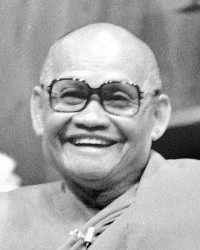
6. “How did you find Ajahn Jayasaro again [in India]?” Answered by Ajahn Pasanno. [Ajahn Pasanno] [Ajahn Jayasaro] [Visiting holy sites] // [Tudong] [Lodging] [Ajahn Koon (Chiang Rai)] [Ajahn Chai] [Ajahn Chah] [Culture/India]
1. “Could you comment on the issue of feeling that there need to be certain conditions in place for me to practice?” Answered by Ajahn Pasanno. [Meditation] [Conditionality] // [Ajahn Chah] [Mindfulness] [Discernment] [Continuity of mindfulness]
Quote: “You can go off to the forest and be happy on your own or you can stay here and I can teach you how to be happy all the time.” — Ajahn Chah to Ajahn BahnKow. [Ajahn Chah] [Ajahn BahnKow] [Happiness] [Seclusion] [Everyday life]
1. “What does “sabbe saṅkhārā dukkhā” mean in relation to the first Noble Truth?” Answered by Ajahn Pasanno. [Suffering] [Volitional formations] [Noble Truth of Suffering ] // [Self-pity]
Quote: “Sumedho loves to suffer.” — Ajahn Chah. [Ajahn Chah] [Ajahn Sumedho]
Response by Ajahn Pasanno. [Fierce/direct teaching] [Compassion]
5. Discussion about keeping the continuity of practice within engagement and daily life. [Everyday life] [Continuity of mindfulness] // [Ajahn Chah] [Ajahn Sumedho] [Ajahn Kinaree]
Story: Ajahn Chah sews a robe obsessively. [Ajahn Chah] [Robes] [Craving]
Follow-up: “Were Ajahn Mahā Boowa’s teachings less focused on daily life?” Answered by Ajahn Pasanno and Ajahn Pesalo. [Ajahn Mun] [Cleanliness] [Ajahn Mahā Boowa] [Determination] [Ardency] [Personality]
Story: Ajahn Mun teases Ajahn Mahā Boowa for being like an old boxer.
Comment: You can read the suttas, but you don’t really get a feel for what the Buddha’s teachings are until you study and practice the Vinaya. [Sutta] [Vinaya] [Protocols] [Communal harmony] [Requisites]
10. “What is a good balance between listening to Dhamma and practicing more deeply? How long should one keep one’s practices, and when to expand or shrink them?” Answered by Ajahn Pasanno. [Hearing the true Dhamma ] [Practicing in accordance with Dhamma ] [Determination ] [Dhamma online] // [Four Noble Truths] [Direct experience] [Ajahn Chah] [Dhamma books] [Mindfulness of mind] [Learning]
11. Comment: I listen to the Abhayagiri Dhamma talks, focusing more on the timbre of the voice rather than trying to get an intellectual grasp of what was said. That projects me into a dimension of well-being. [Hearing the true Dhamma] [Abhayagiri] [Happiness] [Learning]
Response by Ajahn Pasanno. [Ajahn Chah] [Tranquility]
13. “When you’re living on the precepts, how do I relate to (for example) a friend who tells me about an affair they are having?” Answered by Ajahn Pasanno and Ajahn Jotipālo. [Precepts] [Spiritual friendship] [Sexual misconduct] // [Skillful qualities] [Admonishment/feedback] [Discernment] [Right Speech] [Vinaya] [Abhayagiri]
Quote: “Don’t admonish your fellow monks before the meal.” — Ajahn Chah. Quoted by Ajahn Pasanno. [Ajahn Chah] [Monastic life] [Food] [Eating after noon]
15. “AN 5.38 says, ‘Not by sorrow can even the slightest good come.’ How does this work with the natural process of grieving?” Answered by Ajahn Pasanno. [Grief] [Skillful qualities] // [Cultural context] [Family] [Ajahn Chah] [Death] [Characteristics of existence]
5. Comment: If you become a monk or live a more simple life, it would be easier to speak right speech. [Monastic life] [Simplicity] [Right Speech]
Response by Ajahn Pasanno.
Teaching from Ajahn Chah: Don’t admonish anyone before the meal. [Ajahn Chah] [Admonishment/feedback]
2. “In meditation, why does the Buddha tell us to deliberately shut down the voices of papañca as opposed to just sitting?” Answered by Ajahn Pasanno. [Meditation] [Proliferation] // [Self-identity view]
Quote: “There’s only two things you have to do: know and let go.” — Ajahn Chah. [Ajahn Chah] [Mindfulness] [Relinquishment]
5. “Could you tell us your stories related to the King Rama 9 of Thailand?” Answered by Ajahn Pasanno. [King Rama IX] [Culture/Thailand] // [Leadership] [Meditation] [Recreation/leisure/sport] [Commerce/economics]
Story: Thai lay supporters remember King Rama IX at Abhayagiri’s 2016 Kaṭhina. [Abhayagiri] [Kaṭhina]
Story: King Rama IX attends Ajahn Chah’s funeral. [Ajahn Chah] [Funerals] [Wat Pah Pong] [Tranquility]
Story: King Rama IX asks President Nixon for understanding. [Politics and society] [Communal harmony] [Listening]
6. “Does the Buddha say all beings are inherently good? How about generosity? Do all human beings have the capacity for generosity?” Answered by Ajahn Pasanno. [Nature of mind ] [Generosity ]
Sutta: AN 1.51-52
Story: A Mafia boss stays under Ajahn Chah’s kuti and helps out at Wat Pah Pong. [Ajahn Chah] [Crime] [Wat Pah Pong] [Precepts]
Quote: “Generosity is an important doorway for many reasons.”
2. “I often find it hard to stay settled on the breath. Though I’ve been meditating for some time, my mind does not seem to focus well. When things are going “well”, I feel sense of joy but my mind jumps from topic to topic quickly (as though excited it’s going well). When things aren’t going well, my mind shifts into work mode, trying to “fix” the situation and bring the joy back. This results in a lot of tension in my face and long, difficult sittings. Do you have any advice?” Answered by Ajahn Pasanno. [Mindfulness of breathing] [Meditation/General advice] [Meditation/Results] // [Tranquility] [Self-reliance] [Trust]
Quote: “That’s really a farang Buddha. Look how tense he is!” — Ajahn Chah. [Ajahn Chah] [Buddha images] [Culture/West] [Ajahn Sumedho]
12. “I am wondering if you could talk about spiritual bypass? What is it? How do you know if you’ve done it? And how do you disentangle from it?” Answered by Ajahn Pasanno. [Spiritual bypass ] // [Conflict] [Not-self] [Truth] [Views] [Spiritual friendship]
Story: Half the roof blows off a monk’s kuti, but he doesn’t repair it because he is letting go. [Ajahn Chah] [Lodging] [Relinquishment]
5. “I was struck by the suggestion you shared about orienting oneself toward what one can give to a moment rather than what one can get from a moment. This mind shift seems hugely beneficial. Would you expand on this?” Answered by Ajahn Pasanno. [Generosity] [Present moment awareness ] // [Patience ] [Tranquility]
Recollection: “Nine times out of ten, Ajahn Chah’s answer would be, ‘Just be patient.’” [Ajahn Chah]
Reference: Don’t Hold Back by Ajahn Pasanno
11. “If someone spreads a harmful story about another that is untrue, but has convinced her/himself it is true (including her/his own embellishments), does this break the fourth precept?” Answered by Ajahn Pasanno. [Malicious speech] [False speech ] // [Precepts] [Ajahn Chah] [Volition] [Truth] [Nature of mind]
Quote: “The precepts are there for training as opposed to making a legal decision or character judgement.”
12. “It’s a common phrase: “If you see the Buddha on the road, kill him.” Obviously it’s using hyperbole for effect but I think it means to trust only in your own experience. At what point do the guidelines and precepts leave off and the way to proceed on findings begins? I know it’s not a linear path, but I’d appreciate your thoughts.” Answered by Ajahn Pasanno. [Direct experience] [Precepts] [Trust] [Long-term practice] // [Zen] [Vinaya] [Dhamma] [Relinquishment] [Middle Path]
Quote: “The Vinaya and the precepts are for holding on, and the Dhamma is for letting go. When you learn how to balance those two, then you will be free from dukkha.” — Ajahn Chah to Ajahn Sumedho. [Ajahn Chah] [Ajahn Sumedho] [Liberation]
7. “‘Teacher of Gods and Humans’. Can you talk about this? What Gods did the Buddha teach? What other beings did the Buddha teach?” Answered by Ajahn Pasanno. [Recollection/Buddha] [Buddha] [Teaching Dhamma] [Deva] [Human] // [Realms of existence ] [Sutta] [Buddha/Biography] [Ajahn Chah]
Sutta: DN 21: Sakka’s Questions.
Sutta: Snp 2.4: Maṅgala Sutta (Chanting Book translation).
Vinaya: Khandhaka 17.3.11: The Buddha subdues an enraged elephant. [Animal]
Story: Ajahn Chah describes the beings inhabiting Wat Pah Pong. [Ajahn Chah] [Wat Pah Pong] [Non-human beings]
Story: The head being acquires faith, listens to teachings, and temporarily takes on the Eight Precepts. [Faith] [Hearing the true Dhamma] [Eight Precepts]
13. “Please demystify jhāna a little for those like myself whose vipassanā past has had minimal samādhi focus. The emphasis on calming and brightening has been so helpful. Whereas in past I associated deep concentration with vipassanā elites and insight practice more for those living in the mess of the world, now I wonder, in our post election universe, whether a more jhānic or balance between practices would prevent overwhelm, hiding, running to Canada! Thoughts?” Answered by Ajahn Pasanno. [Jhāna] [Insight meditation] [Gladdening the mind] [Calming meditation] [Everyday life] [Politics and society] // [Ajahn Chah] [Tranquility] [Mindfulness of body] [Ajahn Pasanno] [Relinquishment]
Quote: “That desire to measure and quantify attainment is an obstacle in itself.” [Meditation/Results]
5. “Can you please give some guidance on recognizing delusion in the mind? Greed and aversion seem easier to spot.” Answered by Ajahn Pasanno. [Delusion ] // [Restlessness and worry] [Fear] [Self-identity view]
Quote: “It’s like riding along on a horse and asking, ‘Where’s the horse? Where’s the horse?’” — Ajahn Chah. [Ajahn Chah] [Jack Kornfield]
10. “I was wondering how I include the discernment obtained from lifting up the mind to solve a life issue. I wish I could be more intelligent and brighter to solve my life problem in a skillful way. Please advise.” Answered by Ajahn Pasanno. [Discernment] [Everyday life ] // [Trust] [Meditation retreats] [Time management]
Story: A disciple of Ajahn Chah moves to Bangkok. [Ajahn Chah] [Lay life] [Commerce/economics]
23. “Do you understand impermanence as the phenomena of a river flowing or as a light being turned on and off as Bhikkhu Anālayo describes?” Answered by Ajahn Pasanno. [Impermanence ] [Ven. Anālayo] [Similes] // [Pāli] [Translation] [Ajahn Ṭhānissaro] [Ajahn Chah]
6. “When you don’t feel like practicing, what do you do?” Answered by Ajahn Pasanno. [Energy] [Ajahn Pasanno] // [Wat Pah Pong] [Cleanliness] [Ajahn Chah] [Spiritual friendship]
7. “Could you give some advice on using directed and sustained thought? Would these thoughts be like repeating ‘Buddho’ or are they conceptual?” Answered by Ajahn Pasanno. [Buddho mantra] [Directed thought and evaluation] // [Ajahn Chah]
6. Comment: I’ve been reflecting on freedom from as opposed to freedom within. Sometimes there’s a secret hope that those thoughts will go away, vibhava-taṇhā, as opposed to freedom within, meaning releasing the identification with painful thoughts. [Craving not to become] [Self-identity view] [Release] [Directed thought and evaluation] // [Hindrances]
Response by Ajahn Pasanno. [Suffering]
Quote: “Just that much.” — Ajahn Chah. [Ajahn Chah] [Disenchantment]
16. “I spread lovingkindness from home and don’t have the good fortune of meeting with like minds who practice to perfect sīla. Any suggestions?” Answered by Ajahn Pasanno. [Lay life] [Goodwill] [Spiritual friendship] [Virtue]
Quote: Ajahn Chah to Ajahn Sumedho: “Do you mean to say there’s no good people in America?” [Ajahn Chah] [Ajahn Sumedho] [Culture/West]
1. “What meaningful impact do Buddhist monks have on the community?” Answered by Ajahn Pasanno. [Monastic life] [Mutual lay/Saṅgha support ] [Community] [Saṅgha] // [Culture/West] [Culture/Thailand] [Ajahn Chah] [Ajahn Pasanno] [Wat Pah Nanachat] [Lunar observance days] [Abhayagiri]
Story: Ajahn Pasanno’s first visit to Wat Pah Pong. [Wat Pah Pong ] [Temporary ordination] [Thai Ajahn Chah monasteries]
2. “How closely do you and the other monks live together?” Answered by Ajahn Pasanno. [Monastic life] [Saṅgha] [Abhayagiri] // [Ajahn Chah] [Communal harmony ] [Vinaya] [Seclusion] [Culture/West] [Culture/Thailand] [Monastic routine]
Quote: “Human beings. Those are beings with issues.” — Ajahn Chah. [Ajahn Chah] [Human] [Conflict]
3. “When you first ordained, you were just starting to learn about Buddhism. What changed that made you want to dive in?” Answered by Ajahn Pasanno. [Ajahn Pasanno] // [Meditation/Results] [Ajahn Chah]
Story: “If you want to stay with me, you have to stay at least five years.” — Ajahn Chah [Ajahn Chah]
5. “How do we break the chain of dependent origination?” Answered by Ajahn Pasanno. [Dependent origination] // [Suffering]
Quote: “As you’re falling out of a tree, you’re not counting the branches as you go down. All you know is that when you hit the bottom, it’s going to hurt.” — Ajahn Chah. [Ajahn Chah]
1. “How do we make sense of the whirlpool of assumptions?” Answered by Ajahn Pasanno. [Proliferation] [Clinging] // [Discernment] [Perception] [Impermanence] [Ajahn Chah] [Views]
Quote: “Welcome to the human existence.” [Human]
3. “How do we expand our faith into other aspects of training?” Answered by Ajahn Pasanno. [Faith] [Monastic life] [Dhamma] [Vinaya] // [Dependent origination] [Recollection/Buddha] [Ajahn Chah] [Ajahn Liem]
3. “Can you speak to the development of respect for the symbols of monastic life as opposed to respect for individual teachers?” Answered by Ajahn Pasanno. [Respect] [Teachers] [Monastic life] // [Almsbowl] [Buddha] [Ajahn Pasanno] [Ajahn Chah] [Human]
3. “What is the role of confession and other tools for recifying offenses?” Answered by Ajahn Pasanno. [Vinaya] [Confession] // [Ajahn Chah] [Volition] [Kamma] [Dhamma]
5. “What about Sarakāni (SN 55.24-25), the stream enterer who took to drink?” Answered by Ajahn Pasanno. [Stream entry] [Intoxicants] // [Ajahn Chah] [Precepts]
Story: Ajahn Chah takes in a gangster. [Ajahn Chah] [Crime]
9. “When the suttas describe a practitioner as “having gone beyond doubt,” (e.g. DN 3) what do they mean?” Answered by Ajahn Pasanno. [Doubt] [Sutta] // [Four Noble Truths] [Teaching Dhamma] [Ajahn Chah]
Story: An Ajahn Chah monk accused of a heavy offense. [Ajahn Chah] [Vinaya]
1. “What is the role of mentors and teachers in learning to use the monastic form skillfully?” Answered by Ajahn Pasanno. [Teachers] [Mentoring ] [Vinaya ] [Monastic life] // [Saṅgha] [Ajahn Chah] [Wat Pah Pong] [Teaching Dhamma] [Long-term practice] [Ajahn Pasanno]
2. “Who were important mentors for you?” Answered by Ajahn Pasanno. [Ajahn Pasanno] [Teachers] [Mentoring] [Monastic life] // [Ajahn Chah] [Ajahn Jun] [Ajahn Mahā Amorn] [Ajahn Liem] [Ajahn Sumedho] [Ajahn Mahā Boowa] [Ajahn Baen] [Ajahn Buddhadāsa] [P. A. Payutto] [Wat Pah Pong]
Story: Ajahn Mahā Amorn goes to study with Ajahn Chah. [Ajahn Chah] [Learning]
1. “What can we learn when we pay respects to mentors?” Answered by Ajahn Pasanno. [Respect for elders] [Monastic life] // [Ajahn Mahā Boowa] [Almsround] [Ajahn Pasanno]
Story: Ajahn Mahā Boowa visits after Ajahn Chah’s death. [Ajahn Chah]
Story: Ajahn Baen admonishes Ajahn Pasanno at Ajahn Chah’s cremation. [Ajahn Baen] [Fierce/direct teaching]
Quote: “You don’t have to visit me! You know what to do already! It’s all right here (pointing at his heart).” — Ajahn Baen to Ajahn Pasanno.
3. “What about senior monks who don’t meet our expectations of conduct or practice?” Answered by Ajahn Pasanno. [Respect for elders] [Monastic life] // [Ajahn Chah] [Ajahn Pasanno] [Ajahn Mahā Boowa]
Sutta: AN 4.192 Facts
2. “I assume at Abhayagiri the upatakh sleeps in his own dwelling place? (in contrast to the previous story of Ajahn Lee)” Answered by Ajahn Pasanno. [Abhayagiri] [Upatakh] [Monastic life] [Saṅgha] // [Sickness] [Ajahn Chah] [Ajahn Pasanno] [Other Thai monastics]
3. “What is the value of living in community?” Answered by Ajahn Pasanno. [Monastic life] [Saṅgha ] // [Self-identity view] [Continuity of mindfulness] [Ajahn Chah] [Ajahn Tongrat] [Views] [Requisites] [Not handling money]
2. “In Thailand, dāna (generosity) usually means giving food to a monk. But is dāna more of a mindset?” Answered by Ajahn Pasanno. [Generosity] [Culture/Thailand] [Monastic life] // [Chanting] [Upatakh] [Wat Pah Pong] [Ajahn Chah] [Cleanliness]
6. “What about relics?” Answered by Ajahn Pasanno. [Relics ] [Monastic life] // [Ajahn Mun] [Ajahn Pasanno] [Ajahn Khao] [Mae Chee Kaew] [Master Hsuan Hua] [Ajahn Chah]
Story: Ajahn Pasanno’s mother observes multiplying relics.
6. “Is there a place to point out others’ difficulties [in the practice]?” Answered by Ajahn Pasanno. [Admonishment/feedback] [Right Speech] [Community] [Monastic life] [Saṅgha] // [Ajahn Chah] [Teaching Dhamma]
7. “What is the role of admonishment? How do we admonish skillfully?” Answered by Ajahn Pasanno. [Admonishment/feedback ] [Monastic life] [Saṅgha] // [Right Intention] [Goodwill] [Mentoring] [Respect for elders]
Vinaya: Khandhaka 18.11.14, Khandhaka 18.12.8: Mutual admonishment between teacher and student.
Story: Ajahn Amaro waits a year before giving feedback. [Ajahn Amaro] [Patience]
Quote: “Don’t admonish somebody before the meal.” — Ajahn Chah. [Ajahn Chah]
2. “How do we discern the benefit of dhutaṅga practices and how much is too much?” Answered by Ajahn Pasanno. [Discernment] [Middle Path] [Monastic life] [Ascetic practices] // [Ajahn Pasanno] [Devotion to wakefulness] [Almsround] [History/Early Buddhism] [Gladdening the mind] [Ajahn Chah] [Master Hsuan Hua]
Story: Ajahn Jayasaro determines sitter’s practice until Ajahn Chah dies. [Ajahn Jayasaro] [Ajahn Chah] [Respect for elders] [Determination]
1. “The Krooba Ajahns often deemphasize study. What is the context in which they said this and how should we work with this?” Answered by Ajahn Pasanno. [Culture/Thailand] [Thai Forest Tradition] [Learning] // [Ajahn Chah] [Right View] [Culture/West] [Faith]
1. “How can those just entering monastic life lay a good foundation?” Answered by Ajahn Pasanno. [Monastic life] // [Vinaya] [Right View] [Ajahn Chah] [Virtue] [Stream entry] [Four Noble Truths] [Kamma] [Generosity] [Greed] [Communal harmony] [Happiness] [Gratitude]
Sutta: SN 55.1: Sīla of a stream enterer
Sutta: MN 117: The Great Forty
2. “Would you be willing to speak on the importance of having faith in rebirth?” Answered by Ajahn Pasanno. [Faith] [Rebirth] // [Culture/West] [Right View] [Ajahn Chah] [Ajahn Pasanno]
Sutta: MN 117.6: Definition of right view
3. Comment: It sounds like teachings about rebirth and teachers speaking about their experience of rebirth are out there. Whether people pick it up or not, you leave it up to them. [Rebirth] [Teaching Dhamma] [Monastic life]
Response by Ajahn Pasanno. [Ajahn Pasanno] [Ajahn Chah] [Faith]
10. “How did Isan manage to withstand the waves of Communist overthrow that came through Laos and Cambodia, which was so devastating to the monastic community? Ajahn Chah would have been very aware and impacted by that. How did the people of Isan understand themselves? How were they able to withstand that threat to their existence?” Answered by Ajahn Pasanno. [Politics and society] [History/Thai Buddhism] [History/Other Theravāda traditions] [Culture/Thailand]
Story: Ajahn Paññānanda gives a talk at an Isan school where pictures of Marx and Lenin were placed in the assembly hall. [Ajahn Paññānanda]
Story: Driving through military checkpoints on the way to Ajahn Fun’s funeral. [Ajahn Fun] [Funerals] [Ajahn Chah] [Military]
Story: Communist guerillas attend a Kaṭhina ceremony by night and government soldiers by day. [Kaṭhina] [Ajahn Wan]
9. “I have a question about attachment. When you mentioned 1,000 monks [at Wat Pah Pong], does this have anything to do with attachment?” Answered by Ajahn Pasanno. [Clinging] [Ajahn Chah Remembrance Day] // [Suffering] [Cause of Suffering] [Pāli] [Ajahn Chah]
14. “Could you speak about metta in the context of both samādhi and vipassanā?” Answered by Ajahn Pasanno. [Goodwill] [Concentration] [Insight meditation] // [Self-identity view] [Relinquishment]
Quote: “I never heard Ajahn Chah talk much about metta. He just oozed it.” [Ajahn Chah] [Personal presence]
16. [After describing 20 years of meditation practice], “A few weeks ago, I noticed that I had a lot of wrong view. … Now, when I sit in meditation and part of me is very calm and still, there’s a voice that comes up. I can’t tell whether it’s a doubting voice, the restlessness creeping in again, or discernment and mindfulness of not being too calm and asleep. Answered by Ajahn Pasanno. [Concentration] [Views] [Discernment] // [Ajahn Chah] [Mindfulness]
13. “Could you say something about the fact that extreme hardship exists in the world?” Answered by Ajahn Pasanno. [Poverty ] [Compassion] // [Culture/Thailand]
Sutta: AN 4.162: Modes of Practice
Sutta: AN 8.2: Worldly Winds [Worldly Conditions]
Vinaya: Bhikkhu Pārājikā 1.2: The famine in Verañjā. [Buddha/Biography]
Recollection: The vast majority of 20th century Thai meditation masters are from the Northeast. They come from a region and area of great difficulty. [History/Thai Buddhism] [Thai Forest Tradition] [Patience] [Energy] [Faith]
Recollection: More Westerners came to study with Ajahn Chah than Central or Southern Thais. [Ajahn Chah] [History/Western Buddhist monasticism]
17. “The Buddha had the talent of knowing precisely what to say to a person at a given moment. The teaching ajahns have developed this as well, but I’ve never heard of it as part of the training. Can you reflect on that?” Answered by Ajahn Pasanno. [Teaching Dhamma] [Buddha/Biography] [Monastic teachers] // [Personality] [Discernment] [Idealism] [Ajahn Chah] [Suffering] [Humility] [Relinquishment] [Fear] [Self-identity view]
8. “Could you say some more about the process of change?… You can have a big tool kit and apply it with the best of intentions. Sometimes magical things happen, and sometimes nothing happens.” Answered by Ajahn Pasanno. [Right Effort] [Conditionality] [Right Intention] [Progress of insight ] // [Goodwill] [Relinquishment] [Ajahn Chah] [Impermanence] [Long-term practice] [Learning] [Dependent origination] [Not-self] [Mindfulness]
1. “What did you mean by ‘lifting up?’ Is it an object of attention?” Answered by Ajahn Pasanno. [Directed thought and evaluation] [Recollection ] // [Restlessness and worry] [Sloth and torpor] [Postures] [Energy]
Quote: “Namo viññāṇa dhātu (Homage to the element of consciousness).” — Ajahn Chah. [Ajahn Chah] [Consciousness] [Elements] [Knowing itself]
6. “How do we deal with a world full of view and opinions?” Answered by Ajahn Pasanno. [Views ] // [Idealism] [Conditionality] [Impermanence] [Truth]
Story: Sāriputta doesn’t approve of a teaching of the Buddha until he puts it into practice himself. Told by Ajahn Chah. [Great disciples] [Teaching Dhamma] [Direct experience] [Faith] [Ajahn Chah]
6. “Is there something called fierce compassion in the Theravāda tradition? If so, how is that different from resentment or anger?” Answered by Ajahn Pasanno. [Fierce/direct teaching] [Compassion] [Theravāda] [Ill-will] [Aversion] // [Ajahn Mahā Boowa] [Suffering] [Teaching Dhamma] [Admonishment/feedback] [Spiritual bypass] [Ajahn Chah]
Story: Ajahn Chah calls newly-arrived Tan Pasanno lazy. [Ajahn Chah] [Ajahn Pasanno] [Chanting]
4. “How to overcome anxiety? How always to be with Dhamma in the heart?” Answered by Ajahn Pasanno. [Fear] // [Goodwill] [Compassion] [Generosity] [Spaciousness] [Impermanence] [Ajahn Chah] [Proliferation] [Mindfulness] [Clear comprehension] [Skillful qualities]
2. “During my sitting this morning, the thoughts keep arising one after the other. It seems endlessly. How do I notice, learn, and recognize thoughts as a function of the mind and not be affected by them? Also, how can one make use of skillful thoughts in meditation?” Answered by Ajahn Pasanno. [Restlessness and worry] [Proliferation] [Directed thought and evaluation] [Mindfulness of mind] [Recollection] // [Craving not to become] [Characteristics of existence] [Insight meditation] [Relinquishment] [Goodwill] [Patience] [Concentration] [Attitude]
Quote: “Kae nun lae (Thai) – It’s just that much.” — Ajahn Chah. [Ajahn Chah]
2. “I would appreciate further explanation of vitakka and vicāra.” Answered by Ajahn Pasanno. [Directed thought and evaluation ] // [Translation] [Investigation of states] [Bases of Success] [Desire] [Energy] [Heart/mind] [Calming meditation] [Hindrances] [Happiness]
Recollection: Ajahn Chah’s teachings about vitakka-vicāra. [Ajahn Chah]
2. “There is a constant sense of confusion underneath most of the experiences. Other defilements come and go, but moha of various form and intensity seems to be always present. Any suggestions?” Answered by Ajahn Pasanno. [Delusion ] [Unwholesome Roots] // [Mindfulness] [Clear comprehension] [Mindfulness of body] [Continuity of mindfulness]
Quote: “The mind is a liar and a cheat.” — Ajahn Chah. [Ajahn Chah] [Heart/mind] [False speech]
4. “How does one live in harmony with others who hold different views and have different understanding about things? How does one live in harmony with oneself when facing challenges?” Answered by Ajahn Pasanno. [Communal harmony ] [Views] // [Conflict] [Right Speech] [Delusion] [Patience] [Association with people of integrity] [Naturalness]
Quote: “Let the forest teach you. If you look around in the forest, there’s big trees, there’s little trees, there’s straight trees, there’s crooked trees, there’s vines. They all live together in harmony.” — Ajahn Chah. [Ajahn Chah] [Wat Pah Pong] [Culture/Natural environment] [Similes]
Reference: Amaravati Chanting Book, p. 46, Maṅgala Sutta: Don’t associate with fools.
7. “Your advice to leaders in the conflicts of 2021 in terms of the leaders themselves and how they can inspire their teams and communities?” Answered by Ajahn Pasanno. [Leadership] [Conflict] [Community] // [Trust] [Generosity] [Compassion] [Listening] [Ajahn Chah]
Quote: “Leadership always comes by example.”
Quote: “[Ajahn Chah] never asked us to do something that he himself wasn’t doing.” [Ajahn Chah]
6. “A question about Dogenji’s teaching: ‘To study the Buddha Way is to study the self. To study the self is to forget the self. To forget the self is to be actualized by myriad things. When actualized by myriad things your body and mind as well as the bodies and minds of others drop away. No trace of enlightenment remains, and this no trace continues endlessly.’ Can you reflect on this teaching from the Theravāda Thai Forest Teachings?” Answered by Ajahn Pasanno. [Dōgen] [Zen ] [Eightfold Path] [Not-self] [Liberation] [Theravāda] [Thai Forest Tradition] // [Teaching Dhamma] [Knowledge and vision] [Four Noble Truths] [Self-identity view] [Relinquishment] [Aggregates] [Proliferation] [Discernment] [Compassion]
Quote: “Everything is teaching us. Everything is a manifestation of Dhamma and truth.” — Ajahn Chah. [Ajahn Chah] [Dhamma] [Truth] [Suchness]
15. “Could you please explain how one practices applied and sustained thought in breath meditation?” Answered by Ajahn Pasanno. [Directed thought and evaluation] [Mindfulness of breathing] // [Ajahn Chah]
2. “Sometimes when I meditate, I have a pleasant sensation similar to goosebumps or light massage on the back of the head. … I would be grateful for your advice in understanding it.” Answered by Ajahn Karuṇadhammo. [Meditation/Unusual experiences] [Rapture] // [Ajahn Chah] [Clinging] [Impermanence] [Relinquishment] [Characteristics of existence]
3. Comment: Sīla (virtue) is like a compass. You know if you’re off. [Virtue]
Response by Ajahn Pasanno. [Suffering] [Feeling]
Quote: “The language of Dhamma is the language of feeling.” — Ajahn Chah. Quoted by Ajahn Pasanno. [Ajahn Chah] [Dhamma]
8. “Could you say a little more about that clarity? You talked about knowing that there is this factor of the truth of Dhamma? How do you be into that?” Answered by Ajahn Pasanno. [Knowledge and vision] [Truth] [Dhamma ] // [Cause of Suffering] [Unwholesome Roots]
Quote: “It’s intrinsic to us all, but we get in the way.”
Sutta: AN 1.49: “This mind, bhikkhus, is radiant, but it is defiled by adventitious defilements.” [Nature of mind]
Follow-up: “Does the academic speculation about AN 1.49 fall away when you’re actually practicing?” [Views] [Direct experience]
Quote: “First you have to know the Dhamma. Then you have to see the Dhamma. Then you have to be the Dhamma.” — Ajahn Chah. [Ajahn Chah] [Insight meditation] [Relinquishment] [Self-identity view]
Follow-up: “In Ajahn Chah’s progression of knowing Dhamma and seeing Dhamma and then being Dhamma, what is Dhamma in that context?”
10. “Is it possible to get enlightened living in a Muslim country where there are no monasteries?” Answered by Ajahn Pasanno. [Liberation] // [Dhamma online] [Association with people of integrity]
Quote: “You mean there are no good people in America?” — Ajahn Chah to Ajahn Sumedho. [Ajahn Chah] [Ajahn Sumedho] [Culture/West] [Virtue]
5. As Westerners, we don’t like the idea of committing, certainly not for life. Comment by Sol Hanna. [Culture/West] [Determination]
Response by Ajahn Pasanno: “Commitment is anathema.” [Sensual desire] [Ajahn Chah] [Perception of a samaṇa]
7. “There were quite a few Westerners who went to train in Thailand at the time. Not all of them made it. What got you through that period of time? What kept you going?” Answered by Ajahn Pasanno. [Monastic life] [Monastic life/Motivation ] [Ajahn Pasanno] // [Ajahn Chah] [Faith] [Truth]
8. “How did you come to be abbot of Wat Pah Nanachat?” Answered by Ajahn Pasanno. [Wat Pah Nanachat] [Abbot] [Ajahn Pasanno ] // [Ajahn Sumedho] [Ajahn Jāgaro] [Ajahn Puriso] [Ajahn Brahmavaṃso] [Wat Keuan] [Ajahn Chah]
Follow-up: “How did you feel about it?” [Culture/West] [Fear] [Ajahn Chah] [Trust]
9. Under your leadership, Wat Pah Nanachat grew in size and more monks came to practice there. Comment by Sol Hanna. [Wat Pah Nanachat] [Abbot] [Ajahn Pasanno]
Response by Ajahn Pasanno: “I think I did okay.” [Humility] [Ajahn Chah] [Sickness]
1. “In reference to the fragrance of the flower … There are many roses in the courtyard across the street. … Why do we cultivate beauty? Where does beauty arise from?” Answered by Ajahn Pasanno. [Beauty] // [Clinging] [Happiness] [Master Hsuan Hua] [Empathetic joy] [Unconditioned]
Sutta: MN 37: Sabbe dhamma nālaṃ abhinivesāya. (Nothing whatsoever should be clung to.)
Story: Ajahn Pasanno’s mother sends his old letters to Abhayagiri. [Ajahn Pasanno] [Abhayagiri]
Recollection: Ajahn Chah was unshakeable in the midst of all the things that were happening around him and responded warmly and compassionately to the people around him. [Ajahn Chah] [Equanimity] [Compassion] [Family] [Monastic life/Motivation]
2. “What is meant by skillful?” Answered by Ajahn Pasanno. [Skillful qualities ] // [Unskillful qualities] [Happiness] [Tranquility] [Kamma] [Discernment]
Quote: “The language of Dhamma is the language of feeling.” — Ajahn Chah. [Ajahn Chah] [Dhamma] [Feeling]
4. “Am I what I feel? We have a lot of feelings as humans, and then a lot more feelings have come up since COVID. There’s a lot of depression, hurt feelings, regret, death, end of relation and of income, end of status. A lot of us want to know how to work with this or even change these really hard emotional states.” Answered by Ajahn Pasanno. [Emotion] [Human] [Self-identity view] [Pandemic] [Grief] // [Suffering] [Spiritual friendship] [Compassion]
Recollection: “Sometimes Ajahn Chah would consciously make things difficult for us. … He’s always pointing back to the heart.” [Ajahn Chah] [Fierce/direct teaching] [Heart/mind]
6. “Is there a right speed to silent walking?” Answered by Ajahn Pasanno. [Posture/Walking] // [Abhayagiri] [Postures] [Continuity of mindfulness]
Story: Jack Kornfield asks Ajahn Chah, “Whenever you teach walking meditation, you always teach the monks to walk slowly. But whenever you walk meditation, you walk really fast. [Ajahn Chah] [Jack Kornfield] [Teaching Dhamma] [Exercise]
Translations of sampajañña (clear comprehension) and its role in Dhamma practice. [Clear comprehension ] [Translation] [Mindfulness]
3. “Is there a time and place for intentionally breathing or using the breath as a means of calming the mind?” Answered by Ajahn Pasanno. [Volition] [Calming meditation] [Mindfulness of breathing] // [Tranquility] [Energy]
Sutta: MN 118.17: Ānāpānasati Sutta.
Recollection: To deal with the restless mind, Ajahn Chah taught to breath in deeply and not breathe out. [Restlessness and worry] [Ajahn Chah]
1. “After the mind has settled and I’m with the breath, the boundaries of the body disappear and the breath starts to be barely perceptible. When anxiety arises in this situation, is it a feeling or a sensation?” Answered by Ajahn Pasanno. [Tranquility] [Restlessness and worry] [Feeling] [Mindfulness of breathing] // [Pāli] [Emotion] [Volitional formations]
Quote: “You’re falling out of a tree. You don’t have to count all the branches as you go down. You just have to know it’s going to hurt when you hit the bottom.” Ajahn Chah [Ajahn Chah] [Dependent origination] [Similes] [Suffering]
Follow-up: “So I can just feel the feeling tone as unpleasant, pleasant, or neutral … ?” [Noting]
2. “Tibetan Buddhism seems to have a stronger emphasis on compassion and emptiness as a practice. Can you talk about this from the perspective of the Ajahn Chah lineage, including steps as to how it is done?” Answered by Ajahn Pasanno. [Vajrayāna] [Compassion] [Emptiness] [Ajahn Chah lineage] // [Ajahn Chah] [Eightfold Path]
Quote: “What is the mind of an Arahant like?” – “Only compassion” — Ajahn Mahā Boowa. [Ajahn Mahā Boowa] [Arahant]
4. “Please speak about sense consciousness and how the release of attachment is achieved.” Answered by Ajahn Pasanno. [Sense bases] [Consciousness] [Clinging] [Relinquishment] // [Delusion] [Insight meditation] [Knowledge and vision] [Feeling] [Contact] [Drawbacks] [Compassion]
Quote: “Dhamma practice is not difficult. There are only two things you need to do: know and let go.” — Ajahn Chah. [Ajahn Chah] [Dhamma]
5. “How does one know the difference between appropriate grieving and honoring the memory of a beloved versus clinging and attachment?” Answered by Ajahn Pasanno. [Grief ] [Clinging] // [Cause of Suffering] [Self-identity view] [Spiritual urgency]
Recollection: Grieving for Ajahn Chah. [Ajahn Chah] [Ajahn Pasanno] [Recollection/Saṅgha]
Quote: “It’s that personalization of experience that gets us into trouble over and over again in different ways.” [Suffering]
8. “Can you offer practical advice for working with hindrances and cultivating sīla without taking it personally, that is, trying to perfect the personality?” Answered by Ajahn Pasanno. [Hindrances] [Virtue] [Self-identity view] // [Dhamma] [Relinquishment]
Quote: “Kae nun lae (Thai) – It’s just this much.” — Ajahn Chah. [Ajahn Chah] [Suchness]
17. “Fifty vassas! Highs, lows? What are you contemplating these days?” Answered by Ajahn Pasanno. [Ajahn Pasanno] [Monastic life] // [Dhamma] [Abbot] [Mentoring] [Ajahn Chah]
21. “My husband died 10 years ago. There was sadness but also relief that his journey was over and sadness and relief for myself. I can still hear his advice regarding my medications. Is this clinging? He lives in my heart. What do you do with memories and teachings yourself?” Answered by Ajahn Pasanno. [Family] [Death] [Grief] [Memory] [Clinging]
Recollection: I still hear Ajahn Chah’s voice. [Ajahn Pasanno] [Ajahn Chah] [Dreams] [Ajahn Mahā Boowa]
1. “I know that everything changes, and the only thing we can do is accept or be fine with that. But then you have a lot of resistance to acceptance. What can we do with that resistance?” Answered by Ajahn Pasanno. [Impermanence] [Clinging] // [Naturalness] [Suffering] [Truth] [Patience] [Continuity of mindfulness]
Quote: So often Ajahn Chah would respond with the advice, “Just be patient.” [Ajahn Chah]
2. “When that flower is new, if we’re aware of its impermanence and we accept that and we know that it’s coming, is there any reason not to love the flower, appreciate its beauty, and accept it as a blessing?” Answered by Ajahn Pasanno. [Impermanence ] [Beauty]
Quote: A group of experienced Western Buddhists ask Ajahn Chah about Right View. He replies, “Right View is knowing that this cup is broken.” [Ajahn Chah] [Right View]
3. “Have you ever regretted choosing the monastic life? Has your mother ever thought you made a wrong choice?” Answered by Ajahn Pasanno. [Ajahn Pasanno] [Monastic life/Motivation] [Doubt] [Parents] // [Gratitude] [Retirement] [Energy] [Mentoring] [Christianity] [Abhayagiri]
Reflections on leadership. [Leadership ] [Ajahn Chah] [Abbot] [Wat Pah Nanachat] [Discernment]
Quote: “You can’t lead just by telling people what to do and they are going to obey. Forget it!” [Leadership ]
Quote: “Everybody else is a mirror for oneself if one is willing to learn in teaching or leading others.” [Leadership ] [Learning]
7. “At the San Francisco Zen Center, they chant the Heart Sutra daily: ‘No path, no knowledge, no attainment.’ Could you help me understand the paths we’re talking about here and Zen no-path?” Answered by Ajahn Pasanno. [Zen] [Eightfold Path] [Liberation] // [Unconditioned] [Relinquishment] [Buddha] [Truth] [Worldly Conditions]
Reference: The Heart of Prajna Paramita Sutra.
Reference: Vijjācaraṇa-sampanno in the Morning Chanting. [Recollection/Buddha]
Quote: “Right view is knowing that this is a broken glass.” — Ajahn Chah. [Ajahn Chah] [Right View] [Impermanence]
3. “Does the concept of refuge in Buddhism contain an element of grace?” Answered by Ajahn Pasanno. [Three Refuges ] [Theravāda] [Hinduism] // [Relinquishment] [Knowing itself] [Truth]
Quote: “Did you come here to die?” — Ajahn Chah’s greeting to newcomers. [Ajahn Chah] [Death] [Liberation] [Self-identity view]
Quote: “If you really understood refuge in Buddha, Dhamma, and Saṅgha, there wouldn’t be a time when you bowed without bursting into tears of gratitude and devotion.” — Ajahn Chah. [Ajahn Chah] [Bowing ] [Gratitude ] [Ajahn Jayasaro]
1. “What is the translation of sabbaṃ dukkhaṃ? The way you translate it seems psychological. In Sanskrit, dukkhaṃ means out of the cosmic flow of Dhamma. But perhaps dukkhaṃ is best left untranslated. If untranslated, does dukkhaṃ mean the same thing in Buddhism and Advaita Vedanta?” Answered by Ajahn Pasanno. [Suffering] [Pāli] [Equanimity] [Dhamma] [Translation] [Advaita Vedanta] // [Thai] [Human] [Aggregates] [Clinging ] [Knowing itself] [Relinquishment]
Ancient etymology of dukkha: du = bad, unwanted, unpleasant, uncomfortable, not easy; kha = where the axle fits into the wheel. [Language] [History/Indian Buddhism]
Sutta: SN 56.11.4: Dhammacakkappavattana Sutta (Chanting Book translation)
Teaching: The four forms of clinging. [Clinging ] [Sensual desire] [Impermanence] [Naturalness] [Happiness] [Neutral feeling] [Attachment to precepts and practices] [Views] [Doctrine-of-self clinging] [Not-self]
Quote: “Nibbāna is the reality of non-grasping.” — Ajahn Chah. [Ajahn Chah] [Nibbāna] [Cessation of Suffering]
1. “What should one consider when looking for a teacher or guru to guide one’s personal journey?” Answered by Ajahn Pasanno. [Teachers ] [Mentoring] [Discernment] // [Ajahn Chah] [Determination] [Truth] [Perfectionism] [Personality]
Quote: “I saw many people show up [at Wat Pah Pong] with their list of what they thought a perfect teacher should be. … and they would leave.” [Ajahn Chah]
Quote: “It is only when we are willing to give ourselves to truth or reality that the teacher makes sense.” [Relinquishment]
3. “Why don’t we concentrate not so much on personal liberation, but think more about our practice? What are your thoughts about the Bodhisattva ideal, thinking of others all the time rather than achievement or personal liberation?” Answered by Ajahn Pasanno. [Liberation] [Bodhisattva] [Compassion] [Nibbāna]
Quote: “Thinking of yourself is isolating. Thinking of others is proliferating. … Suffering is an experience rather than a conceptualization.” [Self-identity view] [Proliferation] [Suffering]
Quote: “Don’t be an arahant. Don’t be a Bodhisattva. Don’t be anything at all. As long as you’re anything or anybody, you are going to suffer. And as long as you’re suffering, you’re going to be sharing that out with everyone else as well.” — Ajahn Chah. [Ajahn Chah] [Arahant]
1. “Please tell us where the nuns [attending this event] are from?” Answered by Ajahn Pasanno. [Bhikkhunī] // [Aranya Bodhi Hermitage] [Dhammadharini Monastery] [Ayya Tathālokā] [Ajahn Mahā Prasert] [Lodging]
Story: Ajahn Chah tells the early Wat Pah Nanachat monks to clear the underbrush. [Ajahn Chah] [Wat Pah Nanachat]
9. “I’m struggling with the concept of unshakiness, as “I” am falling into the trap of envisioning an unshakeable self. How can letting go be allowed without an I that lets go?” Answered by Ajahn Pasanno. [Equanimity] [Self-identity view] [Relinquishment] // [Knowing itself] [Human] [Ajahn Chah] [Three Refuges]
2. “So Luang Por Sumedho had a bit of a temper in the beginning?” Answered by Ajahn Pasanno. [Ajahn Sumedho] [Aversion] // [Ajahn Chah] [Humor]
3. “What was the nickname of Ajahn Amaro?” Answered by Ajahn Pasanno. [Ajahn Amaro] [Thai] // [Ajahn Chah]
6. “What personal obstacles, either internal or external have you used as dhammas, stepping stones to lift yourself up and go beyond it?” Answered by Ajahn Pasanno. [Ajahn Pasanno] [Long-term practice] // [Fear ] [Ajahn Chah] [Impermanence] [Mindfulness of body] [Knowing itself]
Quote: “The anxious and fearful mind is always trying to find some certainty somewhere. And of course it isn’t anywhere at all except in this present moment and in the quality of awareness that we have. But the personality doesn’t believe that for a long time.” [Present moment awareness]
Quote: “Be careful of believing your mind because it’s a liar and a cheat.” — Ajahn Chah. [Ajahn Chah] [Nature of mind]
10. “We can control unwholesome acts of body and speech through precepts, but whatever pops up in the mind we mostly can’t control. But how is kamma formed in the mind? Should we control that thing or should it be let go?” Answered by Ajahn Pasanno. [Precepts] [Nature of mind] [Kamma] // [Suffering] [Relinquishment] [Ajahn Chah] [Volition]
Sutta: MN 19: Two Kind of Thought
11. “Whatever you do, if you do it with care and attention, it takes longer. If I rush, the task would not be done so well. How do we give care and attention in a quick manner?” Answered by Ajahn Pasanno. [Mindfulness] [Clear comprehension] [Time management] // [Right Mindfulness] [Ardency]
Story: A man moves so slowly paying care and attention that he annoys his family. [Family]
Quote: “A good thief is really mindful.” Ajahn Chah [Ajahn Chah]
13. “When you started teaching and taking on the role of leader of a community, did that affect the way you related to your own practice because you were being seen by others, having to be more careful about conduct?” Answered by Ajahn Pasanno. [Ajahn Pasanno] [Abbot] [Leadership] // [Wat Pah Nanachat] [Ajahn Chah] [Fear] [Faith] [Culture/Thailand]
Ajahn Chah always emphasized, “Whatever you’re doing, you have to learn from it.” [Ajahn Chah] [Learning]