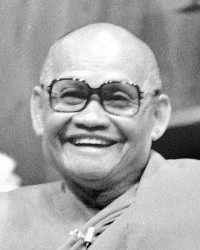
3. Quote: “The language of wisdom is the language of the heart.” — Ajahn Chah. Quoted by Ajahn Jitindriyā. [Ajahn Chah] [Language] [Discernment] [Mindfulness] // [Liberation] [Spiritual search] [Monastic life/Motivation]
8. Story: Ajahn Sumedho wants Ajahn Chah to affirm whether he had attained a degree of insight. Told by Ajahn Jitindriyā. [Ajahn Sumedho] [Stages of awakening] [Ajahn Chah] // [Impermanence] [Liberation] [Bowing] [Becoming]
Reference: Collected Teachings of Ajahn Chah, p. 606
Quote: “We talk about things to develop and things to give up, but there’s really nothing to develop and nothing to give up.” — Ajahn Chah. [Right Effort] [Relinquishment] [Emptiness] [Dispassion]
Reference: Collected Teachings of Ajahn Chah, p. 102
8. Ajahn Chah made me look at myself. Teaching by Ajahn Sumedho. [Teaching Dhamma] [Ajahn Chah] [Ajahn Sumedho ] // [Hearing the true Dhamma] [Posture/Sitting] [Pain] [Aversion] [Admonishment/feedback] [Humor] [Patience] [Goodwill] [Discernment] [Contentment] [Cessation] [Happiness] [Saṅgha] [Views] [Relinquishment]
Quote: “Your practice now is patience.” — Ajahn Chah.
Story: Ajahn Chah chats for hours after Pāṭimokkha. [Idle chatter] [Judgementalism]
2. Story: How I met Ajahn Chah. Told by Ajahn Pasanno. [Ajahn Pasanno] [Ajahn Chah] // [Types of monks] [Wat Pah Pong] [Seclusion]
Quote: “If you want to stay here, you have to be here for five years.” — Ajahn Chah. [Sequence of training]
2. Favorite verses of Ajahn Chah: “Buddhaṃ me jīvitaṃ yāva-nibbānaṃ saraṇaṃ gacchāmi.” Recounted by Ajahn Amaro. [Mantra] [Ajahn Chah] [Three Refuges] [Nibbāna] [Chanting] // [Unwholesome Roots] [Ajahn Sundarā]
Quote: “Nibbāna is complete normality.” — Ajahn Chah. [Naturalness]
8. Reading from the draft biography: Ajahn Chah’s dying father asks him to remain in robes for life. Read by Ajahn Amaro. [Sickness] [Recollection/Death] [Parents] [Monastic life] [Ajahn Chah] [Determination] // [Learning] [Culture/Thailand] [Unattractiveness] [Forest versus city monks] [Sutta] [Spiritual urgency]
Quote: “I dedicate my body and mind, my whole life, to the practice of the Lord Buddha’s teachings in their entirety. I will realize the truth in this lifetime … I will let go of everything and follow the teachings. No matter how much suffering and difficulty I have to endure I will persevere, otherwise there will be no end to my doubts. I will make this life as even and continuous as a single day and night. I will abandon attachments to mind and body and follow the Buddha’s teachings until I know their truth for myself.” — Ajahn Chah. [Buddha] [Dhamma] [Practicing in accordance with Dhamma] [Knowledge and vision] [Truth] [Relinquishment] [Suffering] [Energy] [Doubt] [Continuity of mindfulness]
Reference: Stillness Flowing by Ajahn Jayasaro, p. 40
3. Quote: “The years [Ajahn Chah] took up his ascetic practices were something of a golden age.” — Paul Breiter. [Ascetic practices] [Thai Forest Tradition ] [Ajahn Chah] // [Ajahn Mun ]
Quote: “How do you call yourself a disciple of Ajahn Mun when you only spent seven days with him?” – “If a person with good eyes comes close to something, he sees it.” — Ajahn Chah. [Mentoring] [Knowledge and vision]
4. Ajahn Chah was the living embodiment of these teachings. Reflection by Joseph Kappel. [Dhamma] [Ajahn Chah] // [Buddha images] [Human] [Compassion]
Quote: “It’s like taking the church with you.”
4. Story: When I met Ajahn Chah. Told by Ṭhānissarā. [Ṭhānissarā] [Ajahn Chah] // [Meditation retreats] [Ajahn Sumedho] [Personal presence] [Hearing the true Dhamma] [Liberation] [Happiness]
Story: Ajahn Chah bows to a small, neglected Buddha image in a secular meditation center and inspires Ṭhānissarā’s faith. [Bowing] [Buddha images] [Perception of a samaṇa] [Human] [Faith]
Quote: “If you’ve been listening to this and you think this is good or you think this is bad, then you haven’t been listening properly.” — Ajahn Chah. [Judgementalism] [Appropriate attention]
2. Quote: “These Five Precepts are the basis for human existence. If people could only do this, never mind talking about enlightenment, we would have a world without much trouble.” — Ajahn Chah. Quoted by Paul Breiter. [Ajahn Chah] [Five Precepts ] [Human] [Liberation] [Suffering] // [Virtue] [Intoxicants] [Politics and society]
3. Quote: “Mindfulness is a jewel. Having mindfulness is like being near to the Buddha or being near to God.” — Ajahn Chah. Quoted by Paul Breiter. [Ajahn Chah] [Mindfulness] [Buddha] [God] // [Lay life] [Suffering]
4. Quote: “We think that this is my family, this is my home village, this is my country, and others are [not]. That’s just a delusion.” — Ajahn Chah. Quoted by Paul Breiter. [Ajahn Chah] [Goodwill] [Family] [Community] [Politics and society] [Delusion] // [Human ] [Birth] [Ageing] [Death]
5. Quote: “Everybody worships knowledge. Not many people worship virtue.” — Ajahn Chah at Insight Meditation Center. Quoted by Paul Breiter. [Ajahn Chah] [Learning] [Science] [Technology ] [Virtue] [Insight Meditation Society]
6. Quote: “Is the boulder heavy? … Is a lemon sour?” — Ajahn Chah. Quoted by Paul Breiter. [Ajahn Chah] [Similes] [Suffering] // [Paul Breiter]
7. Quote: “If you see one monkey, you can understand the nature of monkeys.” — Ajahn Chah. Quoted by Paul Breiter. [Ajahn Chah] [Similes] // [Lay life] [Buddha] [Recollection/Buddha]
Quote: “What are the benefits of lay life? We have more opportunities to apply the teaching, ‘Monkeys are like that.’”
4. “His way of teaching was direct. … He would use the essential teaching of the Buddha, the Four Noble Truths.” Recollection by Ajahn Sumedho. [Teaching Dhamma] [Four Noble Truths ] [Ajahn Chah] [Ajahn Sumedho] // [Noble Truth of Suffering] [Human] [Culture/Thailand] [Ageing] [Sickness] [Death] [Spiritual traditions] [Self-identity view]
Quote: “It’s the suffering that awakens you.” — Ajahn Chah. [Suffering] [Liberation]
3. Story: Ajahn Sundarā stays with a nun who lived at Wat Pah Pong with Ajahn Chah. Told by Ajahn Sundarā. [Ajahn Sundarā] [Mae Chee ] [Wat Pah Pong] [Ajahn Chah]
Story: The first nun at Wat Pah Pong. [Artistic expression] [Determination] [Sequence of training] [Eight Precepts]
Story: The Wat Pah Pong nuns go pindapat. [Almsround]
Quote: “Does anyone find having nuns around difficult?” – “Yes.” – “Well, you can go then.” — Ajahn Chah. [Pāṭimokkha] [Women in Buddhism]
Story: A woman brings only enough food for the monks, so Ajahn Chah asks the nuns to chant the blessing. [Generosity] [Mutual lay/Saṅgha support] [Chanting] [Fierce/direct teaching]
Note: Stillness Flowing Chapter 9 contains more information about the Wat Pah Pong mae chees at the time of Ajahn Chah.
6. Quote: “I hope you’re not afraid of suffering.” — Ajahn Chah. Quoted by Jack Kornfield. [Ajahn Chah] [Jack Kornfield] [Suffering] [Fear] // [Wat Pah Pong] [Ghost] [Monastic life] [Liberation]
7. Wat Pah Pong: A place of dignity and surrender. Reflection by Jack Kornfield. [Wat Pah Pong ] [Dignity] [Perception of a samaṇa] [Relinquishment] [Ajahn Chah] // [Cleanliness] [Conflict] [Military] [Suffering] [Respect] [Virtue] [Almsround] [Pain] [Chanting] [Monastic crafts] [Bowing]
Quote: “An island of sanity in a sea of madness.” [Three Refuges]
Quote: “Everything you do in your life in this monastery is a chance to awaken.” — Ajahn Chah. [Liberation] [Continuity of mindfulness]
8. Quote: “This is as cold as it gets.” — Ajahn Chah. Quoted by Jack Kornfield. [Ajahn Chah] [Jack Kornfield] [Wat Tam Saeng Pet] [Culture/Natural environment] // [Almsround] [Mentoring] [Suffering] [Teaching Dhamma] [Sickness] [Fierce/direct teaching] [Humor] [Relinquishment]
16. Quote: “The Eightfold Path is here within us. Two eyes, two ears, two nostrils, a tongue, and a body.” — Ajahn Chah. Quoted by Jack Kornfield. [Ajahn Chah] [Eightfold Path] [Sense bases] // [Heart/mind] [Buddha] [Dhamma] [Four Noble Truths]
17. Quote: “Look at others 10% of the time and look at yourself 90%; that’s about the right measure.” — Ajahn Chah. Quoted by Jack Kornfield. [Ajahn Chah] [Judgementalism ] [Admonishment/feedback] [Discernment] // [Idealism] [Conventions] [Heart/mind] [Vinaya]
Story: Ajahn Chah’s teacher eats sloppily. [Teachers] [Food] [Suffering]
21. Quote: After listening to Jack Kornfield’s adventures, Ajahn Chah responds, “Something else to let go of, isn’t it?” Quoted by Jack Kornfield. [Ajahn Chah] [Jack Kornfield] [Travel] [Culture/Other Theravāda traditions] [Relinquishment] // [Meditation retreats] [Concentration] [Abhidhamma] [Ajahn Jumnien] [Liberation] [Clinging] [Suffering]
23. What does not suffering mean? Reflection by Jack Kornfield. [Suffering] [Cessation of Suffering] [Ajahn Chah] // [Judgementalism] [Politics and society] [Discrimination] [Environment] [Discernment] [Compassion] [Human] [Buddha] [Proliferation] [Relinquishment]
Quote: “We human beings are constantly in combat, at war to escape the fact of being limited by so many circumstances that we can’t control.”” — Ajahn Chah. [Conflict] [Characteristics of existence]
Quote: “Doubts are natural.” — Ajahn Chah. [Doubt] [Naturalness] [Impermanence] [Not-self] [Liberation]
Quote: “The desire mind is like children.” — Ajahn Chah. [Desire] [Similes]
Story: “Scary ride, wasn’t it?” [Jack Kornfield] [Thai Ajahn Chah monasteries] [Fear] [Death]
25. Quote: “What is the Buddha?” — Ajahn Chah. Quoted by Jack Kornfield. [Ajahn Chah] [Buddha] // [Three Refuges] [Knowledge and vision] [Unconditioned] [Recollection/Dhamma] [Liberation]
27. Quote: “The mind, the heart, will become still in any surroundings, like a clear forest pool.” — Ajahn Chah. Quoted by Jack Kornfield. [Ajahn Chah] [Heart/mind] [Tranquility] [Similes] // [Mindfulness] [Naturalness] [Knowledge and vision] [Happiness] [Buddha]
3. Story: Kittisaro’s parents visit Wat Pah Pong. Told by Kittisaro. [Kittisaro] [Parents] [Wat Pah Pong] [Ajahn Chah] // [Culture/West] [Learning] [Monastic life] [Renunciation] [Fear] [Cults] [Children] [Ordination] [Compassion]
Quote: “Wanting your parents to understand is suffering.” — Ajahn Sumedho. [Ajahn Sumedho] [Family] [Suffering]
Quote: “The Communists you really need to be concerned about, the ones who can really hurt you, are the ones who hide inside your own heart.” — Ajahn Chah. [Politics and society] [Unwholesome Roots]
3. Quote: “You’ve been studying your whole lives, and what good has it done you?” — Ajahn Chah. Quoted by Paul Breiter. [Ajahn Chah] [Culture/West] [Learning]
7. Stories on almsround with Ajahn Chah. Told by Paul Breiter. [Almsround] [Paul Breiter ] [Ajahn Chah]
Quote: “Good morning, Mr. Dum.” — Ajahn Chah. [Language]
Quote: “I’m going to disrobe. I want you to find me a nice girl.” — Ajahn Chah. [Ajahn Sinuan] [Respect for elders] [Wat Pah Pong] [Thai Ajahn Chah monasteries] [Humor] [Unwholesome Roots]
1. Quote: “Don’t you say that so lightly–old age, sickness, and death.” — Ajahn Chah. Quoted by Jack Kornfield. [Ajahn Chah] [Sickness] [Ageing ] [Death] // [Health care]
5. Quote: “If I’ve developed any wisdom, it’s because I had such gigantic defilements.” — Ajahn Chah. Quoted by Ajahn Amaro. [Ajahn Chah] [Discernment] [Unwholesome Roots] // [Hindrances ] [Restlessness and worry] [Aversion] [Doubt] [Sensual desire]
8. Story: When asked about the potential for sacred sexuality, Ajahn Chah picks his nose. Told by Ajahn Amaro. [Sensual desire] [Fierce/direct teaching] [Ajahn Chah] // [Insight Meditation Society]
Quote: “There’s nothing more to it than that except what your mind adds to it.” — Ajahn Chah. [Proliferation]
12. Story: Ajahn Sumedho brings a group of Western women to meet Mae Chee Kumfah, only to discover she has converted to Christianity. Told by Ṭhānissarā. [Ṭhānissarā] [Ajahn Sumedho] [Mae Chee Kumfah] [Christianity] [Ajahn Chah] // [Impermanence] [Suffering]
Quote: “Maybe she’s right.” — Ajahn Chah to Ajahn Sumedho. [Fierce/direct teaching]
2. Story: Ajahn Chah’s trip to Mount Rainier. Told by Gail Kappel. [Ajahn Chah] // [Recreation/leisure/sport] [Humor]
Quote: “The sawdust of water.” — Ajahn Chah.
4. Story: Ajahn Chah asks for forgiveness. Told by Gail Kappel. [Asking forgiveness ceremony] [Ceremony/ritual] [Ajahn Chah] // [Joseph Kappel] [Humility]
Quote: “If you cry a little bit, it’s good. If you cry a lot, you’re a fool.” — Ajahn Chah. [Suffering]
8. Quote: “You’re strong. Now you need to make your heart as strong as your body.” — Ajahn Chah. Quoted by Joseph Kappel. [Ajahn Chah] [Heart/mind] // [Joseph Kappel] [Humility] [Family] [Culture/Natural environment]
6. Quote: “Ajahn Chah was a terrible patient.” — Ajahn Pasanno. [Health care] [Sickness] [Ajahn Chah]
Quote: “Don’t doctors die also?” — Ajahn Chah. [Death]
12. Quote: “You’re living off the karma of the Buddha.” — Ajahn Chah. Quoted by Jack Kornfield. [Ajahn Chah] [Almsround] [Kamma] [Buddha] [Jack Kornfield] // [Liberation] [Compassion] [Culture/Thailand] [Gratitude] [Monastic life] [Ajahn Chah lineage]
3. The commentaries contrast the Five Hindrances with the five factors of first jhāna. Teaching by Ajahn Pasanno. [Hindrances] [Jhāna] // [Directed thought and evaluation] [Sloth and torpor] [Doubt] [Rapture] [Ill-will] [Happiness] [Restlessness and worry] [Unification] [Sensual desire]
Story: Ajahn Boon Choo dispels sloth and torpor. [Ajahn Boon Choo] [Devotion to wakefulness]
Quote: “Sensual desire is like looking for the turtle with the mustache.” — Ajahn Chah. [Ajahn Chah] [Similes]
Meditation instruction: Breathing with the five factors of first jhāna. [Mindfulness of breathing]
1. Meditation instruction: Be present with the physical experience of the breath. Bring a sense of ease into the body. Ground awareness in the body. Offered by Ajahn Pasanno. [Mindfulness of breathing] [Mindfulness of body]
Quote: Keeping the breath in mind is like getting the spoon into the mouth and the mouth onto the spoon. — Ajahn Lee Dhammadharo. [Ajahn Lee Dhammadharo] [Similes]
Story: “The body understands!” [Direct experience] [Zen] [Koan] [Ajahn Pasanno]
Body and mind are not separate things. [Body/form] [Heart/mind] [Aggregates ] [Dependent origination] [Consciousness]
Water similes for the mind with and without hindrances. (SN 46.55) [Hindrances] [Sensual desire] [Ill-will] [Sloth and torpor] [Restlessness and worry] [Doubt]
Sutta: DN 2.98: “These are shoals of fish …”
Quote: “You can get a lot of wisdom from walking meditation.” — Ajahn Chah. [Ajahn Chah] [Posture/Walking] [Discernment]
1. Quote: “One who is lost in the world is lost in their moods. One who is lost in their moods is lost in the world.” — Ajahn Chah. Quoted by Ajahn Pasanno. [Ajahn Chah] [Moods of the mind] [Mindfulness of mind]
2. Quote: “A moment of lack of mindfulness is a moment of derangement.” — Ajahn Chah. Quoted by Ajahn Pasanno. [Ajahn Chah] [Mindfulness]
5. When mindfulness is established and the breath becomes subtle, attend to the presence of the breath and the knower itself. Teaching by Ajahn Pasanno. [Tranquility] [Knowing itself ] [Mindfulness of breathing] // [Relinquishment] [Delusion]
Quote: “If you let go a little, you get a little peace. If you let go a lot, you get a lot of peace. If you let go completely, you get complete peace.” — Ajahn Chah. [Ajahn Chah]
2. “Can you speak a little about samatha/vipassanā and explain the difference between serenity and equanimity?” Answered by Ajahn Pasanno. [Calming meditation] [Insight meditation] [Equanimity] // [Commentaries] [Ajahn Chah] [Relinquishment] [Liberation] [Concentration] [Divine Abidings] [Factors of Awakening] [Discernment]
Quote: “Samatha-vipassanā is like a green mango and a ripe mango. Same mango.” — Ajahn Chah. [Similes]
1. “Realized beings abound these days. Care to comment? When the conditions are conducive and the inquiry is in earnest, is it possible to wake up quickly?” Answered by Ajahn Pasanno. [Stages of awakening] [Saṅgha] [Progress of insight] [Ardency] [Conditionality] // [Patience] [Ajahn Pasanno]
Quote: “Buddhism hasn’t come to America yet.” — Ajahn Chah. [Ajahn Chah] [Culture/West] [Insight Meditation Society]
10. “Would you share some of your personal journey, including the time before you became a monk, and why you became a monk, and how the holy life can help people grow and change?” Answered by Ajahn Pasanno. [Ajahn Pasanno] [Monastic life/Motivation] [Monastic life] [Long-term practice ] // [Culture/West] [Travel] [Culture/Thailand]
Story: Ajahn Pasanno begins meditation with a month-long Mahasi Sayadaw retreat. [Meditation retreats] [Mahasi Sayadaw] [Devotion to wakefulness] [Fierce/direct teaching]
Story: Ajahn Pasanno’s first visit to Wat Pah Pong. [Ordination] [Ajahn Chah] [Wat Pah Pong]
Quote: “If you want to stay here, you have to stay at least five years.” — Ajahn Chah. [Sequence of training]
Reflection: “Five years is five years. I’ll go back and give myself to Ajahn Chah.” — Ajahn Pasanno [Relinquishment] [Mentoring]
Quote: “There’s no such thing as the ideal monastic or the ideal practitioner.” [Idealism] [Lay life] [Faith] [Disrobing] [Suffering] [Energy] [Patience]
15. (A) “Please say a few more words on posture. For example, I noticed that my body was leaning towards the left. If I weighted my right hand with intention, this seems to stop. Is this a correct tactic?” (B) “In my martial arts training, a goal is to relax and make the breathing easier. Is that true of vipassanā as well?” Answered by Ajahn Pasanno. [Posture/Sitting] [Mindfulness of body] [Volition] [Tranquility] [Mindfulness of breathing] [Insight meditation] // [Aggregates] [Energy] [Buddha images]
Quote: “That looks like a farang [Western] Buddha. It looks very tense.” — Ajahn Chah. [Ajahn Chah] [Ajahn Sumedho] [Artistic expression] [Culture/West]
1. Recollection: My connection with Ajahn Chah. Recounted by Ajahn Pasanno. [Ajahn Pasanno] [Ajahn Chah] // [Wat Pah Pong]
Quote: “If you want to stay here, you have to stay at least five years.” — Ajahn Chah. [Sequence of training]
Jack Kornfield arrives with a large picture of Ajahn Chah. [Jack Kornfield]
Story: The needlepoint Ajahn Chah portrait at Abhayagiri. [Abhayagiri] [Wat Pah Nanachat] [Devotional practice]
9. Reading from the draft biography: Ajahn Chah obsesses about food. Read by Ajahn Pasanno. [Food] [Sensual desire] [Ajahn Chah]
Reference: Stillness Flowing by Ajahn Jayasaro, p. 39
Quote: “Close the doors. I’m going to eat noodles today!” — Ajahn Chah. Quoted by Ajahn Pasanno.
10. Reading from the draft biography: Ajahn Chah accepts his dying father’s request to stay as a monk for life. Read by Ajahn Pasanno. [Parents] [Monastic life/Motivation] [Sickness] [Death] [Ajahn Chah ] [Determination ] // [Mindfulness of body] [Spiritual urgency ] [Saṃsāra]
Reference: Stillness Flowing by Ajahn Jayasaro, p. 40
Quote: “I dedicate my body and mind, my whole life, to the practice of the Lord Buddha’s teachings in their entirety. I will realize the truth in this lifetime … I will let go of everything and follow the teachings. No matter how much suffering and difficulty I have to endure I will persevere, otherwise there will be no end to my doubts. I will make this life as even and continuous as a single day and night. I will abandon attachments to mind and body and follow the Buddha’s teachings until I know their truth for myself.” — Ajahn Chah. [Determination ] [Ardency] [Patience] [Doubt] [Continuity of mindfulness] [Relinquishment] [Knowledge and vision]
Reference: Stillness Flowing by Ajahn Jayasaro, p. 42
The singular quality of Ajahn Chah’s resolution. Reflection by Ajahn Pasanno. [Determination ]
1. Teaching by Ajahn Pasanno: The role of walking meditation. [Posture/Walking] [Ajahn Chah] // [Thai Forest Tradition] [Continuity of mindfulness] [Lodging] [Sloth and torpor]
Quote: Ajahn Chah admonishes the monks: “I’ve looked at the huts in the forest where you monks live. I see the walking meditation paths, and I don’t see human tracks. All I see are dog tracks!” [Fierce/direct teaching]
5. Quote: “I sacrificed my life for the Dhamma because I had faith in the reality of enlightenment and the path to get there.” — Ajahn Chah. Quoted by Ajahn Pasanno. [Ajahn Chah] [Spiritual search ] [Dhamma] [Faith ] [Eightfold Path] // [Practicing in accordance with Dhamma ] [Determination ] [Courage]
Reference: “Unshakeable Peace,” Collected Teachings of Ajahn Chah, p. 453.
3. Story: A group of military generals ask Ajahn Chah to bless amulets to create a kitchen fund. Told by Ajahn Pasanno. [Amulets] [Ajahn Chah] [Military] [Almsfood] [Wat Pah Pong] // [Culture/Thailand] [Saṅgha decision making] [Festival days] [Almsbowl] [Ajahn Chah Stupa]
Quote: “The Buddha set up the foundation 2,500 years ago with just one baht.” — Ajahn Chah. [Buddha] [Saṅgha]
1. “You talked about having lost a great deal of institutional knowledge in the Forest Tradition through not having monasteries. Do you think Ajahn Chah wanted to have the knowledge from Ajahn Mun passed down? Is that why he had lots of monasteries?” Answered by Ajahn Pasanno. [Thai Forest Tradition] [Tudong] [Ajahn Mun] [Thai Ajahn Chah monasteries] [Ajahn Chah] [Learning] // [Culture/Thailand] [Commerce/economics] [Environment] [History/Thai Buddhism] [Politics and society]
Quote: “Nowadays there aren’t any tudong monks left. There’s only taludong (through the forest) monks.” — Ajahn Chah.
6. Reading from the draft biography: Ajahn Chah leaves his companions and stays alone. Read by Ajahn Pasanno. [Tudong] [Seclusion] [Culture/Thailand] [Ajahn Chah] // [Spiritual friendship]
Reference: Stillness Flowing by Ajahn Jayasaro, p. 89
Quote: “Where is the good person? He lies within us. If we’re good, then wherever we go, the goodness stays with us.” — Ajahn Chah. [Virtue] [Blame and praise]
6. Reading from the draft biography: Ajahn Chah in the early years: spare, stern, and vigorous. Read by Ajahn Pasanno. [Personality] [Personal presence] [Ardency] [Ascetic practices] [Ajahn Chah] // [Similes]
Reference: Stillness Flowing by Ajahn Jayasaro, p. 137
Quote: “Nibbāna lies on the shores of death.” — Ajahn Chah. [Nibbāna] [Death]
7. Reading from the draft biography: Building the road to Tam Sang Pet. Read by Ajahn Pasanno. [Wat Tam Saeng Pet] [Work] [Ajahn Chah] // [Culture/Natural environment] [Ajahn Anek] [Patience] [Perception of a samaṇa] [Ardency]
Reference: Stillness Flowing by Ajahn Jayasaro, p. 428
Quote: “Patient endurance is the general of practice.” — Ajahn Chah.
8. “How did Ajahn Chah communicate to the Western monks?” Answered by Ajahn Pasanno. [Ajahn Chah] [Western Ajahn Chah lineage ] [Language] // [Intuition] [Direct experience]
Quote: “Teaching Westerners is easy. Just like teaching buffaloes.” — Ajahn Chah. [Teaching Dhamma] [Humor]
Quote: “Practicing Dhamma isn’t about the language, it’s about the experience.” — Ajahn Chah.
12. “Kindly share another story of Ajahn Chah. They delight and inspire.” Answered by Ajahn Pasanno. [Ajahn Chah] [Stories]
Story from Ajahn Chah: Two mating lizards fall out of a tree. [Ajahn Pasanno] [Almsround] [Sensual desire] [Drawbacks]
Quote: “Is it suffering?” — Ajahn Chah. [Admonishment/feedback]
8. “How does one contemplate the Eight Worldly Dhammas?” Answered by Ajahn Pasanno. [Worldly Conditions ] [Recollection] // [Craving] [Arahant] [Pain] [Naturalness]
Quote: “Even if someone calls you a dog, all you’ve got to do is look to see if you have a tail.” — Ajahn Chah. [Ajahn Chah] [Harsh speech] [Blame and praise] [Culture/Thailand]
16. “I’m struggling with body pain while sitting in meditation. I realize shifting my body position causes me to temporarily lose my concentration. At times I can sit with the pain; other times I am concerned that I may be injuring my back or knees. How is most beneficial to work with this?” Answered by Ajahn Pasanno. [Pain] [Posture/Sitting] [Concentration] // [Tranquility] [Mindfulness of breathing] [Meditation retreats] [Mindfulness]
Quote: “Chickens sit on their nest for long periods of time, and I don’t see them getting enlightened.” — Ajahn Chah. [Ajahn Chah] [Liberation]
Quote: “You’re never going to be comfortable in a human body.” [Human]
18. “Thank you for your patience and assistance to fearlessly enter the dark an untamed forest of our minds. What or how would you suggest in terms of habits and practices that we may skillfully observe or interact with the sleepy mind?” Answered by Ajahn Pasanno. [Sloth and torpor] // [Mindfulness of breathing] [Continuity of mindfulness] [Posture/Lying down]
Quote: “Did you fall asleep on the in-breath or the out-breath?” — Ajahn Chah. [Ajahn Chah]
Story: Ajahn Pasanno places glasses of water around his body to cultivate mindfulness while sleeping. [Ajahn Pasanno] [Determination] [Rains retreat] [Mindfulness]
4. Story: Ajahn Chah asks Ajahn Sumedho if he might go back to America as a monk. Told by Ajahn Pasanno. [Ajahn Chah] [Ajahn Sumedho] [Culture/West] [Monastic life] [Tudong] // [Almsfood] [History/Western Buddhist monasticism]
Quote: “You mean to say there are no kind people in America?” — Ajahn Chah to Ajahn Sumedho. [Compassion]
9. Quote: “Instead of going tudong, monks go taludong (through the forest).” — Ajahn Chah. Quoted by Ajahn Pasanno. [Ajahn Chah] [Culture/Thailand] [Tudong] // [Environment] [Commerce/economics]
2. “What is the function of a layperson who accompanies a monk on tudong?” Answered by Ajahn Pasanno. [Lay life] [Tudong] // [Sequence of training] [Abhayagiri] [Eight Precepts] [Culture/Thailand] [Ajahn Chah]
Quote: “People who ordain quickly disrobe quickly.” — Ajahn Chah. [Ordination] [Disrobing]
Story: Founding of Pacific Hermitage. [Pacific Hermitage] [Almsround] [Almsfood]
4. “Can the practice be used in a punitive or punishing way?” Answered by Ajahn Pasanno. [Guilt/shame/inadequacy] // [Culture/West] [Habits] [Clear comprehension] [Craving not to become]
Quote: “Having a human mind … It’s amazing how perverse it can be sometimes.” [Human] [Unwholesome Roots]
Story: Ajahn Pasanno can’t translate guilt into Thai. [Ajahn Pasanno] [Translation] [Culture/Thailand] [Suffering]
Quote: “All you need to do is create a cage of mindfulness around [unskillful habits].” — Ajahn Chah. [Ajahn Chah] [Sense restraint] [Mindfulness] [Unskillful qualities] [Similes]
Follow-up: “What about letting the tiger go instead of keeping it in a cage?”
Follow-up: “What about the case when one feels one is the tiger trapped in a metaphorical cage. How to escape?” [Liberation] [Perception] [Self-identity view] [Spiritual friendship]
11. “I’m curious about your pre-monastic life and specifically what led you to the monastic life.” Answered by Ajahn Pasanno. [Ajahn Pasanno ] [Monastic life/Motivation] // [Temporary ordination] [Ajahn Chah] [Wat Pah Pong]
Quote: “If you want to stay here, you have to stay at least five years.” — Ajahn Chah to Ajahn Pasanno. [Sequence of training]
4. Story: Ajahn Chah struggles through lust with patience. Told by Ajahn Pasanno. [Ajahn Chah] [Sensual desire ] [Patience] [Tudong] // [Ajahn Pasanno] [Human] [Meditation/Techniques] [Impermanence]
Quote: Ajahn Chah to biographer: “If you don’t put that in the book, don’t bother printing it.” [Dhamma books]
Quote: “If you ordain as a monk, your defilements ordain with you.” — Ajahn Chah. [Monastic life] [Unwholesome Roots]
5. Quote: “You’re inspired, and you put forth effort. You’re depressed and fed up, and you put forth effort. You’re rested, and you put forth effort. You’re tired, and you put forth effort. ” — Ajahn Chah. Quoted by Ajahn Pasanno. [Ajahn Chah] [Right Effort] [Ardency] [Faith] [Tudong] [Depression] [Sloth and torpor] // [Gladdening the mind]
5. “Was Ajahn Chah an arahant? How can one tell when someone’s work is done? Also, is it inappropriate to ask one’s teacher if they are a stream enterer, once-returner, etc.?” Answered by Ajahn Pasanno. [Ajahn Chah] [Arahant ] [Teachers] [Stages of awakening] // [Suffering] [Unwholesome Roots]
Quote: “To me, I’m more like a tree that birds can come and feed in. … [What they say] I am is just the chattering of the birds.” — Ajahn Chah. [Similes] [Teaching Dhamma]
Sutta: AN 4.192: Discerning another person’s wisdom. [Discernment]
Recollections of mistaken estimates of enlightenment. [Ajahn Pasanno] [Delusion] [Relics]
4. “A small window of anatta has opened. It is very fresh, light, and breezy, but the opening is small, and the rest of the window is caked with so much dirt and grime. I’m fearful that outside of the support of retreat, it could close. Even now it feels like it is opening and closing. How to best proceed?” Answered by Ajahn Pasanno. [Not-self] [Symbolism/metaphor] [Fear] [Meditation retreats] // [Insight meditation] [Restlessness and worry] [Proliferation]
Quote: “The best thing is not claiming ownership over that insight. … Pay attention to the feeling of it.” [Non-identification] [Direct experience ] [Feeling]
Quote: “If you just stick your finger in the warm water, then you’ll know what warm water is.” — Ajahn Chah. [Ajahn Chah] [Language] [Dhamma]
9. “Meditation is work. Sometimes I’m very tired, can’t think, can’t hear, can’t sit, can’t sleep; I just show up and breathe. How are you doing? What keeps you going? I’m so touched with your generous presence, patience, and deep commitment.” Answered by Ajahn Pasanno. [Meditation] [Sloth and torpor] [Mindfulness of breathing] [Ajahn Pasanno] [Energy] [Gratitude] // [Not-self] [Relinquishment]
Quote: “There’s only two things you need to do in Dhamma practice: know and let go.” — Ajahn Chah. [Ajahn Chah] [Mindfulness]
32. “What’s that meat hook doing in my back? Not that again! Or my knees screaming for movement. Not that again! Or my mind racing with judgement. Not that again! Yet I settle down, breathe in and out, watch closely, and then a moment of peaceful, sublime feeling. Not that either?” Answered by Ajahn Pasanno. [Pain] [Judgementalism] [Mindfulness of breathing] [Tranquility] // [Feeling]
Quote: “The language of Dhamma is the language of feeling.” — Ajahn Chah. [Ajahn Chah] [Dhamma]
1. “When a discrete awareness arises and passes away with respect to each mental image, sound, etc., should it be characterized as mindfulness (saṅkhāric aggregate) or consciousness (viññāṇa aggregate)? Are the mental images, sounds, etc. characterized as mind object consciousness, sound consciousness, etc.? What about when consciousness arises and passes away in turn by itself?” Answered by Ajahn Pasanno. [Mindfulness] [Consciousness] [Aggregates] [Sense bases] // [Proliferation]
Quote: “Knowing and letting go.” — Ajahn Chah. [Ajahn Chah] [Relinquishment]
Simile from Ajahn Chah: Investigating Dependent Origination is like falling out of a tree. You don’t have to count every branch as you’re going down. You just have to know that when you hit the bottom it’s going to hurt. [Dependent origination] [Suffering]
1. “Could you expand about the layers of understanding of thought, perception, and dukkha?” Answered by Ajahn Pasanno and Ajahn Yatiko. [Discernment] [Directed thought and evaluation] [Perception] [Suffering] // [Proliferation] [Relinquishment]
Quote: “First you study the Dhamma, then you know the Dhamma, then you see the Dhamma, they you be the Dhamma.” — Ajahn Chah. Quoted by Ajahn Pasanno. [Ajahn Chah] [Dhamma] [Progress of insight]
Commentary: Path of Purification by Bhikkhu Ñāṇamoli, p. 631: The highest level of understanding is giving up.
9. “Can you speak more about the impermanence of goodness?” Answered by Ajahn Pasanno. [Impermanence] [Virtue] [Gradual Teaching] // [Conditionality] [Happiness] [Compassion] [Fear] [Suffering] [Clinging]
Sutta: AN 8.39: Five great gifts which give freedom from fear. [Generosity] [Five Precepts]
Quote: “The basis of Right View is knowing that this cup is a broken glass.” — Ajahn Chah. [Ajahn Chah] [Right View]
3. “I’ve noticed the proliferation of thoughts is different in walking meditation versus sitting. Would you recommend walking meditation for an at-home practice for the first meditation in the early morning? Would you mind sharing your experience with the effects of walking meditation?” Answered by Ajahn Pasanno. [Proliferation] [Posture/Walking] [Everyday life] [Ajahn Pasanno] // [Thai Forest Tradition] [Abhayagiri] [Lodging] [Right Effort]
Quote: “You can get a lot of wisdom from walking meditation.” — Ajahn Chah. [Ajahn Chah] [Discernment]
2. “Could you please tell us about some of your responsibilities as an abbot of Abhayagiri Buddhist Monastery? Is being an abbot of one of Ajahn Chah’s monasteries unique compared to other monasteries?” Answered by Ajahn Pasanno. [Abbot ] [Abhayagiri] [Ajahn Chah monasteries] // [Wat Pah Nanachat] [Culture/West] [Culture/Thailand] [Seclusion] [Mentoring]
Quote: “The garbage can at the top of the line.” — Ajahn Chah’s description of an abbot. [Ajahn Chah]
15. “Can you say a little more about ‘the mind going outside itself’—what that means and how it is dukkha?” Answered by Ajahn Pasanno. [Proliferation] [Suffering] [Cause of Suffering ] // [Knowing itself] [Craving] [Tranquility]
Reference: Gifts He Left Behind by Ajahn Dune, p. 3.
Quote: “Still, flowing water.” — Ajahn Chah. [Ajahn Chah] [Equanimity] [Similes]
Reference: Collected Teachings of Ajahn Chah, pp. 380-381.
7. Comment: The mind is quite tricky. When I notice conflict arise or aversion to another and respond emotionally, I look to the Dhamma and practice and see where to let go, offer compassion and kindness to what is happening, and try to see the moment as impermanent and we will all die. Then the mind and body settle a bit, and I begin to think, ‘Why can’t the other person do this before they become so dramatic? I’m trying, why can’t they?’ And suddenly I’m tense and the mind comes back again to making a me. It tricks me into this loop, so I have to keep catching it. Māra keeps finding ways in, yet I keep practicing with faith. [Nature of mind] [Proliferation] [Aversion]
Response by Ajahn Pasanno. [Suffering] [Self-reliance]
Quote: “The quickest way to enlightenment is to look directly at the mind, point your finger, and say ‘Liar!’” — Ajahn Chah. [Ajahn Chah] [Liberation] [Delusion]
Quote: “Why can’t these ducks be more like chickens?” — Ajahn Chah. [Judgementalism] [Similes] [Human]
12. Quote: “I’m feeling a bit like a prisoner. People take me upstairs to stay and then they bring me down from time to time for questioning.” — Ajahn Chah leading the 1979 retreat at Insight Meditation Society. Quoted by Ajahn Pasanno. [Ajahn Chah] [Insight Meditation Society] [Questions]
Quote: “I’m getting old and my knees hurt.” — Ajahn Chah. [Ageing] [Pain]
9. “How can we balance knowing and letting go with investigation? In what circumstances should one be used rather than the other?” Answered by Ajahn Pasanno. [Mindfulness] [Relinquishment] [Investigation of states] [Discernment ] // [Ajahn Chah] [Calming meditation]
Quote: “The most efficacious investigation comes when the mind has stopped thinking.” — Ajahn Chah. [Concentration]
1. “If starting each meditation session with five minutes of skeleton contemplation, do you have any suggestions, advice, cautions?” Answered by Ajahn Pasanno. [Unattractiveness] // [Disenchantment]
Quote: “They’ve brought their own skeleton to the monastery. Why are they shocked by seeing a skeleton in the cupboard?” — Ajahn Chah. [Ajahn Chah]
7. “How does craving relate to the Five Khandhas?” Answered by Ajahn Pasanno. [Craving] [Aggregates] [Sense bases] // [Suffering] [Clinging]
Quote: “You don’t have to count the branches as you fall down.” — Ajahn Chah. [Ajahn Chah] [Dependent origination]
Comment by Ajahn Karuṇadhammo: In the Fire Sermon (SN 35.28), desire, hatred, and delusion arise on everything. [Unwholesome Roots]
5. “What is the significance of asking for a teaching in brief in SN 35.64?” Answered by Ajahn Pasanno. [Teaching Dhamma]
Quote: “When you pick up one little bit of Dhamma, everything else comes with it as well.” — Ajahn Chah. [Ajahn Chah] [Dhamma]
4. “Can you say more about the practice of awareness of arising and ceasing in relation to discernment and right view?” Answered by Ajahn Pasanno. [Becoming] [Cessation] [Mindfulness] [Discernment] [Right View] // [Impermanence] [Ajahn Chah] [Conditionality] [Self-identity view] [Happiness] [Mindfulness of mind] [Patience]
Reading from an unnamed recent Ajahn Chah book. [Relinquishment] [Practicing in accordance with Dhamma]
Quote: “I don’t teach you guys much. Just be patient.” — Ajahn Chah.
2. “Is it possible for an arahant to have seemingly negative thoughts or speech while free from defilement? In the Udana, Venerable Pilindavaccha gets complained about for calling monks outcastes or lowlings.” Answered by Ajahn Pasanno. [Arahant] [Unskillful qualities] [Great disciples] [Harsh speech]
Sutta: Ud 3.6: Pilindavaccha.
Quote: “Purity or impurity—you have to know for yourself.” — Ajahn Chah. [Ajahn Chah]
Vinaya: Khandhaka 18.11.14 and Khandhaka 18.12.4: Students and teachers are mutually accountable. [Vinaya] [Mentoring]
5. “I notice that when my mind is drifting I don’t feel physical pain but when ‘present’ pain comes to the fore. Suggestions?” Answered by Ajahn Pasanno. [Pain] // [Habits] [Patience] [Suffering] [Cessation]
Sutta: Dhp 183-185: Ovāda Pāṭimokkha (Amaravati Chanting Book, p. 79).
Quote: “All I’m teaching you is patient endurance.” — Ajahn Chah. [Ajahn Chah]
7. “During meditation when thoughts come and want to engage me, some thoughts have the power to take me into the storyline, and I don’t even know why. I don’t even know when. Is there a point, sign,or warning that can be seen before I get lost? It’s really painful to live in a virtual reality that never delivers the promise.” Answered by Ajahn Pasanno. [Restlessness and worry] [Proliferation ] [Suffering] // [Mindfulness of body ] [Ajahn Pasanno] [Feeling] [Dreams]
Quote: “Tuning into the body, I can start to feel where [the thought] is taking me.”
Quote: “You know what the quickest way to enlightenment is? Just look at the thoughts, point your finger, and say ‘Liar!’” — Ajahn Chah. [Ajahn Chah] [Liberation] [Truth]
5. “Sorry, I missed something. Did you say that instead of dwelling on our hindrances and getting depressed, we could instead work with the Factors of Enlightenment to brighten the mind? What are the Factors you would suggest?” Answered by Ajahn Pasanno. [Factors of Awakening] [Gladdening the mind] // [Divine Abidings] [Perfections] [Right Effort] [Hindrances]
Reflections on Unbinding as a translation of Nibbāna. [Nibbāna] [Translation] [Ajahn Ṭhānissaro]
Quote: “Practicing Dhamma is like taking a screwdriver and unscrewing something rather than putting the screwdriver in and tightening it up.” — Ajahn Chah. [Ajahn Chah] [Practicing in accordance with Dhamma] [Similes]
10. “Could you please explain again the differences between saññā, saṅkāra, and viññāṇa? I’m still not getting it.” Answered by Ajahn Pasanno. [Perception] [Volitional formations] [Consciousness] // [Memory] [Sense bases] [Dependent origination ] [Conditionality] [Suffering]
Quote: “All the details of the process of dependent origination . … It’s like falling out of a tree. As you go down, you’re not really counting branches. You just know that when you hit the bottom, it’s going to hurt.” — Ajahn Chah. [Ajahn Chah]
1. “Can you tell us about how Ajahn Chah taught Western monks when he didn’t know English?” Answered by Ajahn Pasanno. [Ajahn Chah] [History/Western Buddhist monasticism] [Teaching Dhamma] [Language] // [Similes]
Quote: “It’s just like teaching buffaloes. Pull them here, pull them there, and sooner or later they learn.” — Ajahn Chah. [Western Ajahn Chah lineage]
5. “You said you have to adjust and think about contemplating. But how can you do that in your working time?” Answered by Ajahn Pasanno. [Right Effort] [Directed thought and evaluation] [Discernment] [Everyday life] // [Mindfulness] [Clear comprehension] [Happiness] [Recollection]
Quote: “In daily life, in contact with the world, do you still breathe?” — Ajahn Chah. [Ajahn Chah] [Mindfulness of breathing]
Follow-up: “In Bangkok, there is lots of news that makes people crazy and divisive. When you see this news, you feel upset and angry.” [News ] [Conflict] [Aversion] [Right Speech] [Politics and society] [Proliferation]
Quote: “I don’t care. Not in the sense that I don’t think it’s serious or that it’s not a problem. But I don’t care in the sense that I don’t want to be getting involved in whatever side people are working themselves up about, because the problem is much deeper than that. We have to pay attention to the deeper problem, both in the human condition and politically.” [Human]
2. “There are photos of Luang Ta Mahā Boowa looking very fierce and also photos of him looking very joyful, laughing, and the same with Ajahn Chah, a bit more stern I’d say. Do you think the same could be said of Ajahn Mun, not that there are photos but there could have been?” Answered by Ajahn Pasanno. [Ajahn Mahā Boowa] [Ajahn Chah] [Happiness] [Ajahn Mun] [Technology] // [Culture/Thailand]
Quote: “Those farangs, they really like teeth.” — Ajahn Chah. [Culture/West]
4. “Do you have any advice about how to hold a particularly strong “fighting spirit” teaching, like Ajahn Dtun?” Answered by Ajahn Pasanno. [Fierce/direct teaching] [Teaching Dhamma ] [Ajahn Dtun] // [Culture/Thailand] [Ardency] [Right Effort] [Restlessness and worry] [Heedfulness] [Discernment] [Goodwill]
Sutta: AN 1.49: The mind is radiant.
Quote: “If you invite visitors into your home [the mind] and they just make a mess, then you want to close the door on them before they come in. You can’t be too polite.” — Ajahn Chah. [Ajahn Chah] [Similes] [Unwholesome Roots]
7. “In the Luang Por Baen reading, he encouraged his monks to admonish each other, but Ajahn Chah said to put 90% of your attention on yourself and only 10% on other people. Could you describe the context of these two statements?” Answered by Ajahn Pasanno. [Ajahn Baen] [Admonishment/feedback ] [Ajahn Chah] // [Culture/Thailand] [Culture/West]
Quote: “If someone criticizes you, then you should raise your hands in añjali and say ‘Sadhu!’ because you don’t have to hire them to do it for you!” — Ajahn Chah. [Respect] [Gratitude]
13. “Is that where when one isn’t meditating per se but where virtue would come in to inform whether we have slipped or not?” Answered by Ajahn Pasanno. [Virtue] // [Upāsikā Kee Nanayon] [Ajahn Chah] [Conscience and prudence] [Similes] [Spiritual friendship]
Quote: “The defilements have their wisdom also.” — Ajahn Chah. [Unwholesome Roots] [Discernment] [Delusion]
2. “Were there any other ways in which he tormented you specifically?” Answered by Ajahn Pasanno. [Ajahn Chah] [Ajahn Pasanno] [Fierce/direct teaching]
Story: Ajahn Chah won’t let Ajahn Pasanno go to a branch monastery to escape the misery of the hot season. [Culture/Natural environment] [Work] [Thai Ajahn Chah monasteries] [Restlessness and worry] [Aversion]
Story: Ajahn Chah calls Ajahn Pasanno lazy. [Pūjā]
Quote: “Do you give up?” — Ajahn Chah to Ajahn Pasanno. [Vinaya] [Relinquishment]
4. Recollections of Ajahn Chah charming people. Recounted by Ajahn Pasanno. [Ajahn Chah] [Personal presence]
Story: “I’ll have her bowing before the end.” — Ajahn Chah speaking of George Sharp’s daughter who travelled with George to Thailand. [George Sharp] [Bowing]
Note: Compare to George Sharp’s version in The Chithurst Story by George Sharp, p. 67.
Quote: “Thank you. That was the most delicious meal I’ve had here.” — Ajahn Chah to an anxious English donor. [Food] [Gratitude] [Culture/West] [Culture/Thailand]
8. “In that talk he [Ajahn Sim] seemed to stress doing samatha meditation before practicing vipassanā. Is that strictly held within this tradition?” Answered by Ajahn Pasanno. [Ajahn Sim] [Calming meditation] [Insight meditation] [Thai Forest Tradition] // [Tranquility] [Knowing itself] [Concentration] [Language]
Quote: “The qualities of the one pointed mind are vitakka, vicāra, pīti, sukha, and ekaggatā. … It’s not one pointed excluding. It works together, it harmonizes, it’s balanced.” — Ajahn Chah. [Ajahn Chah] [Unification ] [Right Concentration]