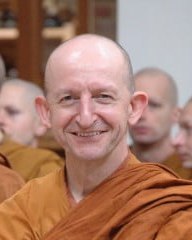
[Session] Readings by Ajahn Pasanno:
The Island by Ajahn Pasanno and Ajahn Amaro, Chapter 15, pp. 270-274:
Suttas: SN 1.1; MN 112.4, .6, .8 & .10; AN 10.7.
“The Four Noble Truths,” p. 333 in Food for the Heart (Wisdom Publications) by Ajahn Chah (commercial).
3. “When I heard that Ajahn Amaro spent two years [not lying down], I was very impressed. But thinking about how Luang Por Sumedho watched Ajahn Amaro do this for two years and then saying, ‘Ah, finally you’re stopping!’ Why do you let people make their own experience?” Answered by Ajahn Pasanno and Ajahn Amaro. [Ajahn Amaro] [Sitter's practice] [Ajahn Sumedho] [Teaching Dhamma]
4. Reflections by Ajahn Amaro and Ajahn Pasanno comparing the diversity of expression in the Six Sets of Six (MN 148) to the Mahāgosiṅga Sutta (MN 32). [Great disciples] [Buddha/Biography] // [Determination]
Sutta: SN 14.15: Students gravitate towards the personality of the teacher. [Personality]
[Session] Readings by Ajahn Pasanno:
The Island by Ajahn Pasanno and Ajahn Amaro, Chapter 15, pp. 274-277:
Suttas: AN 8.30; SN 2.5; AN 3.83; SN 52.9; MN 123.22; MN 122.4, .6 & .7.
Sutta: MN 123: Wonderful and Marvelous.
2. “When Ajahn Chah reached full liberation, did he wait two years just to be sure?” Answered by Ajahn Pasanno and Ajahn Amaro. [Ajahn Chah] [Liberation] // [Delusion] [Doubt]
Simile from Ajahn Chah: “To me that’s just the chattering of the birds.” Related by Ajahn Amaro. [Similes]
Reflection by Ajahn Pasanno: People get infatuated and enthralled by attainment. [Craving] [Meditation/Results] [Relinquishment]
Quote: “[Ajahn Chah’s] duty was to try to teach people Dhamma, as opposed to being something for anybody.” — Ajahn Pasanno. [Teaching Dhamma] [Becoming]
3. “You talked about the end of striving, the end of straining, the end of forcing just now. Yesterday you were talking about standing on one side and neither straining nor moving back. It seems to be a bit of a paradox. Do we strain now and stop when we get there?” Answered by Ajahn Pasanno and Ajahn Amaro. [Right Effort] [Energy] // [Middle Path] [Learning] [Aspects of Understanding]
Sutta: MN 39: Don’t be content with wholesome states.
Sutta: AN 2.5: The qualities that allowed the Buddha to realize full Awakening.
4. “How did the Buddha deal with this issue of people becoming enlightened contemporaneous with him and getting a little bit crazy? His contemporaries also had siddhis [psychic powers] and practices? How did he distinguish between Buddhist and non-Buddhist attainments?” Answered by Ajahn Pasanno and Ajahn Amaro. [Buddha/Biography] [Liberation] [Delusion] [Psychic powers] // [Cessation of Suffering] [Self-identity view] [Relinquishment] [Becoming]
Sutta: AN 6.48: A proper declaration of full knowledge does not include a sense of me and mine.
Vinaya: Mahāvagga 1.38: Rules for wanderers of other sects wanting to become bhikkhus.
5. “I was trying to imagine what it would be like to look into the world through the eyes of an arahant. Something like looking through The Matrix or looking at people as children …” Answered by Ajahn Pasanno and Ajahn Amaro. [Arahant]
Quote: “What is the mind of an arahant like?”—“Only compassion.” — Ajahn Mahā Boowa. Quoted by Ajahn Pasanno. [Ajahn Mahā Boowa] [Compassion]
Reflection by Ajahn Pasanno: Ajahn Chah’s form of compassion could be pretty demanding sometimes. [Ajahn Chah] [Fierce/direct teaching] [Patience] [Humor]
Reflection by Ajahn Kaccāna: From the perspective of an arahant, what drives the entire world is feeble (MN 112.6). [Aggregates] [Dispassion]
7. Story: Ajahn Amaro is invited to give a two-minute Dhamma talk at 10 Downing Street on Visākha Pūjā. Told by Ajahn Amaro and Ajahn Pasanno. [Ajahn Amaro] [Teaching Dhamma] [Politics and society] [Festival days] // [Christianity]
Sutta: MN 123: Wonderful and Marvelous.
8. Recollection: Ajahn Sumedho’s copy of the Majjhima Nikāya has MN 123.22 highlighted in purple and yellow. [Ajahn Sumedho] [Sutta]
9. Comment: The Buddha is always inclined towards drawing conversations to a close (MN 122.6). [Buddha/Biography] [Teaching Dhamma] [Idle chatter] // [Loneliness] [Media]
Sutta: SN 10.3: Sūciloma.
[Session] Readings from The Island by Ajahn Pasanno and Ajahn Amaro, Chapter 12, pp. 198-203. Read by Ajahn Pasanno:
Buddhadāsa Bhikkhu, Heartwood from the Bodhi Tree, pp. 51-2.
Suttas: SN 35.85; SN 41.7; DN 16.2.25.
Commentary: Visuddhimagga 21.70 (Path of Purification by Bhikkhu Ñāṇamoli, p. 686).
2. “The other characteristics like impermanence, dukkha, anatta—are these considered to be the third quenching elements?” Answered by Ajahn Pasanno and Ajahn Amaro. [Characteristics of existence] [Cessation] // [Not-self] [Emptiness] [Ajahn Buddhadāsa]
Reference: Heartwood of the Bodhi Tree by Ajahn Buddhadāsa, quoted in The Island by Ajahn Pasanno and Ajahn Amaro, pp. 198-199.
Sutta: SN 35.85: “The world is empty.” Quoted in The Island by Ajahn Pasanno and Ajahn Amaro, p. 200.
5. Reflections on “Passion is a maker of measurement; aversion is a maker of measurement …” (SN 41.7). [Perception] [Judgementalism ] [Sensual desire] [Aversion] // [Unwholesome Roots] [Conventions]
Quote: “Is this long or short?” — Ajahn Chah. [Ajahn Chah]
6. Story: Ajahn Pasanno comes across handwritten notes about Ajahn Chah’s teachings in the library at Wat Pleng. Told by Ajahn Pasanno and Ajahn Amaro. [Ajahn Pasanno] [Ajahn Chah] [Wat Phleng Vipassanā]
Quote: “What is the essence of the Buddha’s teachings?”—“Is this a big piece of wood or a small piece of wood?” — Ajahn Chah. Quoted by Ajahn Pasanno. [Perception] [Conventions] [Desire]
Sutta: SN 41.7: “Passion is a maker of measurement.”
7. Reflections by Ajahn Amaro and Ajahn Pasanno on the Buddha’s experience of chronic pain in DN 16.2.25. [Buddha/Biography] [Pain] // [Suffering] [Equanimity]
Suttas: DN 33; MN 53; AN 10.67-68: The Buddha stretches his back.
9. “It’s interesting that the Buddha usually speaks of wholesome qualities in the negative, like non-greed, non-hatred, non-delusion. Even the precepts are phrased in the negative. Could you say that’s pointing towards emptiness?” Answered by Ajahn Pasanno and Ajahn Amaro. [Skillful qualities] [Precepts] [Emptiness] // [Western psychology] [Language] [Teaching Dhamma]
11. “I’m curious about the timeline when the Buddha established the Five Precepts for householders.” [Buddha/Biography] [Five Precepts] [Lay life] // [Vinaya]
Vinaya: Mahāvagga 2.1: The Buddha establishes the Uposatha observance for the Saṅgha. [Lunar observance days] [Saṅgha]
Sutta: AN 8.41: Observing the Eight Precepts on Uposatha days. [Eight Precepts]
Sutta: AN 8.39: The eight streams of merit. [Merit] [Three Refuges] [Generosity]
Follow-up: “Did the ritual of requesting the Five Precepts originate in the time of the Buddha?” Answered by Ajahn Amaro and Ajahn Pasanno. [Ceremony/ritual] [Culture/Thailand] [Tipiṭaka]
12. “The eight training precepts that some monastic traditions ask you to take as a lay person when you are reading suttas or attending Dhamma classes—do different Theravāda forms include this?” Answered by Ajahn Amaro and Ajahn Pasanno. [Lay life] [Precepts] [Bhante Gunaratana] // [Culture/Sri Lanka] [Culture/Thailand] [Right Speech]
[Session] Reading from The Island by Ajahn Pasanno and Ajahn Amaro, Chapter 12, pp. 203-207. Read by Ajahn Pasanno:
Sutta: MN 121.
3. “Is my understanding correct that everything is empty, nothing is there from the horses to the … (MN 121.4)? When the body dies, and with it the senses, do [the body and the senses] disappear in the same way the horses disappear [in MN 121.4]?” Answered by Ajahn Pasanno, Ajahn Amaro and Ajahn Kaccāna. [Emptiness] [Death] [Body/form] [Sense bases] // [Outflows] [Rebirth] [Buddha] [Aggregates]
Sutta: MN 72.16: Aggivaccagotta Sutta.
Sutta: Snp 5.7: Upasīva’s Question.
Sutta: AN 2.25: Statements whose meaning should and should not be drawn out.
4. Recollection: Ajahn Chah would often make the distinction of holding but not clinging. Recounted by Ajahn Amaro and Ajahn Pasanno. [Ajahn Chah] [Clinging ] // [Relinquishment] [Emptiness] [Everyday life] [Sense bases] [Self-identity view]
Reference: Collected Teachings of Ajahn Chah, p. 583: “Sense Contact: The Fountain of Wisdom.” [Discernment]
Sutta: DN 16.2.25: The Buddha compares his body to an old cart. [Buddha/Biography] [Pain]
Suttas: MN 35.5; AN 10.67: The Buddha stretches his back.
5. Comment: “The principle of letting go is that nothing is destroyed … we are not buying into the future.” [Relinquishment] [Clinging] [Buddha] [Death]
Response by Ajahn Amaro. [Stream entry] [Aggregates]
Quote: “A samaṇa is one with no future.” — Ajahn Chah. Quoted by Ajahn Pasanno. [Ajahn Chah] [Perception of a samaṇa] [Time]
6. “In animitta samādhi, is the mind one-pointed or just sharp? Does it fall into the world of jhāna?” Answered by Ajahn Pasanno. [Concentration] [Nimitta] [Unification] [Jhāna]
Sutta: SN 48.9.4: Unification of mind with relinquishment as its object. [Relinquishment]
Quote: “The point that includes.” — Ajahn Sumedho. Quoted by Ajahn Amaro. [Ajahn Sumedho] [Spaciousness]
Teaching from Ajahn Chah: “Being Dhamma.” Related by Ajahn Amaro and Ajahn Pasanno. [Ajahn Chah] [Dhamma] [Knowing itself] [Not-self] [Self-identity view]
Sutta: MN 95.20: The sequence of hearing, understanding, practicing, and realizing Dhamma.
Reference: Being Dharma by Ajahn Chah (commercial).
[Session] Readings by Ajahn Pasanno:
The Island by Ajahn Pasanno and Ajahn Amaro, Chapter 12, pp. 207-212:
Suttas: SN 20.7; SN 55.53; SN 22.95; Dhp 46; Dhp 170.
The Island by Ajahn Pasanno and Ajahn Amaro, Chapter 11, pp. 191:
Sutta: Snp 1118-9.
1. Reflection by Ajahn Pasanno: When Ajahn Chah went to America, he emphasized the importance of sīla. [Ajahn Chah] [Culture/West] [Virtue] // [Insight Meditation Society]
Story: Jack Kornfield asks Ajahn Chah what he thinks about Buddhist teachings coming to the West. Ajahn Chah replies, “I haven’t seen any Buddhism yet.” Told by Ajahn Pasanno and Ajahn Amaro. [Jack Kornfield]
Story: Ajahn Chah discerns that Jack Kornfield isn’t accurately translating his teachings about sīla. Told by Ajahn Amaro. [Joseph Kappel] [Translation]
Reflections by Ajahn Amaro and Ajahn Pasanno about SN 20.7 and poetic and literary expressions of Dhamma. [Teaching Dhamma] [Verses] [Great disciples] [Isan]
Sutta: SN 8: Vaṅgīsasaṁyutta.
3. “How does [disenchantment towards the aggregates] square with taking delight in the natural world?” Answered by Ajahn Pasanno and Ajahn Amaro. [Disenchantment] [Happiness] [Culture/Natural environment] // [Dispassion] [Beauty] [Culture/West] [Clinging] [Judgementalism]
Sutta: Thag 18.1.12: Mahākassapa’s verses about nature. [Great disciples]
Quote: “The more completely the heart lets go of the world, the more it can really enjoy it.” — Ajahn Amaro. [Relinquishment]
Recollection: Ajahn Chah had tremendous joy but no illusions about the world around him. [Ajahn Chah]
4. Reflection: In each of the five similes for the aggregates in SN 22.95, there is a form but no essence. [Aggregates] [Similes] [Emptiness] // [Spaciousness]
5. “Everything arises from emptiness, right?” Answered by Ajahn Pasanno and Ajahn Amaro. [Emptiness ] // [Conditionality]
Quote: “There is no discernable beginning to this world (SN 15.1); what we’re looking for is an ending to it.” — Ajahn Pasanno. [Nature of the cosmos] [Cessation]
Sutta: AN 4.77: Imponderables.
6. “Wasn’t there a teaching that everything arises from interest and there is a sequence that ends in Nibbāna?” Answered by Ajahn Amaro and Ajahn Pasanno. [Desire] [Conditionality] [Nibbāna]
Sutta: AN 10.58: “Rooted in interest are all things. …”
7. “In what ways does engaging with the natural world which is always changing contribute to renunciation and realization? In the modern world, such conditions are becoming rarer. What is the answer?” Answered by Ajahn Pasanno, Ajahn Kaccāna and Ajahn Amaro. [Culture/Natural environment ] [Impermanence] [Thai Forest Tradition] [Culture/West] // [Characteristics of existence] [Spiritual friendship] [Seclusion] [Insight meditation] [Ascetic practices]
Suttas: SN 47.6-7: The Four Foundations of Mindfulness are one’s ancestral territory.
Recollection: The austerity of the early days of Wat Pah Pong highlighted the seeking of security. Recounted by Ajahn Pasanno. [Wat Pah Pong] [Ajahn Chah] [Food]
8. Reflections by Ajahn Amaro and Ajahn Pasanno: The meaning of the word ascetic and the nature of forests. [Ascetic practices] [Etymology] // [Recreation/leisure/sport] [Culture/Natural environment] [Culture/West] [Beauty] [Elders' Council]
[Session] Readings by Ajahn Pasanno:
The Island by Ajahn Pasanno and Ajahn Amaro, Chapter 15, pp. 277-278:
Suttas: AN 4.96 & .99; SN 43.1.
The Island by Ajahn Pasanno and Ajahn Amaro, Chapter 16, pp. 279-281:
Suttas: SN 56.35; SN 45.179; SN 45.180.
Vinaya: Mahāvagga 1.7.5.
[Session] Readings from The Island by Ajahn Pasanno and Ajahn Amaro, Chapter 16, pp. 281-286. Read by Ajahn Pasanno:
Suttas: MN 118.9-12; SN 55.52; DN 18.1; SN 55.5; AN 4.240; Iti 76; SN 55.21.
1. [Considering the large numbers of lay disciples who the Buddha declared to have realized stages of awakening in DN 18.1] “I guess they were culturally more open to the path?” Answered by Ajahn Pasanno and Ajahn Amaro. [Lay life] [Stages of awakening] [Culture/India] // [History/Indian Buddhism] [Cultural context] [Buddha]
Sutta: DN 1: The 62 wrong views. [Views]
Sutta: DN 14.1.4: A fortunate aeon. [Previous Buddhas]
2. “Are once-returners always reborn in the human realm? … So they have a long human life?” Answered by Ajahn Pasanno and Ajahn Amaro. [Once return] [Human]
Texts: Seven-year old arahants: Dabba Mallaputta (Bhikkhu Saṅghādisesā 8), Sopāka (Thag 480), Sumana (Thag 429), Bhaddha (Thag 473).
Sutta: Ud 1.10: Bāhiya.
4. “If one cultivates certain pāramīs during one’s lifetime, one can lose them in another lifetime?” Answered by Ajahn Pasanno and Ajahn Amaro. [Perfections] [Rebirth] [Impermanence] // [Aversion] [Clinging] [Fetters] [Stream entry] [Ajahn Chah]
Simile from Ajahn Chah: Tending a plant. [Naturalness] [Similes] [Stages of awakening]
7. Reflection by Ajahn Amaro and Ajahn Pasanno: Stream entry is a really good retirement plan. [Stream entry] [Purpose/meaning] [Retirement] // [Factors for stream entry] [Meditation] [Association with people of integrity] [Hearing the true Dhamma]
8. Reflection by Ajahn Amaro and Ajahn Pasanno: Our strongest habit is to practice Dhamma in accordance with self-view. [Habits] [Self-identity view] [Practicing in accordance with Dhamma] // [Factors for stream entry] [Dhamma]
Quote: “I am an unenlightened person who has got to do something now in order to become enlightened in the future.” — a wrong framework for practice pointed out by Ajahn Sumedho. Quoted by Ajahn Amaro. [Ajahn Sumedho] [Liberation]
Sutta: AN 3.40: Three traits that can predominate (adhipatteyya).
9. Reflection by Ajahn Pasanno and Ajahn Amaro: SN 55.21 indicates that the last mind-moment is not the primary determinant of rebirth. [Death] [Rebirth] // [Commentaries] [Skillful qualities] [Treasures] [Christianity]
Commentarial story: A monk is reborn as a maggot living on his robes. [Robes] [Clinging]
Story: Ajahn Chah declines to visit a dying villager. Told by Ajahn Pasanno. [Ajahn Chah] [Paul Breiter] [Fierce/direct teaching] [Heedlessness]
10. “The first part of the Highest Blessings chant (Snp 2.4; Amaravati Chanting Book, p. 46), ‘associating with the wise,’ is not sappurisa. Is it a synonym?” Answered by Ajahn Amaro and Ajahn Pasanno. [Association with people of integrity] [Pāli] [Verses]
11. AN 10.61 explains that not drawing close to good people is the root of ignorance. Teaching by Ajahn Amaro and Ajahn Pasanno. [Association with people of integrity ] [Ignorance] [Conditionality] // [Saṅgha] [Mutual lay/Saṅgha support]
[Session] Readings by Ajahn Pasanno:
The Island by Ajahn Pasanno and Ajahn Amaro, Chapter 16, pp. 286-288:
Suttas: DN 3.2.21-22; SN 45.55; MN 2.9-11; SN 22.122.
Sutta: SN 22.122: Virtuous.
1. “The suttas ae the classic Dhamma texts, and there are a lot of books, etc. that expound the Dhamma as well. What sources to study to hear the true Dhamma?” Answered by Ajahn Pasanno and Ajahn Amaro. [Hearing the true Dhamma ] [Sutta] [Dhamma books] // [Thai Forest Tradition] [Discernment] [Four Noble Truths] [Views]
Quote: “Does he contemplate the Four Noble Truths when he’s climbing rocks?” — Ajahn Chah. Quoted by Ajahn Pasanno. [Ajahn Chah] [Paul Breiter] [Culture/West] [Recreation/leisure/sport]
Sutta: AN 8.53: Eight criteria to determine what is Dhamma. [Dhamma]
2. Comment: AN 8.53 mentions Dhamma-Vinaya, not just Dhamma. [Dhamma] [Vinaya]
Responses by Ajahn Pasanno and Ajahn Amaro. [Great disciples] [Simplicity]
3. “Is the Abhidhamma a collection of suttas?” Answered by Ajahn Pasanno and Ajahn Amaro. [Abhidhamma] [Tipiṭaka]
References: Abhidhamma in Daily Life by Nina Van Gorkom (commercial); A Comprehensive Manual of Abhidhamma by Bhikkhu Bodhi (commercial).
4. Questions about the heavens as other realms and/or states of mind. Answered by Ajahn Pasanno and Ajahn Amaro. [Deva] [Realms of existence] [Christianity] // [Happiness] [Stream entry] [Great disciples] [Gradual Teaching]
Sutta: SN 56.11.22: Dhammacakka Sutta: The deva realms.
Sutta: SN 46.4: Praise for Sāriputta.
Sutta: AN 3.128: Sāriputta puts Anuruddha on the right track.
Reflection about the two results of dukkha (AN 6.63.42). [Suffering] [Conditionality] [Ignorance] [Faith]
5. “I’ve come across the word ‘celestial state.’ Does that help to clarify the Christian definition of heaven?” Answered by Ajahn Pasanno and Ajahn Amaro. [Deva] [Christianity] // [Realms of existence] [Rebirth]
Follow-up: “Is the Buddha’s teaching on heaven a way to prepare the mind to recognize the Four Noble Truths?” [Gradual Teaching] [Four Noble Truths] [Happiness] [Kamma]
Comment by Ajahn Kaccāna: Generosity, virtue, and the hope of heaven can be a potent force for goodness even without renunciation.
6. “How are yoniso manasikāra and sati-sampajañña related?” Answered by Ajahn Pasanno and Ajahn Amaro. [Appropriate attention ] [Mindfulness] [Clear comprehension ] // [Conditionality] [Stream entry]
Sutta: MN 10.8: Clear comprension. [Mindfulness of body]
Sutta: AN 10.61: The support for sati-sampajañña is yoniso manasikāra.
Sutta: SN 55.5: Four factors for stream entry.
7. “What should we do when we are stuck in aversion and no able to see the anatta aspect of it?” Answered by Ajahn Pasanno and Ajahn Amaro. [Aversion] [Not-self] // [Characteristics of existence]
Follow-up: “Is it wise to use memory in these moments when we feel stuck?” [Memory] [Appropriate attention]
Follow-up: “Is it okay to use force when the defilements seem stronger than us?” [Unwholesome Roots] [Right Effort] [Sutta]
Sutta: MN 20: The Removal of Distracting Thoughts.
8. “When the suffering passes, but you notice fear of it happening again, how do you deal with this?” Answered by Ajahn Pasanno. [Cessation of Suffering] [Fear] // [Recollection] [Appropriate attention]
Recollection: Ajahn Sumedho reminds the Chithurst monastics of the precepts they haven’t broken. Recounted by Ajahn Amaro. [Ajahn Sumedho] [Chithurst] [Recollection/Virtue]
[Session] Readings by Ajahn Pasanno:
The Island by Ajahn Pasanno and Ajahn Amaro, Chapter 16, pp. 289-291:
A 6.98 & .101 (combined).
Suttas: SN 12.67; AN 5.260; MN 6.2-3 & .11; DN 2.101-2.
Suttas: AN 6.98-101; SN 17.5.
1. “In light of AN 6.98, is Nibbāna permanent? Is it possible to pay attention to what’s happening and notice what isn’t changing?” Answered by Ajahn Pasanno and Ajahn Amaro. [Nibbāna] [Impermanence] // [Time] [Dhamma]
Sutta: Ud 8.3: Nibbāna Sutta (Chanting Book translation).
Quote: “Permanence isn’t the same as timelessness.” — Ajahn Amaro.
2. “Does Nibbāna exist? Is there a sutta about this?” Answered by Ajahn Amaro and Ajahn Pasanno. [Nibbāna] [Sutta] // [Etymology] [Discernment]
Sutta: Milindapañha 323, quoted in The Island by Ajahn Pasanno and Ajahn Amaro, p. 162.
Quote: “Dhamma is real but does not exist. The five khandhas exist, but they’re not real.” — Ajahn Paññāvaḍḍho. Quoted by Ajahn Amaro. [Ajahn Paññāvaḍḍho] [Dhamma] [Aggregates]
Quote: “Dhamma is un-image-able.” — Ajahn Sumedho. Quoted by Ajahn Amaro. [Ajahn Sumedho]
3. “What are the differences between disenchantment and dispassion? What are their characteristics?” Answered by Ajahn Pasanno and Ajahn Amaro. [Disenchantment] [Dispassion] // [Translation] [Etymology ] [Sutta]
4. Story: Joseph Goldstein recognizes stinginess with regard to Dhamma (AN 5.260). [Joseph Goldstein] [Greed] [Dhamma] // [Insight meditation]
5. “Could you repeat the five types of stinginess (AN 5.260)?” Answered by Ajahn Pasanno and Ajahn Amaro. [Greed ] // [Family] [Corruption] [Lodging] [Gain and loss] [Fame and disrepute] [Teaching Dhamma]
Story: Ajahn Mahā Prasert gets sent to Nebraska. [Ajahn Mahā Prasert] [Jealousy]
Suttas: SN 17: Connected Discourses on Gain, Honor, and Fame.
Reading: SN 17.5: The Dung Beetle. [Humor] [Similes]
Reflections on the kammic effects of King Ajātasattu killing his father (DN 2.101). [Kamma] [Killing] [Parents] [Stream entry]
Vinaya: Khandhaka 21.1.3: The First Council occurred at Rājagha, King Ajātasattu’s capital city.
6. “Out of curiosity, would accidentally killing [your parent] be equivalently bad kamma?” Answered by Ajahn Amaro and Ajahn Pasanno. [Killing] [Parents] [Kamma] [Volition]
8. The seven qualities of a sapurisa (good person; DN 33.2.3). Teaching by Ajahn Amaro and Ajahn Pasanno. [Association with people of integrity ] // [P. A. Payutto] [Mindfulness] [Clear comprehension] [Moderation in eating] [Ajahn Chah] [Time management]
Reference: Buddhadhamma by P. A. Payutto Chapter 13.4.
Reference: A Constitution for Living by P. A. Payutto (pdf unavailable).
Sutta: AN 10.61: The first condition for dispelling ignorance.
Sutta: AN 2.126: The voice of another is a condition for the arising of Right View. [Right View]
10. Comment: The entire Amaravati audio archive has been transcribed using AI and is searchable by subject. [Dhamma recordings] [Amaravati] [Dhamma online] [Artificial intelligence]
Note: These transcriptions are available only to members of the Amaravati community and by permission.